

Medicare Orthotics and Prosthetics Patient-Centered Care Act This bill revises payment rules and establishes several requirements relating to coverage of orthotics and prosthetics under Medicare. Specifically, the bill requires suppliers of orthotics and prosthetics to meet certain standards with respect to licensure and accreditation, physical facilities, and liability insurance. Orthotists and prosthetists may also issue written orders for commercial purposes that meet specified standards; such orders must be signed by the treating physician. The bill also prohibits payment under Medicare for certain prosthetics and orthotics that are delivered via drop shipment (i.e., direct shipment to a beneficiary who has not received corresponding patient care from a health care practitioner).
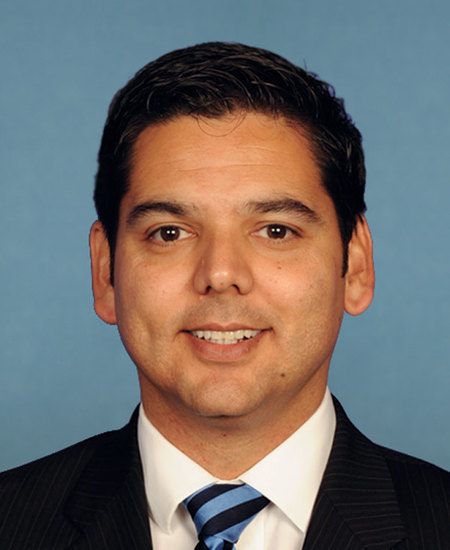
Rep. Raul Ruiz
Sponsored bills
Medicare Multi-Cancer Early Detection Screening Coverage Act of 2021 This bill provides for Medicare coverage and payment for multi-cancer early detection screening tests that are approved by the Food and Drug Administration and that are used to screen for cancer across many cancer types.
This bill directs the Speaker of the House and the President pro tempore of the Senate to arrange for the award of three Congressional Gold Medals to the U.S. Capitol Police (USCP) and other law enforcement agencies that protected the U.S. Capitol on January 6, 2021. Following the award of these medals, one medal shall be given to the USCP, one medal shall be given to the Metropolitan Police Department of the District of Columbia, and one medal shall be given to the Smithsonian Institution and displayed with a plaque listing all law enforcement agencies that participated in protecting the Capitol on January 6, 2021.
Equality Act This bill prohibits discrimination based on sex, sexual orientation, and gender identity in areas including public accommodations and facilities, education, federal funding, employment, housing, credit, and the jury system. Specifically, the bill defines and includes sex, sexual orientation, and gender identity among the prohibited categories of discrimination or segregation. The bill expands the definition of public accommodations to include places or establishments that provide (1) exhibitions, recreation, exercise, amusement, gatherings, or displays; (2) goods, services, or programs; and (3) transportation services. The bill allows the Department of Justice to intervene in equal protection actions in federal court on account of sexual orientation or gender identity. The bill prohibits an individual from being denied access to a shared facility, including a restroom, a locker room, and a dressing room, that is in accordance with the individual's gender identity.
Expand Navigators' Resources for Outreach, Learning, and Longevity Act of 20 21 or the ENROLL Act of 20 21 This bill makes several changes to the navigator program for health insurance exchanges (a program through which entities receive funding to provide education and enrollment assistance). Specifically, the bill addresses certain funding decisions and regulatory actions taken by the Centers for Medicare & Medicaid Services (CMS). For example, the bill increases funding for navigators in federally facilitated exchanges (FFEs) beginning in FY2022. (The CMS decreased annual funding for FFE navigators for the 2017-2018 and 2018-2019 program years.) The bill also counters guidance issued by the CMS regarding navigator criteria by requiring FFE navigators to be chosen without regard to how the entity provides information about association health plans or short-term, limited-duration insurance. The bill also reinstates certain requirements that were removed by the CMS in 2018. Specifically, the bill requires (1) at least two navigators in each FFE, including at least one community and consumer-focused nonprofit group; and (2) that navigators be physically present in the state where the exchange is located.
Improving Access to Indian Health Services Act This bill permanently extends certain Medicaid flexibilities relating to Indian health care providers. Specifically, the bill permanently expands coverage to include clinical services that are furnished outside of a clinic by an Indian Health Service (IHS) facility, a tribe or tribal organization, or an Urban Indian Organization (UIO). Current guidance from the Centers for Medicare & Medicaid Services allows IHS and tribal facilities to receive payment for clinical services provided outside of clinics through October 31, 2021; facilities are expected to work with their state Medicaid programs to transition to other, more permanent payment options for these services. The bill also permanently establishes a 100% federal matching rate, also known as the Federal Medical Assistance Percentage (FMAP), for UIO services. Current law provides a 100% FMAP for UIO services during the eight fiscal quarters after March 11, 2021.
Environmental Justice for Coronavirus Affected Communities Act This bill reauthorizes through FY2022 (1) the Environmental Justice Small Grants Program; (2) the Environmental Justice Collaborative Problem-Solving Cooperative Agreement Program, which provides financial assistance to address local environmental or public health issues; and (3) the Community Action for a Renewed Environment grant program, which assists communities address multiple sources of toxic pollutants.
Marketing and Outreach Restoration to Empower Health Education Act of 2021 or the MORE Health Education Act This bill requires the Department of Health and Human Services (HHS) to conduct outreach and reporting related to federally facilitated exchanges (i.e., health insurance exchanges established and operated within states by HHS). The activities must inform potential enrollees of the availability of coverage and related financial assistance under the exchanges and must be provided in culturally and linguistically appropriate formats. The bill provides funding for the activities. Beginning for plan year 2022, HHS also must publish biweekly reports that include specified metrics about the performance of such exchanges during each annual open enrollment period. Further, after each open enrollment period, HHS must report on how many consumers enrolled in coverage with assistance from patient navigators, the advertising and outreach expenses related to raising awareness about open enrollment, and the amount of monthly user fees collected during the plan year.
Children’s Health Insurance Program Permanency Act or the CHIPP Act This bill permanently extends the Children's Health Insurance Program (CHIP) and related measures, programs, and authorities. Specifically, the bill permanently funds CHIP and related programs that support the development of child health quality measures and outreach and enrollment efforts. The bill also permanently authorizes the Medicaid and CHIP express lane eligibility option, which allows states to use information from designated programs (e.g., the Supplemental Nutrition Assistance Program) to streamline eligibility determinations for children. Additionally, under the bill, states may expand eligibility to children whose family income exceeds the otherwise applicable limits.
Medicaid Report on Expansion of Access to Coverage for Health Act or the Medicaid REACH Act This bill reduces federal payment for Medicaid administrative expenses incurred by states that have not elected to participate in Medicaid expansion under the Patient Protection and Affordable Care Act (i.e., nonexpansion states) if the state does not comply with specified reporting requirements. The bill requires nonexpansion states to report, among other information, the number of uninsured individuals under the age of 65 and the estimated percentage of such individuals who would be eligible to receive coverage if the state expanded Medicaid.