

Give Kids a Chance Act of 2025 This bill expands the Food and Drug Administration’s (FDA’s) authority with respect to research on rare pediatric diseases, including by permitting the FDA to take enforcement action against drug sponsors that fail to satisfy pediatric study requirements and by reauthorizing programs that support pediatric research. Specifically, the bill modifies requirements relating to molecularly targeted pediatric cancer investigations to permit research on new drugs in combination with active ingredients that have already been approved, provided certain conditions are met; permits the FDA to take enforcement action against drug sponsors that fail to comply with pediatric study requirements, if such sponsors demonstrated a lack of due diligence in satisfying the requirement; renews the FDA’s authority to award priority review vouchers to sponsors of new products intended to treat rare pediatric diseases through September 30, 2029; and reauthorizes through FY2027 certain funding for the National Institutes of Health to support priority pediatric research. The bill also provides statutory authority for the FDA’s interpretation of the orphan drug exclusivity period. The bill specifies, consistent with FDA regulations, that the seven-year market exclusivity period for drugs for rare diseases or conditions (i.e., orphan drugs) prohibits the approval of the same drug for the same approved use or indication with respect to the disease or condition. (In Catalyst Pharmaceuticals, Inc. v. Becerra , a court rejected the FDA’s interpretation and held that orphan drug exclusivity extends to all uses or indications for the disease or condition.)
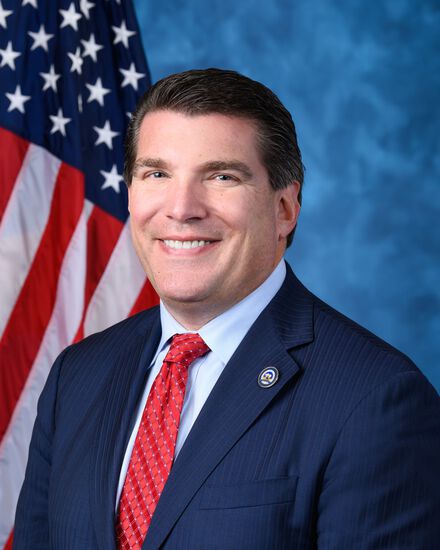
Rep. Jay Obernolte
Sponsored bills
Maddy summaryThis bill denies immigration benefits to individuals who participated in, supported, or facilitated Hamas attacks against Israel starting October 7, 2023. It amends immigration law to make such individuals inadmissible (barred from entering the U.S.) and ineligible for any immigration relief, including asylum or other protections. The law requires annual reports from the Homeland Security Secretary tracking how many people are denied entry or removed under these provisions. It directly affects non-U.S. nationals involved in Hamas-related violence against Israel since the October 7, 2023, attacks.
Maddy summaryHR 5800, the SAFE Drivers Act, requires commercial driver's license (CDL) applicants and renewers to pass a standardized English proficiency test approved by the Federal Motor Carrier Safety Administration (FMCSA). The test assesses reading road signs, understanding emergency communications, and writing required documentation - critical for safety in commercial driving. States must administer the test through their DMVs, report pass rates annually to the FMCSA, and face potential federal funding cuts if they fail to comply. The law applies to all new CDL issuances or renewals starting 12 months after enactment, directly affecting commercial drivers seeking or maintaining their licenses.
Maddy summaryHR 6197, the Health Tech Investment Act, establishes a new payment category under Medicare for algorithm-based healthcare services (like AI tools used in diagnosis or treatment) starting January 1, 2026. It requires Medicare to pay based on manufacturer-provided costs (including software, staff, and overhead) for these services and prohibits removing them from the special payment category for at least five years after initial payment. This directly affects Medicare beneficiaries (through coverage), healthcare providers (who deliver these services), and AI/algorithm service manufacturers (who receive reimbursement). The bill ensures these new technologies get fair payment while gathering sufficient claims data before potentially moving them to standard payment categories.
Maddy summaryHR 6019 repeals a requirement that Senate offices must be notified when legal requests seek Senate data. Specifically, it removes Section 213 of the 2026 appropriations act, which mandated that Senate offices be informed about legal processes requesting disclosure of Senate data. This change directly affects Senate offices by eliminating a procedural notification step for legal requests involving their data. The bill makes no other policy changes, solely removing this specific administrative requirement.
This bill designates the facility of the United States Postal Service located at 28201 Franklin Parkway in Santa Clarita, California, as the "Deputy Ryan Clinkunbroomer Post Office Building".
Maddy summaryHRES 890 is a symbolic resolution supporting the designation of November 19, 2025, as "National GIS Day." It recognizes Geographic Information System (GIS) technology - used for mapping, data analysis, and decision-making - as essential for government operations, businesses, education, and addressing societal challenges. The resolution encourages GIS users, educators, students, and innovators to leverage this technology for learning, solving problems, and driving economic growth. As a non-binding resolution, it has no direct policy impact but formally expresses congressional support for the annual observance.
Maddy summaryHRES 880 is a symbolic House resolution recognizing the strategic U.S.-India partnership, not a bill with new policy or funding. It reaffirms longstanding cooperation on defense, counterterrorism, technology, and people-to-people ties, citing historical milestones like the 2008 nuclear agreement and recent Quad collaboration. The resolution has no binding effect but formally supports continued partnership through existing mechanisms like the U.S.-India Transforming Relationship Utilizing Strategic Technology initiative. It highlights shared priorities including Indo-Pacific stability and counterterrorism efforts, with no new legislative requirements or changes to law.
Maddy summaryHR 6022, the Sgt. Walter F. Hartnett IV Green Star Veterans Service Act, creates a designated "Green Star Service Flag" for the next of kin of veterans who died by suicide after September 11, 2001. The bill authorizes the Secretary of Veterans Affairs to design the flag and allows eligible next of kin - defined as family members under VA law or those designated by the Secretary - to display it. It also requires manufacturers to obtain a license from the VA to produce the flag, imposing a $1,000 civil penalty for unauthorized production or sale. This is a procedural measure focused on recognizing bereaved families, not altering benefit eligibility or funding.
Maddy summaryHRES 864 is a ceremonial resolution honoring U.S. veterans on Veterans Day 2025. It does not create new laws or policies but formally recognizes veterans' service and sacrifice, calling on all Americans to observe Veterans Day. The resolution references historical context about Veterans Day's origins (from Armistice Day to honoring all veterans) but contains no concrete policy changes. It directly addresses the general public, urging them to participate in the observance. As a non-binding resolution, it affects no specific individuals or groups through legislative action.