

Maddy summaryThe Federal Workforce Reproductive Rights Protection Act prevents federal agencies from relocating headquarters or major operations to states with laws restricting or banning abortion, while also barring the use of funds to build or lease facilities in those locations. To support federal employees who need to access reproductive health care, the bill allows workers to decline transfers to restrictive states, grants up to 21 days of paid leave for travel to obtain such services, and provides reimbursement for travel costs without requiring disclosure of the specific medical procedure. Additionally, the legislation prohibits government agencies from investigating an employee's use of abortion services when reviewing security clearances or making personnel decisions and protects workers from retaliation if they exercise these new rights.
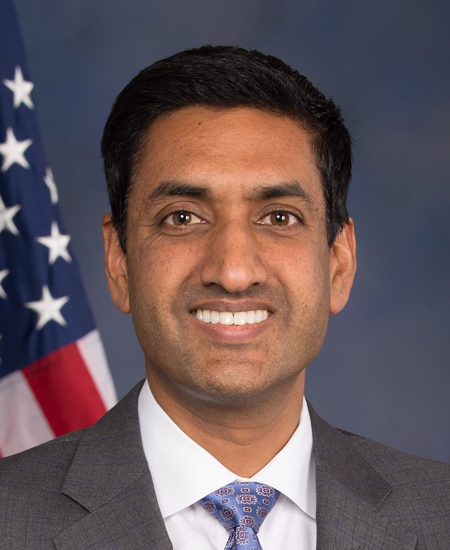
Rep. Ro Khanna
Sponsored bills
Maddy summaryThe Protect Local Funding Act prohibits federal agencies from finalizing, implementing, or enforcing a specific proposed rule regarding federal financial assistance scheduled for publication in May 2026. This legislation directly affects the Office of Management and Budget and other federal agencies by legally blocking them from acting on that particular regulation. By preventing the enforcement of this rule, the bill aims to stop a specific administrative action that could impact how federal funds are distributed. The measure does not alter existing funding programs but rather serves as a procedural barrier to a future regulatory change.
Maddy summaryThe Don't Settle for Corruption Act requires that the Attorney General must submit a report to both houses of Congress for any settlement regarding lawsuits brought against the President or former President by the United States. Before such a settlement can be approved and paid, Congress must pass a specific joint resolution within 60 days of receiving the report. This process ensures that compromise settlements in these high-profile cases receive explicit legislative approval rather than being finalized solely by the executive branch. The law applies specifically to imminent litigation or suits involving the President or former President and mandates that these settlements be handled similarly to court judgments.
Maddy summaryThis bill proposes a new amendment to the U.S. Constitution to guarantee the right to vote for all citizens of legal voting age in their place of residence. It requires states to allow voters to register and cast ballots on election day and mandates that Congress set national standards for how elections are administered. The amendment permits only narrowly tailored rules to protect election integrity and gives Congress the authority to pass laws enforcing these new voting rights.
Maddy summaryThe Keep Public Funds in Public Schools Act of 2026 eliminates a federal tax credit that allowed parents to deduct contributions to scholarship granting organizations from their income. By removing these specific tax breaks, the bill prevents the use of public tax dollars to support private school vouchers and scholarship programs. This change directly affects families who currently rely on these tax incentives to fund education outside the public school system. The provisions take effect for taxable years beginning after December 31, 2026.
Maddy summaryThis bill establishes the Foreign Investment Review Authority (FIRA), a new independent agency tasked with monitoring and enforcing foreign investment commitments made by other countries to the United States. FIRA would be led by a board of directors and an ethics officer, with oversight from a public board appointed by congressional leaders, to review investments and ensure they provide specific economic benefits such as creating quality jobs and sourcing materials domestically. The legislation requires investors to submit detailed notices and quarterly updates, while FIRA has the power to mediate terms or prohibit investments that fail to meet strict criteria regarding economic impact and ethical compliance. Additionally, the bill mandates regular public and congressional reporting on investment progress and creates a formal process for appealing FIRA's decisions in federal court.
Maddy summaryThe Critical Defense Ownership Review Act requires the Department of Defense to review any merger or acquisition where an investment company gains at least 25 percent ownership or control of a major defense supplier. Before such a transaction can proceed, the involved parties must submit a premerger notification to the Department of Defense, which will assess the deal's impact on national security, competition, supply stability, and the financial health of the supplier. If the review identifies potential risks, the Secretary of Defense must report these findings to the Federal Trade Commission or the Department of Justice within 30 days. Additionally, the bill mandates a triennial review every three years to evaluate how past mergers and acquisitions have affected the overall health of the defense industrial base.
Maddy summaryThe Magnets Value Chain Support Act of 2026 establishes a series of tax credits to encourage the production of magnets and related materials within the United States and to promote their use in critical industries. This legislation directly affects manufacturers of permanent magnets, magnet metals, and rare earth oxides, as well as companies that incorporate these materials into motors, generators, robotics, and defense systems. The bill creates three specific production credits that provide financial incentives based on the percentage of domestic content and the performance level of the magnets produced, while also offering a separate credit for businesses purchasing high-performance magnets made in the United States. To qualify for these benefits, producers must ensure that their materials are not sourced from prohibited foreign entities and must maintain certain domestic production capacities. The act includes strict reporting requirements to track supply chain origins and limits the credits to specific strategic applications, excluding low-power consumer goods.
Maddy summaryThis bill directs the Comptroller General of the United States to create and regularly update a "High Risk List" that identifies program areas where state and local governments face the greatest risks to the integrity of federally funded money. The list will analyze existing audit reports and public data to pinpoint specific administrative practices that lead to waste, fraud, or abuse, while also highlighting successful strategies that have improved fund management. Additionally, the report will outline available federal tools and resources to help address these vulnerabilities and offer recommendations to Congress on how to mitigate the identified risks. Ultimately, the legislation aims to enhance oversight of state-administered federal programs by providing a clear, evidence-based assessment of where the highest risks exist.
Maddy summaryThis resolution formally congratulates the James Lick Observatory on its 150th anniversary and recognizes its historical contributions to astronomy and science. It highlights the observatory's legacy, including its role in major scientific discoveries and its partnership with the University of California to train scientists and engage the public. The House of Representatives commends the University of California for managing the facility and encourages continued support from federal, state, and private sources. This non-binding measure serves as a symbolic acknowledgment of the observatory's achievements rather than establishing new laws or funding.