

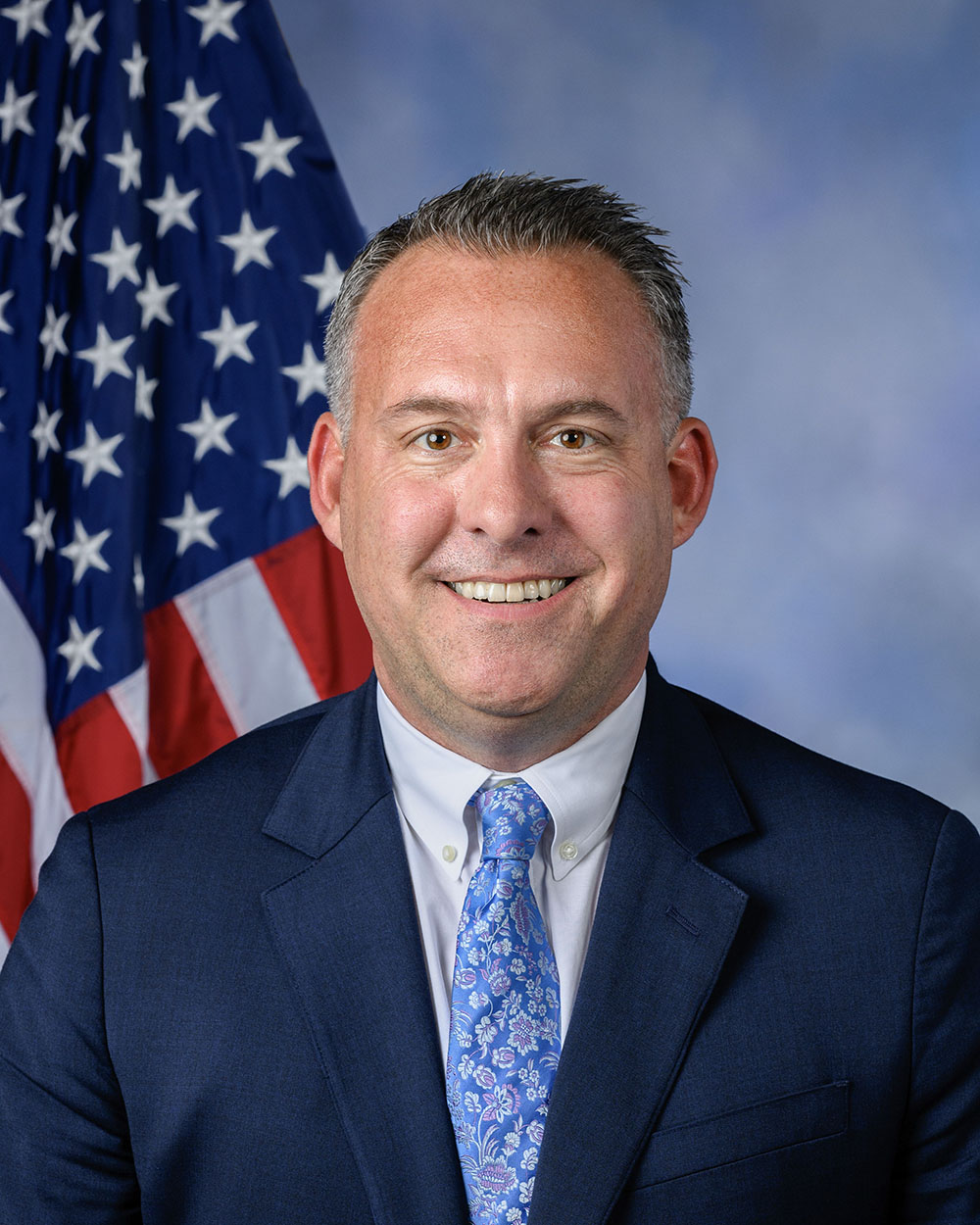
Photo of Adam Gray
D United States House · District 13 · California On the 2026 ballot

Rep. Adam Gray

Compare
Total votes
650
all sessions
Attendance
94%
39 missed
Lower than 82% of chamber peers
With party
82%
of cast votes
Lower than 98% of chamber peers
Bipartisan score
9%
crosses aisle rarely
Higher than 97% of chamber peers
Sponsored
158
bills & resolutions
Lower than 85% of chamber peers
Committees
6
assignments
158 bills and resolutions

Sponsored bills

Total
158
Primary
8
Co-sponsor
150
This page
158
matching current filters
Co-sponsor HR 3657
Passed · Utah House · Co-sponsor
Hydropower Licensing Transparency Act

Maddy summaryThis bill requires the Federal Energy Regulatory Commission (FERC) to submit annual reports to Congress about pending hydropower license applications. Specifically, FERC must report on licenses where licensees notified them at least 3 years prior but haven't received new licenses yet, including details like notification dates, docket numbers, application status, and upcoming proceedings. The reports aim to increase transparency in the relicensing process for existing hydropower facilities. This directly affects FERC (which must provide the reports) and Congress (which receives them), with no direct impact on hydropower operators or the licensing outcome itself.

Passed Jun 10, 2026 1 co-sponsor
Co-sponsor HR 1077
In committee · Utah House · Co-sponsor
STEAM Act

Streamlining Thermal Energy through Advanced Mechanisms Act or the STEAM Act This bill expedites the environmental review of certain geothermal energy activities under the National Environmental Policy Act of 1969 (NEPA). Specifically, the bill expands the Energy Policy Act of 2005 to include certain geothermal exploration or development activities in an existing categorical exclusion from NEPA for certain oil or gas activities.  A categorical exclusion applies to a class of actions that do not require an environmental assessment nor an environmental impact statement under NEPA. The categorical exclusion established by the bill applies to drilling a geothermal well (1) in an area where drilling has occurred previously within the five years prior to the date when drilling begins; or (2) within a developed field for which an approved land use plan or environmental document prepared under NEPA determined drilling to be a reasonably foreseeable activity, so long as the plan or document was approved within the five years prior to the date when drilling begins.

In committee May 20, 2026 1 co-sponsor
Co-sponsor HCONRES 75
Failed · Utah House · Co-sponsor
Directing the President, pursuant to section 5(c) of the War Powers Resolution, to remove the United States Armed Forces from hostilities against the Islamic Republic of Iran.

Maddy summaryThis bill directs the President to withdraw U.S. military forces from hostilities against Iran within 30 days of February 28, 2026 (the date troops were deployed), unless Congress authorizes continued action through a formal declaration of war or specific statute. It explicitly permits defensive actions, maintains non-combat troop presence in the region, and clarifies that intelligence-sharing activities related to Iran remain unaffected. The resolution does not authorize military force but aligns with the War Powers Resolution's requirement for congressional oversight of military deployments. It directly affects the President and military commanders responsible for implementing the withdrawal.

Failed May 14, 2026 1 co-sponsor
Co-sponsor HR 2488
In committee · Utah House · Co-sponsor
To designate the facility of the United States Postal Service located at 3817 Marysville Boulevard in Sacramento, California, as the "Grantland Johnson Post Office".

Maddy summaryHR 2488 designates the U.S. Postal Service facility at 3817 Marysville Boulevard in Sacramento, California, as the "Grantland Johnson Post Office." This bill updates all federal references in laws, maps, and documents to use the new name for that specific location. It directly affects the postal service facility and any federal records mentioning it. The bill is purely procedural, with no policy changes or financial impacts beyond the name designation.

In committee Apr 29, 2026 1 co-sponsor
Co-sponsor HR 6387
Passed · Utah House · Co-sponsor
FIRE Act

Maddy summaryThe FIRE Act amends the Clean Air Act to clarify when air quality monitoring data affected by wildfires or prescribed fire (a state-approved wildfire risk mitigation practice) can be excluded from compliance calculations with air quality standards. It expands the definition of "exceptional events" to include natural wildfires and human activities mimicking natural events (like prescribed burns), while excluding common weather patterns and pollution from noncompliance. The bill requires the EPA to conduct regional analysis for multistate wildfire events and create a public website tracking state petitions for data exclusion. This change primarily affects how states and the EPA handle air quality data during wildfire seasons and when using prescribed fire as a management tool.

Passed Apr 27, 2026 1 co-sponsor
Co-sponsor HR 3419
Passed · Utah House · Co-sponsor
To amend the Public Health Service Act to reauthorize the telehealth network and telehealth resource centers grant programs.

Maddy summaryThis bill reauthorizes federal grant programs supporting telehealth networks and resource centers through the Public Health Service Act. It provides $42.05 million annually for fiscal years 2026 through 2030 to fund these programs. The key provision is the specific, multi-year funding amount for existing telehealth infrastructure and support services. These grants directly support healthcare providers and community organizations that expand remote medical services. The bill makes no changes to program eligibility or structure, only extending funding authorization.

Passed Apr 22, 2026 1 co-sponsor
Co-sponsor HR 7973
In committee · Utah House · Co-sponsor
Momnibus Act

Maddy summaryThe Momnibus Act is a comprehensive legislative bill designed to improve maternal health outcomes across the United States by addressing social determinants of health, expanding access to care, and reducing disparities among pregnant and postpartum individuals. The bill establishes a federal task force to coordinate efforts between agencies and stakeholders to eliminate preventable maternal mortality and severe morbidity, while providing sustained funding to community-based organizations to address nonclinical factors like housing, nutrition, and transportation. Key provisions include extending WIC eligibility to 24 months postpartum, creating grants to grow and diversify the perinatal workforce, implementing respectful maternity care training for all healthcare employees, and establishing compliance programs to track and address bias in maternity care settings. The legislation also includes specific measures for incarcerated mothers, veterans, and vulnerable populations affected by climate change, alongside funding for maternal mental health services and technology-enabled care models to expand access in underserved areas.

In committee Apr 20, 2026 1 co-sponsor
Co-sponsor HR 8308
In committee · Utah House · Co-sponsor
CERTAIN Act

Maddy summaryThe CERTAIN Act aims to expedite federal permitting and environmental reviews for infrastructure projects by imposing strict timelines on federal agencies. It limits an agency's ability to revoke existing project authorizations unless specific conditions are met, such as a court order or immediate harm. The bill mandates deadlines for agencies to process applications, determine completeness, and conduct environmental reviews, with routine authorizations automatically approved if agencies miss their deadlines.

In committee Apr 15, 2026 1 co-sponsor
Co-sponsor HR 7469
In committee · Utah House · Co-sponsor
SNAP Online Access Act of 2026

Maddy summaryThis bill makes online grocery purchasing with SNAP benefits permanent nationwide, ending the current pilot program. It requires the Secretary of Agriculture to transition the program within 120 days, issue necessary regulations within two years covering program integrity and equitable access, and consult with retailers, states, and consumer advocates. SNAP recipients who shop online for groceries will directly benefit from this permanent access, while retailers and EBT processors must comply with new nationwide rules. The bill mandates a report to Congress within 120 days detailing stakeholder input and recommendations.

In committee Mar 20, 2026 1 co-sponsor
Co-sponsor HR 7426
In committee · Utah House · Co-sponsor
USDA Express Loan Act of 2026

Maddy summaryHR 7426, the USDA Express Loan Act of 2026, streamlines the application and approval process for USDA-guaranteed farm loans. It requires a simplified application form for real estate and operating loans under $1 million and mandates that the USDA approve or disapprove complete applications within 5 business days. The bill also sets new guarantee caps: 90% for loans up to $125,000, 75% for $125,000-$500,000, and 50% for $500,000-$1 million. Additionally, it creates an accelerated process for business and industry loans under $400,000 (up to $600,000 with low default risk) to assist rural businesses. This directly affects farmers, ranchers, and rural businesses seeking USDA-guaranteed loans through participating lenders.

In committee Mar 20, 2026 1 co-sponsor
Showing 21 to 30 of 158 bills
Previous 1 2 3 4 16 Next