

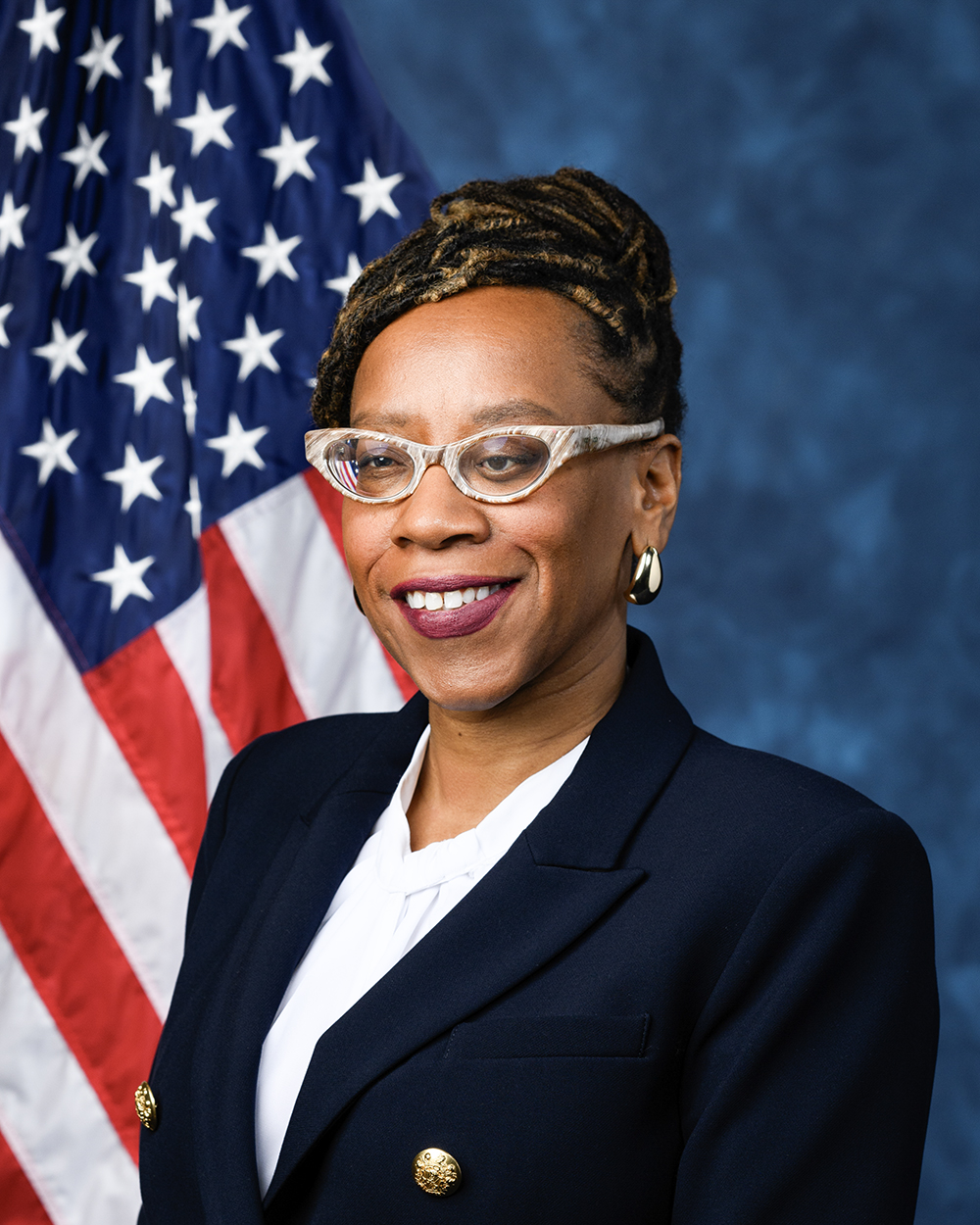
Photo of Lateefah Simon
D United States House · District 12 · California On the 2026 ballot

Rep. Lateefah Simon

Compare
Total votes
650
all sessions
Attendance
98%
12 missed
Near the chamber average
With party
96%
of cast votes
Near the chamber average
Bipartisan score
2%
crosses aisle rarely
Near the chamber average
Sponsored
661
bills & resolutions
Higher than 93% of chamber peers
Committees
7
assignments
661 bills and resolutions

Sponsored bills

Total
661
Primary
11
Co-sponsor
650
This page
661
matching current filters
Co-sponsor HRES 1222
In committee · Utah House · Co-sponsor
Recognizing the designation of the week of April 24 through April 30 as the annual "National Reentry Week".

Maddy summaryThis resolution officially designates the week of April 24 through April 30 as the annual "National Reentry Week" to raise awareness about the challenges formerly incarcerated individuals face when returning to society. The bill highlights the need for better support systems, such as access to housing, education, job training, and mental health services, to help reduce recidivism rates. It encourages the Department of Justice and the Bureau of Prisons to coordinate reentry efforts and engage in related events during this designated week. While the measure does not change laws or allocate funding, it serves to focus national attention on policies that promote successful reintegration and public safety.

In committee Apr 28, 2026 1 co-sponsor
Co-sponsor HR 8563
In committee · Utah House · Co-sponsor
Investing in the American Dream Act

Maddy summaryThe Investing in the American Dream Act expands eligibility for Small Business Administration loans to include small businesses owned by certain non-citizens. Specifically, it allows businesses to qualify if they are at least 51 percent owned and controlled by individuals who are lawfully present in the United States and authorized to work, such as refugees, asylees, permanent residents, and specific nonimmigrant visa holders. The bill also permits businesses owned by individuals living outside the United States to apply for these loans. This change aims to broaden access to federal financial support for small enterprises by removing previous restrictions based on the citizenship or permanent residency status of the business owners.

In committee Apr 28, 2026 1 co-sponsor
Co-sponsor HR 8555
In committee · Utah House · Co-sponsor
Living Wage For All Act

Maddy summaryThe Living Wage For All Act raises the federal minimum wage in a tiered schedule, requiring large corporations to reach $25 per hour by 2031 while giving smaller businesses a longer timeline to catch up. Once the standard is met, the law automatically indexes the minimum wage to two-thirds of the national median hourly wage to ensure it keeps pace with economic changes. The bill also eliminates the lower minimum wage for tipped employees and youth workers, phasing them out until they match the general standard, and extends similar protections to incarcerated workers. Additionally, the legislation restricts the issuance of special minimum wage certificates for workers with disabilities and mandates that employers provide technical assistance during the transition period.

In committee Apr 28, 2026 1 co-sponsor
Co-sponsor HR 8549
In committee · Utah House · Co-sponsor
Second Look Act of 2026

Maddy summaryThe Second Look Act of 2026 allows federal courts to reduce prison sentences for individuals who have served at least 10 years in custody for offenses carrying a term of more than 10 years. To qualify, a defendant must demonstrate that they are no longer a danger to the community and are ready to reenter society, with special consideration given to those aged 50 or older who face a legal presumption in their favor for release. The process requires a formal application, a hearing where evidence regarding rehabilitation and age-related decline in criminality is presented, and the appointment of a lawyer for those who cannot afford one. If approved, the court may shorten the prison term while maintaining the original period of supervised release, and the United States Sentencing Commission will publish annual reports on the number of people granted or denied these reductions.

In committee Apr 28, 2026 1 co-sponsor
Co-sponsor HR 8548
In committee · Utah House · Co-sponsor
One Stop Shop Community Reentry Program Act of 2026

Maddy summaryThis bill authorizes the Attorney General to create a grant program that funds community-based organizations to establish "One Stop Shop" centers for formerly incarcerated individuals. These centers would provide a single location for comprehensive services, including job training, housing assistance, legal aid, and mental health support, while requiring applicants to develop needs assessments and plans for transportation and stakeholder collaboration. Additionally, the legislation authorizes funding for toll-free, 24/7 hotlines that connect people in need with local reentry resources and offer guidance on navigating the system. The program includes strict requirements for data collection and reporting to Congress to track outcomes such as recidivism rates and employment success, with a preference for hiring formerly incarcerated individuals to run these initiatives.

In committee Apr 28, 2026 1 co-sponsor
Co-sponsor HR 8547
In committee · Utah House · Co-sponsor
'Directly Impacted Child Rehab and Safety Act

Maddy summaryThis bill, known as the Directly Impacted Child Rehab and Safety Act, modifies federal laws to adjust how children are processed within the juvenile justice system. It raises the minimum age for federal juvenile delinquency proceedings from 12 to 13 and increases the age threshold for transferring older juveniles to adult criminal court from 15 to 16, with specific exceptions for serious violent crimes. The legislation also requires courts to consider factors such as a child's exposure to trauma and their role in an offense before deciding on transfers or sentencing. Additionally, the bill mandates the collection of detailed statistics on children in federal custody and authorizes grants to help state agencies better coordinate between child welfare and juvenile justice systems to support vulnerable youth.

In committee Apr 28, 2026 1 co-sponsor
Co-sponsor HR 8541
In committee · Utah House · Co-sponsor
Long-Term Care Workforce Support Act

Maddy summaryThe Long-Term Care Workforce Support Act aims to address the severe shortage and low wages of direct care professionals who support older adults and people with disabilities by increasing Medicaid funding, expanding training grants, and establishing new federal labor protections. To improve compensation and retention, the bill allows states to receive additional Medicaid funds if they implement specific workforce improvements, such as raising wages, providing paid leave, and ensuring stable scheduling, while also creating a national strategy to calculate fair labor costs. The legislation introduces comprehensive worker rights, including a requirement for written employment agreements, fair scheduling with advance notice, paid sick time, and a federal standard to prevent workplace violence. Furthermore, the bill establishes multiple grant programs to fund training, career advancement, and diversity initiatives, alongside a new commission to develop national training standards and a technical assistance center to address inequities within the workforce.

In committee Apr 28, 2026 1 co-sponsor
Co-sponsor HR 8540
In committee · Utah House · Co-sponsor
HCBS Access Act

Maddy summaryThe HCBS Access Act requires Medicaid to cover a broad range of home and community-based services for people with disabilities and older adults, aiming to eliminate waiting lists and ensure these individuals can live in their communities rather than institutions. To achieve this, the bill mandates that states create detailed implementation plans, establishes a new advisory panel to recommend additional services, and sets a 100 percent federal funding match for these services to encourage state participation. The legislation also strengthens protections for family caregivers, requires states to remove financial liens on the estates of deceased beneficiaries, and creates a national technical assistance center to support the recruitment and training of direct care workers. Additionally, the bill directs the government to establish a separate occupational category for direct support professionals to better track workforce shortages and improve data collection on this critical labor force.

In committee Apr 28, 2026 1 co-sponsor
Co-sponsor HR 8517
In committee · Utah House · Co-sponsor
Clean Energy Workforce Act

Maddy summaryThe Clean Energy Workforce Act authorizes $100 million to help schools and colleges train students for jobs in clean energy, renewable energy, and climate change fields. The funding supports two main programs: grants for partnerships between schools and local businesses to create or expand educational courses that prepare students for these industries, and grants for educational facilities to become more energy-efficient and use renewable power. To ensure quality, the bill requires a review committee of educators and industry experts to evaluate grant applications, with priority given to programs that reach underserved students and share their methods with other schools.

In committee Apr 27, 2026 1 co-sponsor
Co-sponsor HR 8494
In committee · Utah House · Co-sponsor
To prohibit the Department of Homeland Security from entering into, modifying, extending, or renewing, any contract or intergovernmental service agreement to establish or operate any new immigration detention model, including the use of warehouses, modular facilities, soft-sided structures, tent systems, and processing centers.

Maddy summaryThis bill prohibits the Department of Homeland Security from using federal funds to create or expand new immigration detention facilities, including warehouses, tents, and modular structures. It directly affects immigration enforcement agencies by banning the construction, renovation, or operation of non-traditional detention centers and preventing the transfer of funds to such projects. The legislation requires any money previously allocated for these facilities to be redirected toward affordable healthcare and housing services instead. Effective immediately upon enactment, the ban applies to all existing federal funds and prevents the use of current budgets for establishing or operating alternative detention models.

In committee Apr 24, 2026 1 co-sponsor
Showing 121 to 130 of 661 bills
Previous 1 12 13 14 67 Next