

This bill prohibits the use of federal funds to seek U.S. membership in the World Health Organization (WHO), or to make contributions to the WHO, until the President makes certain certifications to Congress. Specifically, the prohibition shall apply until the President certifies that the WHO (1) has adopted reforms to ensure that humanitarian assistance is not politicized; (2) is not under the control of the Chinese Communist Party (CCP) and is not involved in a cover-up of the CCP's response to the COVID-19 (i.e., coronavirus disease 2019) pandemic; (3) has granted observer status to Taiwan; (4) does not divert humanitarian or medical supplies to Iran, North Korea, or Syria; and (5) has put in place mechanisms to increase transparency and eliminate waste, fraud, and abuse.
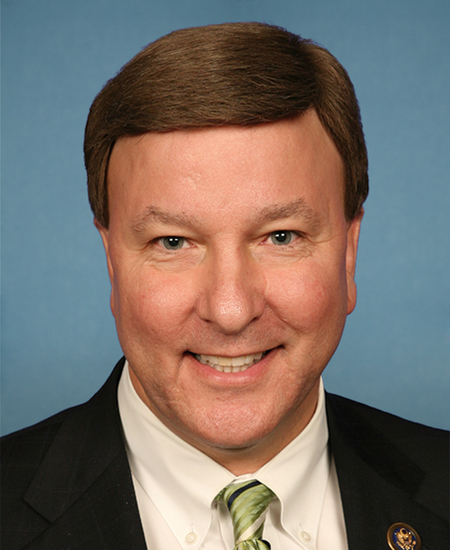
Rep. Mike Rogers
Sponsored bills
Access Technology Affordability Act of 2021 This bill allows a refundable tax credit equal to the amounts paid for qualified access technology for use by a blind individual who is the taxpayer, the taxpayer's spouse, or a dependent of the taxpayer. Qualified access technology is hardware, software, or other information technology with the primary function of converting or adapting information that is visually represented into forms or formats useable by blind individuals. The credit is limited to (1) costs that are not compensated by insurance or otherwise, and (2) an aggregate amount of $2,000 per blind individual in any period of three consecutive taxable years. The credit must be adjusted for inflation after 2021 and terminates after 2026.
Protecting American Resources, Innovation, and Sovereignty Act or the PARIS Act This bill requires the President to submit a report to Congress prior to taking certain actions under the Paris Agreement, and it gives Congress the authority to block such actions. The bill also prohibits any legal cause of action in U.S. courts pursuant to the Paris Agreement. Prior to establishing or revising a climate change-related action (referred to under the agreement as a nationally determined contribution or NDC), the President must submit a detailed report to Congress that includes information such as how the NDC will impact the level of total global emissions. If any action proposed in this report results in increased costs of energy or manufacturing, the report must include specific policy measures to prevent (1) job displacement, (2) reduced global competitiveness of U.S. goods, and (3) leaked emissions that may occur as a result of the proposed action. Congress may block the NDC by enacting a joint resolution of disapproval within 60 days of the President submitting this report.
Save Democracy Act This bill addresses issues involving voter registration, casting of ballots, and tabulation of ballots in federal elections. Specifically, regarding voter registration for federal elections, the bill prohibits the use of automatic voter registration systems, requires individuals to provide documentary proof of U.S. citizenship to register to vote, requires individuals to provide their full Social Security number on their voter registration application, and requires courts to notify state election officials when an individual is recused from jury duty because the individual is not a U.S. citizen. Next, regarding the casting of ballots in federal elections, the bill requires individuals to provide proof of identification for absentee and in-person voting, prohibits states from mailing unrequested absentee ballots, prohibits the use of a drop box for collecting voted absentee ballots unless it is located inside of a building that serves as an office for the election official, restricts the delivery of ballots by third parties (i.e., prohibits ballot harvesting), requires that absentee ballots be received before the polls close on election day, and requires states to use Social Security numbers to verify the identification of each individual who casts a ballot. Finally, regarding the tabulation of ballots in federal elections, the bill requires states to permit poll watching by at least two campaign representatives per campaign, requires continuous counting of ballots after the closure of polling places on election day, and requires an audit of voting systems.
This resolution expresses the sense of the House of Representatives that Congress should ensure that the U.S. Postal Service is not privatized and remains an independent establishment of the federal government.