

Maddy summaryThe Protecting America's Herds Act creates a grant program for cooperative extension services to help prepare for and respond to New World screwworm outbreaks in livestock. Funds awarded through this competitive process can be used to train staff, support animal inspections, educate producers, and provide direct technical assistance on prevention and treatment. The Department of Agriculture must prioritize grants for states and Tribal communities at higher risk of the pest spreading and coordinate closely with veterinary and agricultural experts. This legislation aims to strengthen the nation's ability to detect and manage this specific animal health threat through improved readiness and education.
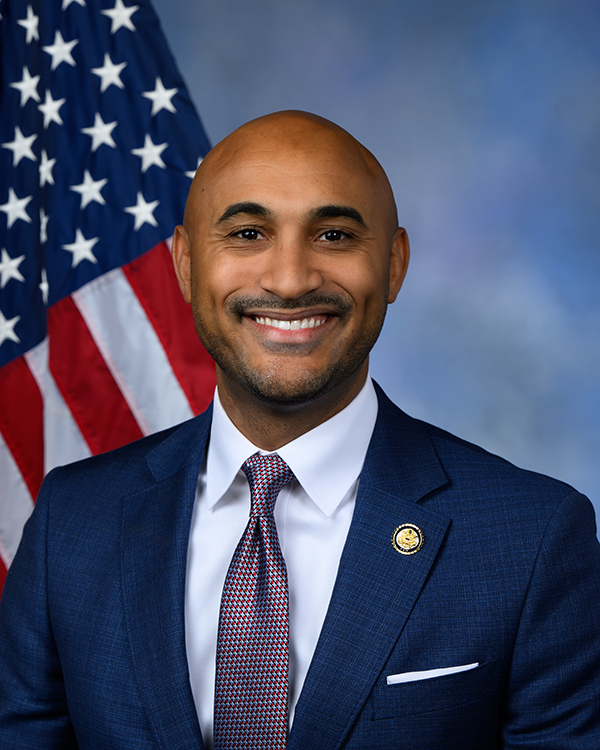
Rep. Shomari Figures
Sponsored bills
Maddy summaryThis resolution expresses support for designating June 2026 as Black Music Month to honor the historical and cultural significance of Black contributions to American music. It acknowledges the wide-ranging influence of Black music across various genres and its central role in the nation's history, including the civil rights movement. The bill calls on the public to celebrate this month by promoting diversity, performing Black music, and spreading awareness of its legacy.
Maddy summaryThe All in For Attendance Act aims to reduce chronic student absenteeism by requiring schools to implement specific support strategies for students missing 10 percent or more of school days. It mandates the creation of data systems to track attendance reasons, establishes advisory programs to engage families, and requires schools to partner with community organizations to remove barriers like transportation or health issues. The legislation also prohibits schools from using suspensions, fines, or academic penalties as punishment for student absences. Additionally, it directs funds toward evidence-based interventions such as social and emotional learning programs, restorative justice, and high-impact tutoring to improve student engagement and attendance.
Maddy summaryThis bill proposes a new amendment to the U.S. Constitution to guarantee the right to vote for all citizens of legal voting age in their place of residence. It requires states to allow voters to register and cast ballots on election day and mandates that Congress set national standards for how elections are administered. The amendment permits only narrowly tailored rules to protect election integrity and gives Congress the authority to pass laws enforcing these new voting rights.
Maddy summaryThe Keep Public Funds in Public Schools Act of 2026 eliminates a federal tax credit that allowed parents to deduct contributions to scholarship granting organizations from their income. By removing these specific tax breaks, the bill prevents the use of public tax dollars to support private school vouchers and scholarship programs. This change directly affects families who currently rely on these tax incentives to fund education outside the public school system. The provisions take effect for taxable years beginning after December 31, 2026.
Maddy summaryThis bill directs the Assistant Secretary of Commerce for Communications and Information to conduct a comprehensive study on various broadband internet technologies, including fiber-optic cables, satellite systems, and mobile wireless networks. The study will examine specific factors such as workforce needs, deployment costs, internet speed and latency, equipment lifespan, and monthly subscription prices for consumers. The findings will be compiled into a report submitted to Congress within one year of the bill's enactment to inform future policy decisions regarding broadband infrastructure.
Maddy summaryThis bill requires states and tribal organizations that run school lunch programs to also participate in the Summer EBT program, which provides food assistance to children during summer breaks. For the summers of 2024 through 2026, participation in the summer program remains voluntary for these entities. Starting in summer 2027, joining the summer program becomes mandatory for any state or tribal organization that already participates in the school lunch program. The legislation also updates administrative rules to ensure states submit management plans for these programs by specific deadlines each year.
Maddy summaryThis resolution expresses support for designating the week of May 31 through June 6, 2026, as "Our Roads, Our Safety Week." It directly affects all road users, including drivers of cars, trucks, buses, bicycles, and pedestrians, by highlighting shared responsibilities for road safety. The bill recognizes the Federal Motor Carrier Safety Administration's campaign aimed at reducing crashes involving large commercial vehicles through increased public awareness. It encourages government agencies to continue their outreach efforts and urges the public to learn specific safety rules for sharing the road with large trucks and buses.
Maddy summaryThis bill establishes a five-year demonstration program to fund projects that improve mentorship practices for faculty, graduate students, and postdoctoral researchers in science, technology, engineering, and mathematics fields. It allows the National Science Foundation to award grants to universities and nonprofit organizations for initiatives focused on building mentoring skills, training cultural competencies, and researching better mentorship methods, with special priority given to minority-serving and rural institutions. Additionally, the legislation updates reporting requirements to include institutional processes for addressing harassment, discrimination, and professional misconduct. The program is authorized to receive up to $5 million annually from fiscal years 2027 through 2031, with a requirement to report on its effectiveness after five years.
Maddy summaryThis bill, known as the Critical Access Hospital RIP Act of 2026, aims to protect rural hospitals from losing their special status due to new road construction. It directly affects facilities designated as critical access hospitals that might otherwise fail to meet population requirements because a nearby highway or bridge was recently built or improved. The law mandates that if a facility qualifies for designation but fails the population test solely because of a completed roadway project, it will still be considered to meet the requirement. By ignoring the impact of these specific transportation upgrades, the legislation ensures these hospitals can continue operating without being forced to close due to infrastructure changes.