

Protecting Access to Lifesaving Screenings Act of 2021 or the PALS Act This bill makes a series of changes relating to health insurance coverage of screening mammography. Specifically, the bill requires that any provision of law referring to current recommendations of the U.S. Preventive Services Task Force (USPSTF) with respect to breast cancer screening mammography be administered as if (1) the provision referred to USPSTF recommendations last issued before 2009; and (2) those recommendations applied to any screening mammography modality, including any digital modality of such a procedure. This requirement shall also apply to the Veterans Health Administration's policy on mammography screening for veterans. In addition, the bill preserves Medicare coverage for screening mammography, without a requirement for coinsurance, and expands the definition of screening mammography to include any digital modality of such a procedure. Further, the Centers for Medicare & Medicaid Services may not decrease the frequency with which screening mammography may be paid by Medicare for a woman over 39 years of age. In 2009, the USPSTF updated its guidelines to recommend against routine screening mammography for women between 40 to 49 years of age and to recommend biennial, instead of annual, screening mammography for most women between 50 to 74 years of age. In 2015, through the appropriations process, a three-year moratorium was placed on implementing the guidelines; the moratorium was subsequently renewed until January 1, 2023.
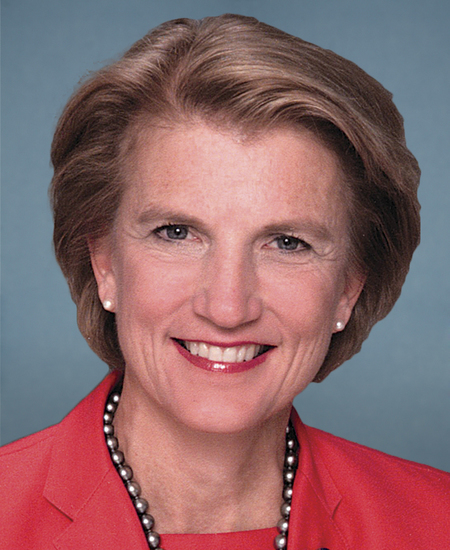
Sen. Shelley Moore Capito
Sponsored bills
Fracturing Regulations are Effective in State Hands Act This bill gives states the sole authority to promulgate or enforce any regulation, guidance, or permit requirement regarding hydraulic fracturing on or under any land within their boundaries. Hydraulic fracturing or fracking is a process to extract underground resources such as oil or gas from a geologic formation by injecting water, a propping agent (e.g., sand), and chemical additives into a well under enough pressure to fracture the geological formation. Hydraulic fracturing on federal land must comply with the law of the state in which the land is located.
Semiquincentennial Commemorative Coin Act This bill directs the Department of the Treasury to mint and issue $25.00 gold coins, $2.50 silver coins, 25 cent clad coins, and proof silver $2.50 coins in commemoration of the 250th anniversary of the establishment of the United States. The designs of the coins shall be emblematic of the semiquincentennial anniversary of the establishment of the United States of America and celebrate 250 years of our nation. On each coin there shall be a designation of the value of the coin; an inscription of the years 1776-2026; and inscriptions of the words Liberty , In God We Trust , United States of America , and E Pluribus Unum . Treasury may issue coins under this bill only during the period beginning on January 1, 2026, and ending on December 31, 2026. All sales of coins issued shall include a surcharge as prescribed by this bill. All surcharges received by Treasury from the sale of such coins shall be paid to the America 250 Foundation to fund the restoration, rehabilitation, and interpretation of units of the U.S. National Park System and its related areas, as a legacy of the semiquincentennial commemoration.
Federal Land Freedom Act of 2021 This bill authorizes a state with an established oil and gas leasing program to take responsibility from the federal government for leasing and regulating the exploration and development of oil, gas, and other forms of energy on certain federal land in the state. In addition, the bill exempts state actions to lease, permit, or regulate oil and gas exploration and development from certain requirements under the Administrative Procedure Act, the National Historic Preservation Act, the Endangered Species Act of 1973, and the National Environmental Policy Act of 1969.
This resolution recognizes and expresses support for the efforts of democracy and human rights activists in Cuba.
Stop the Importation and Manufacturing of Synthetic Analogues Act of 2021 or the SIMSA Act of 2021 This bill establishes a process and requirements for regulating substances that have a similar chemical structure and actual or predicted effect as a controlled substance that is currently subject to such regulation because of its potential for abuse or dependence.
This resolution designates June 2021 as National Post-Traumatic Stress Awareness Month and June 27, 2021, as National Post-Traumatic Stress Awareness Day. The resolution supports (1) the education of members of the Armed Forces, veterans, their families, and the public about post-traumatic stress; and (2) efforts by the Department of Veterans Affairs and the Department of Defense to foster cultural change around the issue of post-traumatic stress. The resolution also encourages the leadership of the Armed Forces to support treatment of members of the Armed Forces who suffer from post-traumatic stress.
Volunteer First Responder Housing Act This bill expands eligibility to qualified volunteer first responders for assistance under (1) the Department of Agriculture Single Family Housing Guaranteed Loan Program, and (2) certain Department of Housing and Urban Development single-family property disposition programs.
This resolution designates May 18, 2021, as National CASA/GAL Volunteers Day to commend the work of court-appointed special advocate (CASA) and guardian ad litem (GAL) volunteers.
Advancing FASD Research, Services, and Prevention Act or the FASD Respect Act This bill expands and establishes programs for fetal alcohol spectrum disorders (FASD). Specifically, it directs the Department of Health and Human Services, the National Institutes of Health, the National Center on Birth Defects and Developmental Disabilities, and the Health Resources and Services Administration to carry out and coordinate research, surveillance, and related activities to diagnose, prevent, and treat FASD. Furthermore, the bill establishes various grant programs to support FASD coalitions and develop systems of care; provide services for individuals affected by FASD and other conditions related to prenatal substance exposure; identify and implement best practices for educating children with FASD; and establish centers for excellence to build relevant capacity for preventing, treating, and responding to the needs of individuals with FASD. The bill also directs the Department of Education and the Department of Justice to develop and disseminate trainings and best practices related to FASD in schools and correctional facilities, respectively.