

Maddy summaryThis bill prohibits Big Cypress National Preserve from being designated as wilderness or included in the National Wilderness Preservation System. It directly affects the preserve by preventing its potential classification under federal wilderness protection laws. The key mechanism is a simple legal prohibition, ensuring the area cannot be added to the wilderness system through future designations. The bill does not create new programs or impact specific groups, only restricting a potential administrative change.
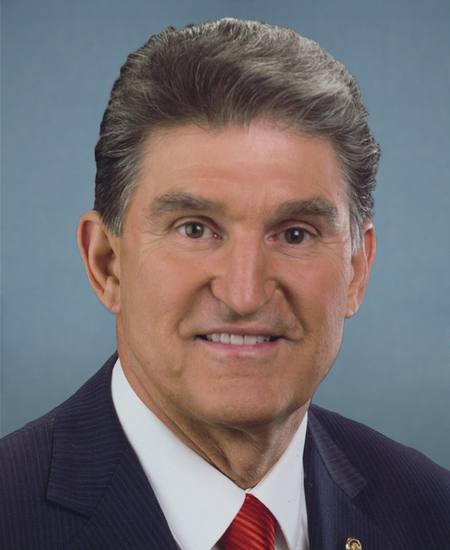
Sen. Joe Manchin, III
Sponsored bills
Maddy summaryThis bill imposes sanctions on foreign entities that knowingly facilitate Iranian petroleum trade. It targets foreign port owners, vessel operators, refineries, and related individuals (including family members or entities owned by them) involved in transactions with Iranian oil, such as docking vessels carrying Iranian crude or conducting sea-to-sea transfers of petroleum products. Sanctions include banning sanctioned vessels from U.S. ports for up to two years, blocking U.S. assets of targeted entities, and denying visas to involved individuals. The bill also requires a detailed report on Iranian petroleum exports within 120 days, analyzing export volumes, revenue, and key participants.
Maddy summarySRES 673 is a commemorative Senate resolution honoring the late David Hampton Pryor, who served as a U.S. Senator for Arkansas from 1978 to 1997. The resolution expresses the Senate’s "profound sorrow" at his death and directs the Secretary of the Senate to share the resolution with the House and deliver a copy to his family. It does not create new laws or policies - it is purely ceremonial, recognizing Pryor’s career as a legislator, governor, and public servant. The resolution concludes with the Senate adjourning as a mark of respect for his legacy.
Maddy summaryThis resolution (SRES 668) is a ceremonial Senate measure honoring the late Senator Daniel Robert "Bob" Graham of Florida, who died on November 9, 2023. It formally expresses the Senate's "profound sorrow" over his death and directs the Secretary of the Senate to share the resolution with the House of Representatives and deliver a copy to his family. The resolution commemorates Graham's career as a Florida senator (1987-2005), governor (1979-1987), and his work on the 9/11 intelligence inquiry, but does not create any new laws or affect constituents. As a commemorative resolution, it serves solely to memorialize his service.
Maddy summaryThis bill exempts specific less-than-lethal projectile devices (like certain beanbag rounds or rubber bullets) from federal firearm restrictions, taxes, and the National Firearms Act. It defines these devices as those firing at under 500 feet per second and designed not to cause death or serious injury. The exemption applies to manufacturers, importers, and law enforcement agencies purchasing or using these devices, removing tax burdens and regulatory hurdles. The law directly affects law enforcement agencies that use such tools and the companies that produce them. It makes these devices legally distinct from traditional firearms under federal law.
Maddy summaryThis bill creates a new federal criminal offense for assaults on law enforcement officers that cause serious injury or involve specific circumstances like crossing state lines, using interstate commerce, or employing firearms. It increases penalties to up to 10 years in prison for assaults causing serious injury, with life imprisonment if death occurs or kidnapping/killing is involved. The bill requires the Attorney General to certify federal prosecution is necessary before proceeding, unless states lack jurisdiction or have requested federal involvement. It directly affects law enforcement officers (including federal, state, and local) by establishing new federal penalties for certain assaults against them.
Maddy summaryThis bill requires federal agencies to publish an advance notice 90 days before proposing major regulations, giving the public earlier opportunity to comment. A "major rule" is defined as one likely to impose $100 million or more in annual economic impact, significantly increase costs for consumers or industries, or affect competition, health, safety, or the environment. The advance notice must explain the problem the rule addresses, outline regulatory alternatives considered, and cite legal authority, followed by a 30-day public comment period. Exceptions apply for routine rules, when compliance would be impractical, or if the Office of Information and Regulatory Affairs deems it unnecessary.
Maddy summaryThe SMART Act of 2024 requires federal agencies to plan for and conduct post-implementation reviews of major regulations. It defines "major rules" as those with significant economic impact ($100 million+ annually), major cost increases, or substantial effects on health, safety, or competition. Agencies must create assessment frameworks before finalizing such rules and conduct reviews within 10 years to measure actual effects against predicted outcomes, including public input and cost-benefit analysis. These reviews must be published online, and agencies must justify any delays or exemptions. The law directly affects federal agencies issuing major regulations, adding a structured review process without altering the rules themselves.
Maddy summaryThis joint resolution seeks congressional disapproval of a specific Environmental Protection Agency (EPA) rule setting greenhouse gas emissions standards for heavy-duty vehicles (Phase 3). If passed, it would nullify the EPA rule (published April 22, 2024) under the Congressional Review Act, preventing it from taking effect. The rule directly affects manufacturers of trucks and buses by establishing new requirements for reducing emissions. The resolution does not create new standards but aims to block the existing EPA rule through a formal disapproval process.
Maddy summaryThis joint resolution seeks to block an Environmental Protection Agency (EPA) rule that would set new emissions standards for light- and medium-duty vehicles sold in model years 2027 and later. It directly affects automakers, as the rule would require them to meet stricter pollution limits for these vehicles. The resolution uses a congressional disapproval process under federal law to prevent the EPA rule from taking effect. If passed, the rule would be invalidated, meaning automakers would not need to comply with the 2027+ emissions standards outlined in the EPA's April 2024 proposal.