

Maddy summarySRES 565 is a ceremonial Senate resolution honoring the late Representative Don Young (R-AK), who served 49 years in the U.S. House of Representatives - the longest tenure of any Alaska representative and the 45th Dean of the House. The resolution commemorates his life, service, and legacy, including his work on landmark legislation like the Trans-Alaska Pipeline authorization and the Alaska Native Claims Settlement Act. It contains no policy changes or new laws; instead, it directs the Senate to mourn his passing, honor his bipartisan service, and transmit a copy to his family. This is a purely symbolic resolution with no direct impact on constituents or legislation.
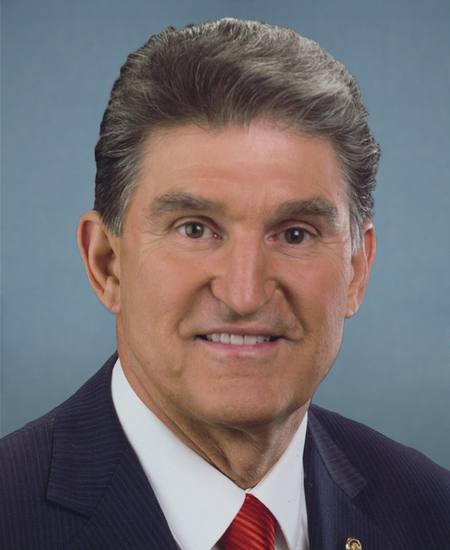
Sen. Joe Manchin, III
Sponsored bills
Support Kids Not Red Tape Act of 2022 This bill extends and modifies the authority of the Department of Agriculture (USDA) to waive certain requirements related to the National School Lunch Program, the School Breakfast Program, the Child and Adult Care Food Program, and the Summer Food Service Program. Current law authorizes USDA to waive certain requirements, such as those related to nutritional content and congregate feeding, for the purpose of dealing with the COVID-19 pandemic. Under this bill, USDA shall have authority through FY2023 to grant such a waiver, with no waiver having effect past FY2023. Currently, USDA's authority to grant a waiver expires on June 30, 2022, with no waiver having effect past the 2021-2022 school year. If a state elects to receive a waiver that modifies the operation of a school breakfast or lunch program for the 2022-2023 school year, the state must provide a transition plan to USDA. USDA must provide technical assistance to help school food authorities and states meet nutritional standards and resume regular meal program operations for the 2023-2024 school year. While a waiver is in effect during the 2022-2023 school year, the state subject to the waiver must provide technical assistance in lieu of fiscal action for meal pattern violations due to supply chain disruptions. The bill also appropriates funds as necessary to carry out this bill's activities.
This bill extends through FY2021 the inapplicability of the requirement for counties to elect to receive certain payments under the Secure Rural Schools and Community Self-Determination Act of 2000. That act provides compensation to counties for the presence of untaxable federal land within their borders.
Ban Russian Energy Imports Act This bill declares that a national emergency exists with respect to the aggression of Russia against Ukraine. During this emergency, the President must prohibit the importation of crude oil, petroleum, petroleum products, liquefied natural gas, and coal in which Russia or a Russian national has any interest. The bill exempts products that are already loaded or in transit at the time of this bill's enactment.
This resolution condemns violence and threats of violence against historically Black colleges and universities (HBCUs) and reaffirms the federal government's commitment to combating violence against HBCU students, faculty, and staff.
Department of Energy Science for the Future Act This bill supports specified research and development activities of the Department of Energy (DOE) Office of Science. The bill establishes various programs, including a basic energy sciences research and development program; a Carbon Oxide Sequestration Research and Geologic Computing Initiative; a biological systems science and climate and environmental science research and development program; earth and environmental systems science research; a coastal zone research initiative; a Quantum User Expansion for Science and Technology program or QUEST program; a research program on the fundamental constituents of matter and energy and the nature of space and time; research activities on the nature of the primary contents of the universe, including the nature of dark energy and dark matter; a research program to discover and understand various forms of nuclear matter; a high intensity laser research initiative; and an Emerging Biological Threat Preparedness Research Initiative. The DOE Office of Science shall continue to leverage U.S. participation in the Large Hadron Collider and prioritize expanding international partnerships and investments in the Long-Baseline Neutrino Facility and Deep Underground Neutrino Experiment. DOE shall broaden its recruitment pool to increase participation from underrepresented institutions of higher education, including historically Black colleges and universities. DOE may not carry out certain gain-of-function research.
Modernizing Access to our Public Land Act This bill directs the Department of the Interior, the Forest Service, and the U.S. Army Corps of Engineers to jointly develop and adopt interagency standards to ensure compatibility and interoperability among federal databases for the collection and dissemination of certain data. Specifically, these requirements shall apply to outdoor recreation data related to federal lands and used to depict locations at which recreation uses are available to the public. Each such department shall digitize and make publicly available on their websites, as applicable, geographic information system mapping data that specifies, with respect to the relevant department, all federal interests in private land, including easements, reservations, and rights-of-way to which the federal government does not have a fee title interest, and that may be used to provide recreational access to the federal land. Interior, the Forest Service, and the Corps of Engineers must digitize and publish geographic information system mapping data that includes status information as to whether roads and trails are open or closed, the dates on which roads and trails are seasonally opened and closed, the types of vehicles that are allowed on each segment of roads and trails, and the boundaries of areas where hunting or recreational shooting is regulated or closed.
Health Care for Burn Pit Veterans Act This bill updates policies and procedures related to Department of Veterans Affairs (VA) health care and benefits for veterans who have been exposed to toxic substances. Specifically, the bill extends the eligibility period for VA hospital care, medical services, and nursing home care for combat veterans who served after September 11, 2001, and were exposed to toxic substances, radiation, or other conditions, including those who did not enroll to receive VA care during the eligibility period. The VA must incorporate into its existing health care screening a screening to help determine potential exposures to toxic substances during military service. Among other requirements, the VA must also provide annual training to health care and benefits personnel with respect to veterans who were exposed to toxic substances; analyze total and respiratory disease mortality in veterans who served in specified locations on specified dates; conduct an epidemiological study on the health trends of veterans who served in the Armed Forces after September 11, 2001; conduct a study to determine trends in the rates of the incidence of cancer in veterans; publish a list of VA resources for veterans who were exposed to toxic substances, families and caregivers of such veterans, and survivors of such veterans who are receiving death benefits; and report on the data quality of the Individual Longitudinal Exposure Record and its usefulness in supporting veterans in receiving VA health care and benefits.
Harriet Tubman Bicentennial Commemorative Coin Act This bill directs the Department of the Treasury to mint and issue 50,000 $5 gold coins, 400,000 $1 silver coins, and 750,000 half-dollar clad coins emblematic of the legacy of Harriet Tubman as an abolitionist. The Secretary may issue coins under this bill only during the period of January 1, 2024, through December 31, 2024. All surcharges received by Treasury from the sale of such coins must be paid equally to the National Underground Railroad Freedom Center in Cincinnati, Ohio, and The Harriet Tubman Home, Inc. in Auburn, New York, for the purpose of accomplishing and advancing their missions.
Maddy summarySRES 520 is a ceremonial Senate resolution designating the week of February 21-25, 2022, as "Public Schools Week." It does not create new laws, allocate funding, or directly affect any individuals or institutions. The resolution uses symbolic language to highlight the importance of public education in the U.S. but contains no policy changes or actionable provisions. As a procedural resolution, it serves only to recognize public schools during that specific week.