

Maddy summaryS 3488 creates a formal program allowing NASA to temporarily exchange employees with private sector companies for up to two years (renewable to a total of three years). It directly affects NASA civil servants and private sector workers in fields like technology or cybersecurity, requiring NASA employees to return to government service for twice the assignment duration. Key provisions include strict written agreements covering confidentiality, prohibitions on using government information for private gain, and limits (capping participation at 2% of NASA's workforce). The bill mandates annual reporting to Congress on participation numbers, assignment details, and workforce impacts, with a GAO review after three years.
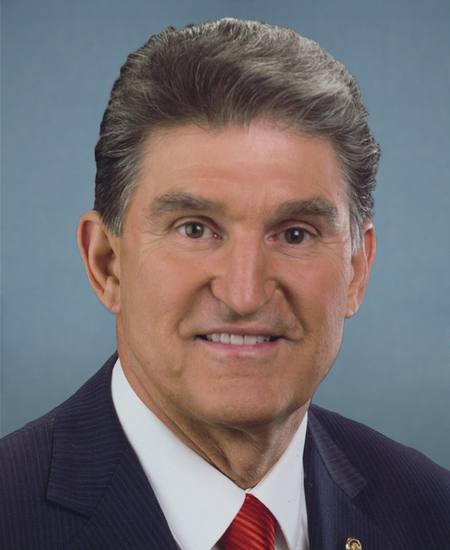
Sen. Joe Manchin, III
Sponsored bills
Maddy summaryThe Children and Teens' Online Privacy Protection Act (S 1418) strengthens privacy protections for children under 13 and teens aged 12-17 online. It requires websites, apps, and connected devices that target children or teens, or are reasonably likely to be used by them, to obtain verifiable consent from parents for children and from teens themselves for those aged 12-17 before collecting personal information. The bill prohibits targeted marketing to children and teens, establishes a "Digital Marketing Bill of Rights for Teens," and creates a Youth Privacy and Marketing Division within the Federal Trade Commission to enforce these rules. It also sets out specific Fair Information Practices Principles requiring transparency, data accuracy, security, and proper data disposal for children's and teens' personal information.
Maddy summaryThe Kids Online Safety Act requires social media platforms and other online services used by minors to implement safety features protecting children under 17. It mandates default privacy controls, limits addictive features like automatic media playback, restricts advertising of harmful products (tobacco, gambling, alcohol) to minors, and requires annual transparency reports about online risks. Platforms with over 10 million monthly U.S. users must provide parental tools, conduct independent audits, and make de-identified data available for research on online harms. The bill focuses on preventing mental health disorders, bullying, sexual exploitation, and addictive behaviors through platform design changes.
Maddy summaryThis is a ceremonial Senate resolution (SRES 492) honoring the late First Lady Rosalynn Carter. It expresses the Senate's condolences for her passing and recognizes her lifetime of humanitarian work, including her advocacy for mental health care, founding of caregiver support programs, and service with The Carter Center. The resolution does not create new laws or policies; it is purely a commemorative statement. It was introduced by a bipartisan group of senators and adopted by the Senate on December 7, 2023.
Maddy summaryThis bill provides retroactive pay, benefits, and seniority for senior military officers (O-7 and above) whose promotions were delayed due to a suspension of Senate confirmation hearings starting in February 2023. It specifically applies to officers confirmed to their ranks between December 5 and December 31, 2023. The Secretary of Defense must pay retroactive compensation starting 30 days after the appointment was placed on the Senate Executive Calendar, use that date for seniority calculations, and waive any negative impacts from the confirmation delay. This addresses a specific backlog of promotions affected by the Senate's temporary suspension of its advice-and-consent process.
Maddy summaryThe Senate passed SRES 484, a resolution condemning the terrorist organization Hamas for its October 7, 2023, attacks on Israel. It formally opposes Hamas, affirms Israel’s right to self-defense, and emphasizes that terrorism and violence should not be defended. The resolution also recognizes religious freedom and encourages peaceful assembly while rejecting the use of conflict to incite division. As a procedural resolution, it does not create new laws or policies but expresses the Senate’s position.
Maddy summaryThis bill prohibits the Department of Health and Human Services from implementing a proposed rule requiring minimum staffing levels in nursing homes, which opponents argue could accelerate closures, especially in rural areas. Instead, it creates a 17-member Advisory Panel on the Nursing Home Workforce to study staffing shortages, barriers to care access for seniors in rural and underserved areas, and regulatory impacts. The panel must submit an initial report within 60 days of its first meeting, analyzing workforce challenges and recommending solutions to strengthen staffing without imposing new mandates. The bill directly affects rural nursing homes and seniors who rely on these facilities, aiming to prevent closures by addressing systemic workforce issues through analysis rather than immediate regulatory changes.
Maddy summaryThis bill (S 2087) extends the authorization period for the Congressional Award Program, which recognizes young Americans for achievements in community service, personal growth, and physical fitness. It reauthorizes the program through October 1, 2028, instead of ending in 2023. The bill makes minor technical updates to medal specifications but does not change eligibility or program structure. The Congressional Award Program directly affects youth participants and the agencies managing the awards.
Maddy summaryThis Senate resolution designates November 2023 as "National Homeless Children and Youth Awareness Month" to highlight the issue of homelessness among children and youth. It cites statistics including 1.2 million homeless children identified in U.S. schools during the 2021-2022 school year and higher risks of health issues, school disruption, and suicide among homeless youth. The resolution encourages businesses, governments, schools, and organizations to raise awareness, share information about causes and solutions, and support efforts to prevent homelessness during that month. As a symbolic resolution, it does not create new laws or funding but aims to foster voluntary community action.
Maddy summaryThe Fiscal Stability Act of 2023 establishes a 16-member Fiscal Commission to develop recommendations for improving the federal government's long-term fiscal health. The commission, appointed by congressional leadership with balanced representation from both parties, must identify policies to achieve a sustainable public debt-to-GDP ratio of 100% by 2039 and ensure solvency of federal trust funds for at least 75 years. The commission must submit a report and implementing bill by May 1, 2025, which Congress would consider under expedited procedures requiring approval by a supermajority of voting members. This bill directly affects federal budget policy by creating a structured process for addressing fiscal challenges, with the commission terminating 30 days after submitting its final recommendations.