

Maddy summaryThe Union Members Right to Know Act requires labor unions to provide members with clear information about their rights, including summaries of religious accommodation options under the Civil Rights Act and the Beck decision (which protects against mandatory dues for non-bargaining activities). Unions must send this information via mail or email within 30 days of a new member joining or within one year of the law’s enactment for existing members, with annual updates, and maintain a website link to this content. The bill also prohibits using dues for non-bargaining activities without a member’s written authorization, which expires after one year and cannot be automatically renewed. This law directly affects unions and their members by increasing transparency about how dues are used and member rights.
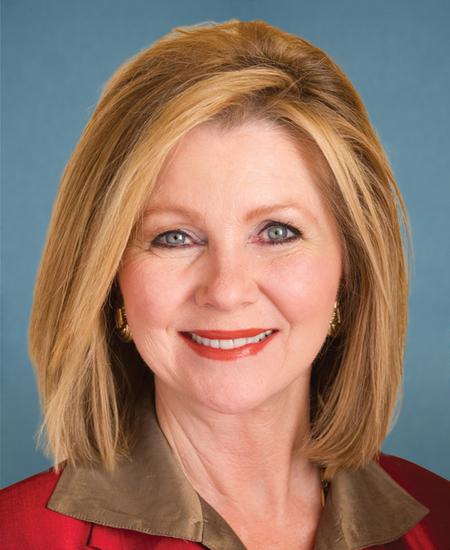
Sen. Marsha Blackburn
Sponsored bills
Maddy summaryThis bill allows federal prosecutors to directly charge juveniles aged 16 or older with specific violent crimes in federal court, bypassing the usual process requiring the Attorney General to file a transfer motion. It directly affects juveniles aged 16+ accused of five serious offenses: murder, aggravated assault, motor vehicle theft, armed robbery, or aggravated sexual assault involving a firearm. The key mechanism removes the mandatory transfer step for these cases, enabling immediate federal prosecution. The bill targets only the most severe crimes listed under federal law, not all juvenile offenses.
Maddy summaryS 3129, the Preventing Foreign Interference in American Elections Act, expands restrictions on foreign contributions to U.S. elections by banning foreign entities from funding specific voter engagement activities like voter registration, ballot collection, and get-out-the-vote efforts. It directly affects foreign individuals, organizations, and political committees that might fund such activities, while clarifying that state/local ballot initiatives and referendums are covered under election definitions. Key mechanisms include prohibiting "indirect contributions" (where funds are routed through intermediaries) and requiring certifications under penalty of perjury to confirm compliance with the ban. The bill also adds enforcement provisions to limit investigations to necessary facts and strengthens penalties for violating donor privacy rules for tax-exempt organizations. These changes aim to close loopholes that could allow foreign interference in election processes.
Maddy summaryThis bill requires the Secretary of Defense to submit regular reports confirming that military leadership boards at all Defense installations reflect current command structure. Specifically, it mandates an initial report by January 31, 2026, covering 2025 compliance, and subsequent reports within 120 days after a new President takes office or a new Secretary of Defense is confirmed. These reports must certify that all leadership boards have been updated to align with the current Commander-in-Chief and other leadership changes. The bill directly affects the Department of Defense and reports to the President and congressional defense committees.
Maddy summaryS 3109 (TRAFFIC Act of 2025) permanently disqualifies individuals convicted of human trafficking from obtaining or holding transportation-related licenses and certifications. It amends federal laws governing merchant mariners (46 U.S.C. § 7512), locomotive operators (49 U.S.C. § 20135), train conductors (49 U.S.C. § 20163), commercial drivers (49 U.S.C. § 31310), pilots (49 U.S.C. § 44703), and other transportation authorizations. The bill prohibits issuing these licenses to anyone convicted of offenses under federal human trafficking law (18 U.S.C. Chapter 77) or substantially similar state/local/Tribal laws. This applies directly to transportation workers seeking or holding credentials for operating vehicles, vessels, or aircraft.
Maddy summaryS 3110, the STOP Human Trafficking Act, requires the U.S. Department of Transportation to combat human trafficking in transportation systems by establishing centralized databases tracking anti-trafficking efforts by transportation organizations (like airports, transit agencies, and cruise lines) and developing standardized policies, training, and public awareness materials. Key provisions include updating trauma-informed training for transportation staff, creating multilingual prevention resources for vulnerable travelers, and launching a public awareness campaign focused on high-risk locations during major events. The bill also creates a grant program to fund anti-trafficking initiatives by eligible transportation stakeholders, prioritizing regions with higher trafficking prevalence. It directly affects transportation operators, airports, transit authorities, and related entities by mandating coordinated prevention strategies and resource sharing.
Maddy summaryS 3108, the AI-Related Job Impacts Clarity Act, requires covered entities - including publicly-traded companies, government agencies, and certain non-publicly-traded companies identified through future regulations - to report quarterly on AI-driven workforce changes in the U.S. (including territories). Specifically, entities must disclose layoffs due to AI automation, hires for AI-related roles, unfilled positions replaced by AI, and retraining efforts, along with relevant industry codes. The Secretary of Labor will compile this data into public quarterly reports published on the Bureau of Labor Statistics website and submitted to Congress. This law focuses solely on mandating transparency about AI's workforce effects, not on regulating AI use or outcomes. Non-publicly-traded companies will be included only if they meet size or impact thresholds set by future regulations.
Maddy summarySRES 482 is a ceremonial Senate resolution recognizing November 3-7, 2025, as "National Veterans Small Business Week." It does not create new laws or policies but formally acknowledges veteran-owned small businesses, which employ nearly 3.3 million people and generate over $952 billion in annual sales. The resolution expresses support for these businesses and appreciation for veterans' entrepreneurship, while highlighting the Senate Committee on Small Business and Entrepreneurship’s annual observance of this week. It has no direct impact on regulations, funding, or veteran business operations.
Maddy summaryThe SAFE KIDS Act voids surrogacy contracts between U.S. surrogates and foreign nationals from designated "entities of concern" (like sanctioned countries), with limited exceptions for married U.S. couples. It criminalizes surrogacy brokers who facilitate such contracts, imposing fines or up to one year in prison. If a contract is voided, custody decisions for the child are determined by state courts based on the child's best interests, not the invalid agreement. The law directly affects U.S. surrogates, foreign nationals seeking surrogacy, and surrogacy brokers, targeting exploitation and potential trafficking risks.
Maddy summaryThis bill ensures that critical firearm-related operations continue during government shutdowns by designating them as "excepted" under federal law. It specifically covers the FBI's background check system (NICS), ATF enforcement programs, Commerce Department firearm export licensing, and State Department defense trade controls. These functions would remain operational even if most government services halt, directly affecting firearm background checks and export licensing processes. The policy change prevents temporary disruptions to gun sales and international firearm transactions during shutdowns.