

Maddy summaryThis bill (SJRES 10) seeks to block a specific rule issued by the Department of Veterans Affairs (VA) regarding reproductive health services for veterans. It requests Congress disapprove the rule (published September 2022) under a process in federal law that allows Congress to halt agency regulations. If approved, the VA rule would be nullified and could not take effect, meaning the VA could not enforce its provisions on reproductive health services for veterans. The bill directly affects the implementation of this VA policy for veterans receiving care at VA facilities.
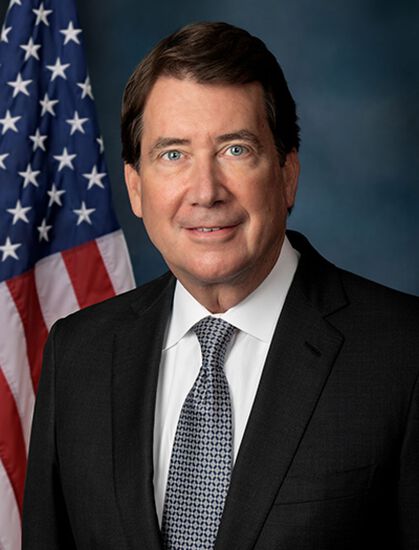
Sen. Bill Hagerty
Sponsored bills
Maddy summaryThis bill establishes a new Special Envoy to the Pacific Islands Forum (PIF) position at the State Department. The envoy will represent the U.S. as a dialogue partner with PIF and coordinate U.S. policy with like-minded democracies in the region. The bill requires the President to appoint the envoy (with Senate confirmation) and mandates a 180-day report detailing plans to recruit and retain diplomatic staff for Pacific Island posts. It directly affects U.S. diplomatic operations in the Pacific and aims to strengthen engagement with PIF member nations, including the Freely Associated States.
Maddy summaryThis bill amends key labor laws to strengthen worker protections and clarify union election processes. It requires employers to provide voter lists for union elections with only one employee-chosen contact detail (like email or phone), mandates secret ballot elections for union representation, and restricts union dues from funding non-representational activities without written employee consent for at least 35 days. The bill also clarifies joint employment standards, making it harder for companies to avoid responsibility for workers' pay and conditions, and adds tribal sovereignty protections to labor law definitions. These changes directly affect employers, unions, and employees in collective bargaining contexts.
Maddy summaryThis bill amends the Public Health Service Act to give the Secretary of Health and Human Services authority to temporarily restrict people and property entering the U.S. from specific foreign countries. It directly affects border crossings from nations identified as sources of significant fentanyl smuggling that poses a serious public health danger. The key provision allows the Secretary to prohibit or limit these entries for a set period, based on their determination that such restrictions are necessary to avert the risk of fentanyl introduction. The measure focuses on public health protection related to fentanyl trafficking, not broader immigration policy.
Maddy summaryThis bill prohibits federal agencies from banning lead ammunition or tackle for hunting and fishing on federal lands and waters managed by the Interior Department or Agriculture Department. It directly affects hunters and anglers using these public areas by preventing federal restrictions on lead products, except in limited cases. The exception allows restrictions only on specific federal sites where state wildlife data shows lead use is harming wildlife, and only if approved by the state's fish and wildlife agency. The bill requires federal agencies to explain in public notices how any exception meets these state approval and wildlife harm criteria.
Maddy summarySRES 140 is a symbolic Senate resolution commemorating 200 years of official U.S.-Chile relations, marking the anniversary of the U.S. establishing diplomatic ties with Chile on January 27, 1823. It does not create new policies or affect specific groups; instead, it formally recognizes historical milestones like the 2004 U.S.-Chile Free Trade Agreement and Chile's role as a democratic partner. The resolution reaffirms shared values including democracy, human rights, and cooperation on science, environmental issues, and economic ties. It serves as a ceremonial acknowledgment of the bilateral relationship, with no concrete policy changes or funding attached.
This resolution honors the memories of the victims of the attack at the Covenant School in Nashville, Tennessee, on March 27, 2023. The resolution offers condolences to the families and friends of the victims and expresses gratitude to the first responders.
Maddy summarySRES 120 is a ceremonial Senate resolution designating March 23, 2023, as "National Women in Agriculture Day." It recognizes the significant contributions of women in U.S. agriculture, citing that they represent over one-third of agricultural producers and generated $148 billion in sales in 2017. The resolution encourages citizens to acknowledge women in the field and supports their roles as producers, educators, mentors, and leaders. As a symbolic gesture, it does not create new laws or funding but aims to highlight their impact on the agricultural workforce and food systems.
Maddy summaryThis bill restricts federal funding for state and local governments that qualify as "sanctuary jurisdictions" under its definition. A sanctuary jurisdiction is defined as any state or local area that prohibits sharing immigration status information or refusing to comply with federal immigration detainers (with an exception for crime victims/witnesses). The bill blocks funding for Economic Development Administration grants and Community Development Block Grants if projects are located in such jurisdictions or if recipients become sanctuary jurisdictions during the grant period. Recipients must return funds if they become sanctuary jurisdictions, and the U.S. government will reallocate those funds to non-sanctuary areas.
Maddy summaryThe SAFE School Act establishes a federal grant program providing $900 million to states and school districts to improve K-12 school security. It funds three key activities: training veterans or former law enforcement officers as school safety officers (including firearm or de-escalation training), hiring such personnel, and installing security infrastructure like metal detectors, access controls, and emergency systems. The program is administered by the Attorney General’s Office of Justice Programs, with no federal restrictions on how funds are used for eligible security activities. The bill directly affects all public and private elementary and secondary schools in the 50 states, DC, and Puerto Rico.