

Maddy summaryThe Promoting Free and Fair Elections Act (S 1398) prohibits federal agencies from using government funds to partner with non-profits for voter registration or mobilization activities on agency property or websites. It delays implementation of certain voter registration initiatives under Executive Order 14019 until agencies submit reports to Congress about their plans, with an exception for activities already permitted under the National Voter Registration Act of 1993. The bill also requires agencies to submit detailed reports within 30 days of enactment about their voter registration activities and amends the Higher Education Act to prevent work-study programs from being used for voter registration or mobilization. These provisions directly affect federal agencies, non-profit organizations collaborating with them, and institutions participating in federal work-study programs.
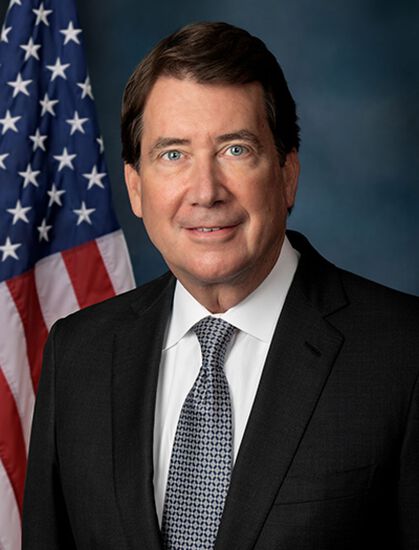
Sen. Bill Hagerty
Sponsored bills
Maddy summaryThis resolution (SRES 186) calls on North Korea to address the abduction of Japanese citizens, which began in the 1970s and saw only five returnees after 24 years despite North Korea's 2002 admission. It specifically urges North Korea to release any remaining abductees, return remains and provide details on deceased victims, make appropriate reparations, and issue a formal apology. The resolution, introduced by Senators Sullivan and Hirono, formally expresses the Senate's stance on this issue without creating new laws or imposing penalties.
Maddy summaryThis bill permanently extends existing U.S. sanctions against Iran by removing an expiration date from the Iran Sanctions Act of 1996. It directly affects how the U.S. government enforces sanctions targeting Iran’s weapons programs, ballistic missile development, and support for terrorist proxies. The key provision repeals the "sunset" clause that would have automatically ended these sanctions, making them permanent without needing future congressional action. The bill does not create new sanctions but ensures current penalties remain in place to address Iran’s destabilizing activities, as outlined in the bill's findings.
Maddy summaryThis bill requires the Consumer Financial Protection Bureau (CFPB) to publish detailed cost-benefit analyses with every proposed rule. It mandates that notices include specific information like why federal action is needed (instead of state or market solutions), assessments of costs for small businesses and other entities, and evaluations of whether the rule overlaps with existing regulations. The CFPB must also justify rules if benefits don’t outweigh costs or if burdens fall disproportionately on small businesses or consumers. This directly affects the CFPB’s rulemaking process and the businesses, consumers, and local governments subject to its regulations.
Maddy summaryS 1382, the Protecting Our Supreme Court Justices Act of 2023, increases penalties for obstructing justice near Supreme Court justices' residences or workplaces. It amends federal law to raise the maximum prison sentence for picketing or parading that obstructs justice from one year to five years. This change directly affects individuals who engage in disruptive protests near justices' homes or offices. The bill focuses solely on strengthening criminal penalties for obstruction, not on judicial decisions or court procedures.
This resolution recognizes the 70th anniversary of the signing of the Mutual Defense Treaty between the United States and South Korea. Affirming the importance of the U.S.-South Korean alliance as the linchpin to safeguarding peace, security, and prosperity on the Korean peninsula, the resolution welcomes President Yoon Suk Yeol to the United States. It also supports ongoing defense and security ties, calls for continued promotion of human rights, and encourages close cooperation between the United States, South Korea, and Japan.
Maddy summaryThis joint resolution (SJRES 25) seeks congressional disapproval of a specific Department of Labor rule regarding wage rates for H-2A agricultural workers. It targets the rule published in the Federal Register (88 Fed. Reg. 12760) that established a methodology for calculating "Adverse Effect Wage Rates" (AEWR) for temporary H-2A nonimmigrant workers in non-range occupations. If passed, the resolution would block this rule from taking effect, directly affecting agricultural employers who rely on H-2A visas and the workers themselves by preventing the implementation of the new wage calculation method. The resolution does not create new policy but aims to halt an existing rule through the congressional disapproval process under U.S. Code.
Maddy summaryThe Save Local Business Act (S 1261) clarifies when businesses can be held jointly liable for labor violations under federal law. It amends the National Labor Relations Act and Fair Labor Standards Act to define "joint employer" status strictly: an employer must directly and immediately control essential employment terms like hiring, pay, scheduling, and discipline for another employer’s workers. This directly affects businesses operating under multi-employer structures (e.g., franchises, staffing agencies) by limiting joint liability to cases where control is demonstrable and immediate. The bill does not change existing labor protections but sets clearer, more specific criteria for determining joint employer responsibility.
No EV Credits for Idle Allies Act This bill excludes critical materials for vehicle batteries that were extracted or processed in Germany or France from any determination of the eligible amount of the new clean vehicle tax credit unless the Department of State certifies that either country has, since February 24, 2022, directly provided a cumulative amount of aid to Ukraine that is not less than the direct commitment of aid provided by the United States. The State Department must annually review its certification of the amount of aid provided to Ukraine by Germany or France and require such countries to attain a certain level of defense spending for the duration of the war in Ukraine.
Capital Gains Inflation Relief Act of 2023 This bill allows the adjusted basis of certain assets (including any common stock in a C corporation, any digital asset, and tangible property used in a trade or business) to be indexed for inflation for the purpose of determining the gain or loss of a taxpayer (other than a corporation) who has held the asset for more than three years. The bill sets forth rules for applying the inflation adjustment to short sales; regulated investment companies; real estate investment trusts; other pass-through entities, including partnerships, S corporations, and common trust funds; dispositions between related persons; and improvements to property or contributions of capital. The Internal Revenue Service may disallow an adjustment if any person transfers cash, debt, or any other property to another person for the principal purpose of securing or increasing the adjustment allowed by this bill.