

Respect for Child Survivors Act This act requires the Federal Bureau of Investigation (FBI) to use a multidisciplinary team with investigations of child abuse and related crimes. The act also reauthorizes grants for children's advocacy centers (CACs). CACs use a multidisciplinary response to coordinate the investigation, treatment, and prosecution of child abuse cases. (Sec. 2) This section requires the FBI to use a multidisciplinary team with any investigation of child sexual exploitation or abuse, the production of child sexual abuse material, or child trafficking. The FBI must also use a trained child adolescent forensic interviewer in these investigations. These requirements do not apply if a multidisciplinary team or an interviewer is unavailable or is otherwise inconsistent with applicable federal law. In implementing these requirements, the FBI must use and coordinate with multidisciplinary teams based at CACs. (Sec. 3) This section modifies and reauthorizes through FY2028 grants for regional and local CACs, as well as for technical assistance and training. Grants for CACs are administered by the Office of Juvenile Justice and Delinquency Prevention (OJJDP) within the Department of Justice. It adds a finding stating that a key to a child victim healing from abuse is access to supportive and healthy families and communities. The section modifies grant provisions for regional CACs, including by directing the OJJDP to maintain (in addition to establish) regional CACs; adding, as a new program objective, the provision of technical assistance, training, coordination, and organizational capacity support for state chapters; and requiring the OJJDP to consider, as an additional selection criteria, proposals for regional CACs that best result in supporting state chapters. The section also modifies grant provisions for local CACs, including by adding as new grant purposes (1) the establishment and maintenance of a network of care for child abuse victims, and (2) the development and dissemination of practice standards for care and best practices in program evaluation. Finally, the section modifies the criteria that the OJJDP may use to evaluate local CAC programs.
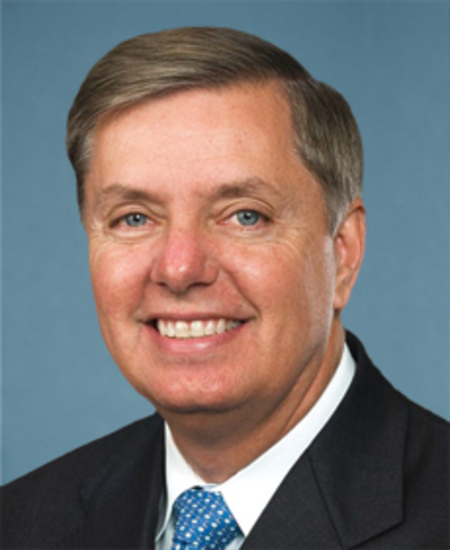
Sen. Lindsey Graham
Sponsored bills
Justice for Victims of War Crimes Act This act broadens the scope of individuals who are subject to federal prosecution for war crime offenses. Currently, the federal war crimes statute provides federal jurisdiction over war crime offenses committed anywhere (i.e., inside or outside the United States) if the victim or offender is a member of the Armed Forces or a U.S. national. First, this act extends federal jurisdiction over war crime offenses committed anywhere to offenses where (1) the victim or offender is an alien lawfully admitted for permanent residence; or (2) the offender is present in the United States, regardless of the nationality of the victim or the offender. Second, the act expands federal jurisdiction over war crime offenses to include offenses that occur in whole or in part within the United States, regardless of whether the victim or offender is a member of the Armed Forces, a U.S. national, or an alien lawfully admitted for permanent residence. The act allows an indictment for certain war crime offenses to be instituted any time, making the statute of limitations inapplicable. To undertake a prosecution for war crime offenses, the act requires written certification that prosecution is in the public interest and is necessary to secure substantial justice. The certification is not subject to judicial review.
Emmett Till and Mamie Till-Mobley Congressional Gold Medal Act of 2021 This act provides for the posthumous presentation of a Congressional Gold Medal in commemoration of Emmett Till and Mamie Till-Mobley. After it is awarded, the medal shall be given to the National Museum of African American History and Culture.
Iran Hostages Congressional Gold Medal Act This bill provides for the award of a Congressional Gold Medal to the 53 hostages of the Iran Hostage Crisis (November 4, 1979-January 21, 1981) in recognition of their bravery and endurance throughout their captivity.
This joint resolution nullifies a Department of Education rule published on July 6, 2022, concerning final priorities, requirements, definitions, and selection criteria for the Charter Schools Program.
National Climate Adaptation and Resilience Strategy Act of 2022 This bill requires the President to identify or appoint a Chief Resilience Officer that must (1) direct a government-wide effort to build resilience to climate change vulnerabilities in the United States in collaboration with existing federal initiatives and interagency adaptation efforts, and (2) create working groups. The officer and the working groups must jointly submit to the President and Congress a strategy for the government to address such vulnerabilities in partnership with nonfederal partners, a plan to implement the strategy, and updates by specified deadlines.
This resolution condemns those acting on behalf of Russia for committing acts of genocide against the Ukrainian people. It also calls on the United States, in cooperation with North Atlantic Treaty Organization (NATO) and European Union allies, to undertake measures to support the Ukrainian government to prevent further acts of Russian genocide against the Ukrainian people.
Syria Detainee and Displaced Persons Act This bill addresses detainees in Syria affiliated with the Islamic State in Iraq and Syria (ISIS), including by requiring an interagency strategy regarding such detainees.
Speak Out Act This act prohibits the judicial enforceability of a nondisclosure clause or nondisparagement clause agreed to before a dispute arises involving sexual assault or sexual harassment in violation of federal, tribal, or state law.
Strengthening Coastal Communities Act of 2022 This bill expands and revises the system of vulnerable coastal areas that are protected under the Coastal Barrier Resources Act, including by directing the Department of the Interior to carry out a coastal hazard pilot project to identify areas that can be added to the John H. Chafee Coastal Barrier Resources System. The bill also modifies certain boundaries of the John H. Chafee Coastal Barrier Resources System Units located in Connecticut, Delaware, Florida, Louisiana, Maryland, Massachusetts, New Hampshire, New Jersey, New York, Rhode Island, South Carolina, and Virginia.