

Maddy summarySRES 462 is a non-binding Senate resolution passed on November 14, 2023, expressing support for U.S. efforts to deter Iran and its proxies (like Hamas, Hezbollah, and the IRGC) from escalating violence in the Middle East following Hamas' October 7, 2023, attack on Israel. It urges the President to maintain military deterrence, recognizes Israel's right to self-defense, encourages the safe release of Hamas-held hostages, and supports diplomatic talks between Saudi Arabia and Israel to normalize relations. The resolution does not create new laws or policies but formally endorses existing U.S. actions, including military positioning and strikes against Iran-linked groups. It directly addresses U.S. foreign policy toward Iran and its proxies, emphasizing regional security concerns.
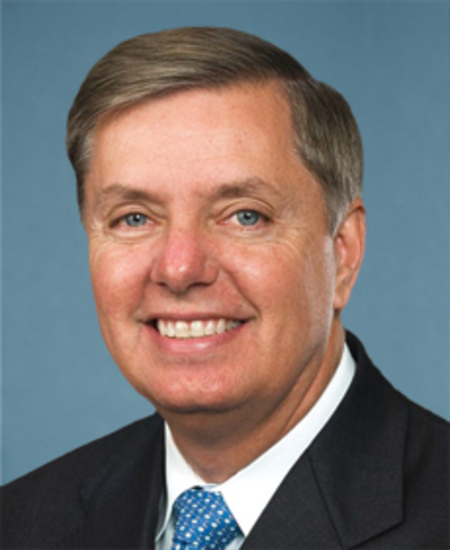
Sen. Lindsey Graham
Sponsored bills
Maddy summarySenate Joint Resolution 49 seeks congressional disapproval of a National Labor Relations Board (NLRB) rule that would have established a new standard for determining when two or more companies are considered "joint employers" under labor law. The rule, published in October 2023, would have affected businesses with complex employment structures, such as franchisors and contractors, by altering how joint employer liability is assessed for wage, hour, and union representation matters. If passed, the resolution would block the rule from taking effect, preserving the previous standard for joint employer determinations. The bill was introduced by Senators Cassidy, Manchin, Braun, McConnell, Marshall, Cramer, Capito, and Paul and referred to the Health, Education, Labor, and Pensions Committee.
Maddy summarySRES 408 is a non-binding Senate resolution condemning Hamas for its October 7, 2023, terrorist attacks on Israel, which killed over 1,400 Israelis and abducted nearly 200 hostages. The resolution demands Hamas immediately release all hostages, provide medical care, and cease using them as human shields, while calling on the U.S. to lead global efforts for their safe return. It specifically references Hamas's attacks on Israeli communities, the Nova music festival, and the execution of civilians, citing international law violations. As a symbolic resolution (not a law), it does not impose legal requirements or directly affect any individuals or policies.
Maddy summaryThis bill creates a Chief Resilience Officer in the Executive Office of the President to coordinate federal climate adaptation and resilience efforts across government agencies. It establishes a Partners Council with representation from state and local governments, tribal nations, Freely Associated States, non-profits, and the private sector to advise on improving federal support for community resilience. The bill requires a National Adaptation and Resilience Strategy and Implementation Plan within two years, along with an Adaptation and Resilience Clearinghouse to improve access to climate adaptation resources. The law mandates regular assessments of federal resilience efforts and has a sunset provision ending its requirements by September 30, 2033.
Maddy summaryThis bill provides $10 million in additional funding to the U.S. Security Coordinator for Israel and the Palestinian Authority. The funds, to be used as needed until expended, support the coordinator's mission of advancing security cooperation between Israel and the Palestinian Authority. It directly affects the Security Coordinator's office by enabling their ongoing security-related activities. The bill is a straightforward funding measure with no policy changes beyond the specified appropriation.
Maddy summaryThis bill reauthorizes funding for the DNA Analysis Backlog Elimination Act program, extending the funding period from fiscal years 2019-2024 to 2024-2029. It directly affects law enforcement agencies and crime laboratories that process forensic DNA evidence to reduce backlogs. The key provision updates the timeframe for federal grants that help these agencies conduct DNA testing on unsolved cases. This ensures continued support for analyzing biological evidence in criminal investigations without creating new requirements.
Maddy summaryThe Foundation for International Food Security Act of 2023 establishes an independent U.S. agency to accelerate sustainable agriculture investments that foster global food security. The Foundation will coordinate with U.S. government agencies and private sector partners to fund projects in up to 10 eligible countries that demonstrate commitment to agricultural reform, cost-sharing, and measurable outcomes. The bill authorizes $100 million annually for 10 years (2024-2033), requiring private sector cost-matching and prohibiting support for countries that support terrorism or violate human rights. It includes requirements for annual reporting to Congress on project outcomes, coordination with existing programs, and transparency in how funds leverage private investments. The Foundation must focus on projects that increase agricultural productivity, reduce food loss, improve nutrition, and build resilient food systems while avoiding duplication of existing U.S. government programs.
Maddy summaryThe Foreign Pollution Fee Act of 2023 would impose a fee on imported goods from countries where the pollution intensity (greenhouse gas emissions per unit of product) exceeds U.S. production standards. The fee amount would be determined using a tiered system based on the percentage difference in pollution intensity between foreign production and U.S. production, with higher pollution intensity differences resulting in higher fees. The bill includes exemptions for products from low-income countries, products from countries with free trade agreements, and products where domestic U.S. production meets certain thresholds. It also establishes a National Laboratory Advisory Board to help determine pollution intensity calculations and a process for international partnership agreements with other countries to reduce pollution intensity.
Maddy summaryThe Iranian Sanctions Enforcement Act of 2023 establishes the Iran Sanctions Enforcement Fund, initially funded with $150 million, to cover expenses related to seizures and forfeitures of property connected to sanctions violations by Iran or its designated proxies like Hezbollah and the Iranian Revolutionary Guard Corps. The fund will pay for law enforcement costs including investigations, detention, equipment, and rewards for informants, with priority given to seizing oil and petroleum products that fund terrorist activities. The bill also creates an Export Enforcement Coordination Center within Homeland Security to better coordinate federal agencies' efforts on sanctions enforcement. Annual reports to Congress will detail fund usage, seizures, and financial status, with the fund required to repay the Treasury $150 million by 2034 unless waived for national security reasons.
Maddy summaryThis bill requires the U.S. Secretary of State to designate Ansarallah (the Houthi group in Yemen) as a Foreign Terrorist Organization within 90 days of enactment, reversing a 2021 Biden administration decision that removed the designation. It mandates the President to impose existing sanctions under two executive orders: blocking assets of designated terrorists (E.O. 13224) and restricting travel for Yemeni nationals linked to terrorism (E.O. 13780). The sanctions directly target Ansarallah, its members, agents, affiliates, and any foreign entities owned or controlled by the group. This would restrict U.S. financial transactions with the Houthis and their networks, while also affecting Yemeni nationals subject to travel bans under the applicable sanctions.