

Maddy summarySRES 80 is a Senate resolution introduced on February 13, 2025, expressing gratitude to the Joint Congressional Committee on Inaugural Ceremonies, the Architect of the Capitol, the Sergeant at Arms, the Secretary of the Senate, law enforcement officers, emergency personnel, and volunteers. It specifically acknowledges their work during the January 20, 2025 inauguration of President Donald J. Trump, noting their efforts to adapt to cold weather challenges that required relocating events indoors. The resolution has no policy impact and serves solely as a ceremonial acknowledgment of their contributions to the inauguration's security and success.
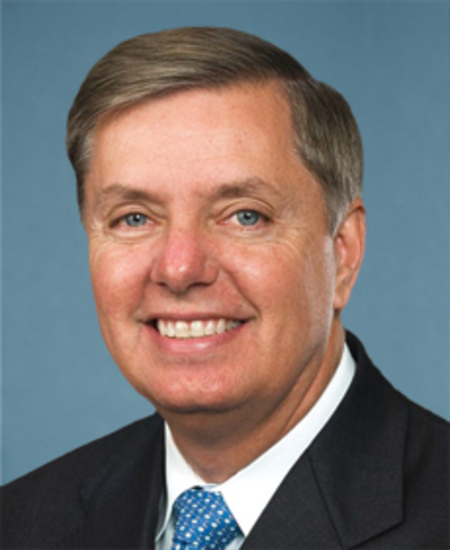
Sen. Lindsey Graham
Sponsored bills
Maddy summaryThe Healthy Poultry Assistance and Indemnification Act of 2025 requires the U.S. Department of Agriculture to compensate poultry growers and egg-laying facility owners when their operations are in a USDA-designated "control area" (a zone established due to animal health threats like disease outbreaks). Compensation equals the average income from the owner's five most recent flocks multiplied by the number of flocks they were prohibited from raising during the control period, but cannot exceed the difference between this amount and any other compensation received. Payments must be made within 60 days of the owner's request. This bill directly assists poultry producers facing income loss due to USDA-mandated restrictions during disease control efforts.
Maddy summaryThis bill repeals the federal estate tax and generation-skipping transfer tax for estates of people who die on or after the bill's enactment date, directly affecting heirs of large estates (typically valued over $13 million for 2025). It also modifies the gift tax by establishing a $10 million lifetime exemption (adjusted for inflation), replacing the current exemption amount. The bill sets new tax brackets for gifts exceeding this threshold and adjusts the calculation method for gift tax liability. These changes apply to gifts made or estates settled after the bill becomes law, with no impact on existing estate plans or transfers before enactment.
Maddy summaryThis resolution expresses the Senate's view that NATO members not spending at least 2% of GDP on defense should face consequences. It specifically prohibits such countries from holding NATO leadership roles (like Secretary General or military commands above 2-star rank) or hosting major events (such as NATO Summits or ministerial meetings). The resolution targets members who fail to meet the 2% target, as 23 of 31 members did meet it in 2024. It is a symbolic statement, not a binding law, aiming to pressure non-compliant nations ahead of the June 2025 NATO Summit.
Maddy summaryThis bill prohibits federal agencies (like the Fish and Wildlife Service and Forest Service) from banning lead ammunition or tackle on public lands and waters used for hunting or fishing, directly affecting hunters and anglers who use federal lands. It blocks new federal regulations on lead levels in hunting gear, except in limited cases where a specific area's wildlife decline is linked to lead use and the state wildlife agency approves the restriction. The law requires federal agencies to explain in notices how any exception meets state wildlife department requirements or state law. It does not change existing state laws or allow federal bans on lead where states already prohibit it.
Maddy summaryThis bill reduces sentencing thresholds for fentanyl and similar synthetic opioid offenses by lowering the quantity amounts that trigger mandatory minimum penalties (e.g., changing "400 grams" to "20 grams" for certain offenses). It requires the U.S. Sentencing Commission to update federal sentencing guidelines within 120 days to align with these changes. Additionally, it authorizes $9 million for the U.S. Postal Service to purchase chemical screening devices and staff to detect fentanyl and other synthetic opioids in mail and packages. The bill directly affects individuals convicted of federal drug offenses under the Controlled Substances Act.
Maddy summaryThe Fair Access to Banking Act (S 401) prohibits large financial institutions ($10 billion+ in assets) and payment networks from denying services to lawful businesses based on political or reputational factors, such as the type of legal business they operate. It requires banks to justify denials using objective, risk-based standards instead of category-based decisions, and mandates written explanations for denials. The law enables lawsuits against violators with treble damages and civil penalties up to 10% of service value (capped at $10,000 per violation). It directly affects major banks, payment processors, and credit unions that serve large-scale customers, ensuring fair access for businesses operating within federal law.
Maddy summaryS 364, titled the "Hearing Protection Act" (though it regulates firearm silencers, not hearing protection), changes federal law to treat firearm silencers like firearms for tax and regulatory purposes. It imposes a 10% federal tax on silencers (similar to firearms), preempts state laws that tax or regulate silencers beyond federal rules, and requires the destruction of existing silencer registration records within one year. The bill clarifies definitions of "firearm silencer" in federal law and modifies licensing requirements for these devices. This directly affects silencer owners, manufacturers, and state governments that previously imposed additional restrictions or taxes.
Nancy Gardner Sewell Medicare Multi-Cancer Early Detection Screening Coverage Act This bill allows, beginning in 2028, for Medicare coverage and payment for multi-cancer early detection screening tests that are approved by the Food and Drug Administration and that are used to screen for cancer across many cancer types, if the Centers for Medicare & Medicaid Services determines such coverage is appropriate. Coverage is limited to those under a certain age (age 68 in 2028, increased by one year every year thereafter) and to one test every 11 months.
Maddy summaryThis bill (S 345, the SHUSH Act) removes federal barriers to state regulation of firearm silencers. It preempts state laws that impose taxes, registration, or recordkeeping requirements on silencers, meaning states cannot enforce such rules. The bill also amends tax code to treat silencers like firearms for registration purposes and excludes silencers from federal consumer safety regulations. It directly affects silencer manufacturers, sellers, and users by preventing federal interference with state-level rules governing these devices. The key change is making state laws the sole regulatory framework for silencers, not federal requirements.