

Maddy summaryThis bill repeals two specific legal authorizations for U.S. military force against Iraq: the 1991 authorization (Public Law 102-1) and the 2002 authorization (Public Law 107-243). If enacted, it would end the legal basis for military operations in Iraq under these two resolutions. The repeal directly affects the executive branch’s authority to use military force against Iraq under these specific laws. It does not create new policy but removes existing legal permissions.
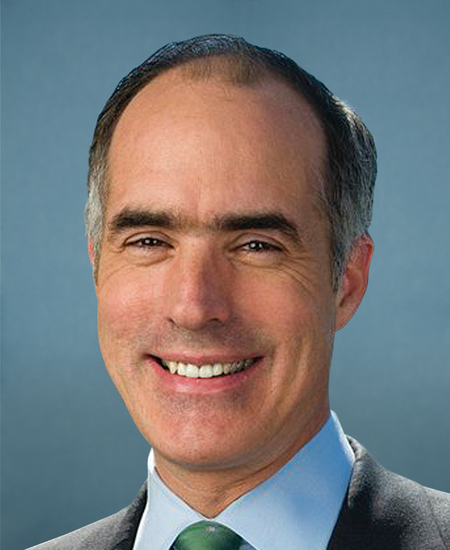
Sen. Robert P. Casey, Jr.
Sponsored bills
Maddy summaryThe REAADI for Disasters Act improves disaster preparedness, response, recovery, and mitigation for individuals with disabilities and older adults (age 50+), who face higher risks during disasters. It requires accessible communications (including American Sign Language, captions, and plain language), inclusive advisory committees in disaster planning, and accessible shelters and facilities. The bill also mandates that crisis standards of care during disasters comply with civil rights laws and funds training centers to support disability-inclusive disaster management practices.
Maddy summarySenate Bill 1036, the Senior Hunger Prevention Act of 2023, aims to improve nutrition assistance access for seniors (60+) and people with disabilities by amending the Food and Nutrition Act. Key provisions include extending SNAP certification periods from 24 to 36 months, establishing a standardized medical expense deduction starting at $155 for fiscal year 2024 (adjusted annually), and creating simplified application programs (ESAP and CAP) to reduce administrative barriers for eligible households. The bill also funds a pilot program for outreach and enrollment targeting older adults, kinship families, and adults with disabilities, and expands food delivery services for eligible participants. Additional provisions increase funding for the Commodity Supplemental Food Program and Seniors Farmers' Market Nutrition Program.
Maddy summaryThe Gun Violence Prevention Research Act of 2023 would authorize $50 million annually for the Centers for Disease Control and Prevention (CDC) to conduct or support research on firearms safety and gun violence prevention for fiscal years 2024 through 2029. This funding would allow the CDC to study the causes and prevention of gun violence, including evaluating safety measures and effective interventions. The research would be conducted under the Public Health Service Act, with the funding added to existing appropriations. The bill does not change current laws but provides dedicated resources for evidence-based research on gun violence as a public health issue.
Maddy summaryThe Railway Accountability Act (S 1044) requires the Federal Railroad Administration to study broken rim derailments and wheel safety, including causes and new mitigation strategies, and mandates a report within one year. It requires major railroads to create updated safety plans for switchyards, prohibits moving trains before brake inspections are complete, and restricts brake inspections to qualified personnel. The bill also mandates public disclosure of safety waivers granted to railroads and requires railroads fined for safety violations to join a confidential reporting system for near-misses. These provisions directly affect major railroads and their operational safety protocols, focusing on preventing derailments through improved inspections, transparency, and reporting.
Maddy summaryThis bill raises the salary threshold for white-collar workers (executives, administrators, professionals) to qualify for overtime pay under federal law. It sets new annual salary minimums: $45,000 starting in 2023, increasing to $55,000 in 2024, $65,000 in 2025, $75,000 in 2026, and then automatically adjusting yearly based on the 55th percentile of full-time salaried workers' earnings. The bill also limits exempt employees to no more than 20 hours per week on duties not directly related to their exempt roles. It directly affects millions of salaried workers currently excluded from overtime pay due to the current $35,568 annual threshold. The changes aim to restore overtime protections to historic levels by updating the threshold to reflect modern wages.
Maddy summaryThe Truck Parking Safety Improvement Act creates a federal grant program to fund public parking facilities for commercial trucks along highways and near freight facilities. It authorizes $175 million for fiscal year 2024, increasing to $320 million by 2026, to address parking shortages that impact driver safety and traffic flow. Eligible projects include building rest areas, expanding parking at truck stops or ports, and improving existing facilities, all requiring free public access and no fees for drivers. The program mandates stakeholder input from trucking companies and safety officials, with annual reports to Congress on project effectiveness and parking availability.
Maddy summaryThis bill amends the Age Discrimination in Employment Act (ADEA), Title VII of the Civil Rights Act, and the Americans with Disabilities Act (ADA) to change how discrimination claims are proven. It establishes that a claim is valid when a worker shows age, disability, race, or other protected characteristic was a "motivating factor" for an employment action - even if other factors were also involved - without needing to prove it was the sole cause. For cases meeting this standard, courts can only award non-monetary remedies like injunctions or attorney fees, not back pay or reinstatement. The law applies to all pending and future claims under these statutes, affecting workers covered by ADEA (age 40+), Title VII (race/color/religion/etc.), and ADA (disability) protections.
This resolution designates March 2023 as National Women's History Month. The resolution also recognizes the celebration of such month as a time to reflect on the contributions that women have made to the United States.
Maddy summaryThe International Human Rights Defense Act of 2023 establishes a permanent Special Envoy for LGBTQI+ human rights at the Department of State to lead U.S. foreign policy efforts addressing discrimination and violence against LGBTQI+ people globally. The bill requires the Special Envoy to develop an annual global strategy to prevent and respond to criminalization, discrimination, and violence against LGBTQI+ individuals, with mandatory reporting on countries that criminalize same-sex relationships or discriminate based on sexual orientation, gender identity, or sex characteristics. It directs U.S. foreign assistance to support programs that protect LGBTQI+ rights, including health initiatives addressing HIV/AIDS in LGBTQI+ communities, and requires training for U.S. personnel and foreign officials on LGBTQI+ rights issues. The bill also mandates regular congressional briefings on the status of LGBTQI+ rights worldwide and U.S. government efforts to address abuses.