

Maddy summaryS 1086, the Disability and Age in Jury Service Nondiscrimination Act, prohibits federal courts from excluding potential jurors based on disability or age. The bill amends federal jury law to ensure individuals with disabilities or older adults are not disqualified if they can serve with reasonable accommodations, such as accessible facilities or modified procedures. It specifically adds "disability, age" to existing protections against exclusion and requires courts to consider accommodations for jurors with infirmities. This change directly affects prospective federal jurors with disabilities or age-related needs who were previously excluded under broad "infirmity" rules. The bill applies only to federal jury service, not state courts.
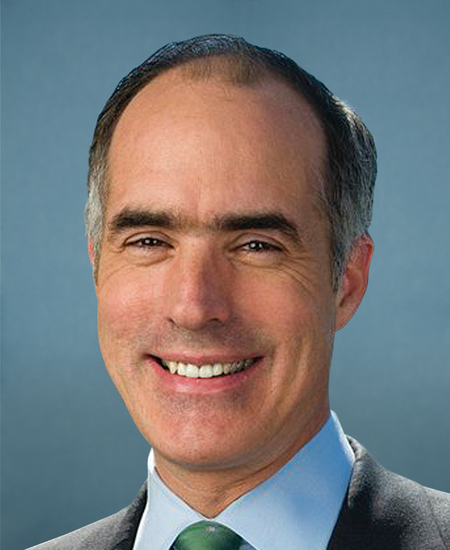
Sen. Robert P. Casey, Jr.
Sponsored bills
Guardianship Grant Flexibility Act This bill allows recipients of demonstration grants for preventing and detecting elder abuse to use the grants for state court programs that use clinics supervised by a licensed attorney to recruit and train law students to represent individuals in guardianship cases and serve as guardians ad litem. (Guardians ad litem are court-appointed representatives for individuals who are unable to represent their own interests, typically because they are minors or declared legally incompetent.)
Maddy summaryThe RISE Act requires colleges and universities to accept multiple forms of documentation, such as past Individualized Education Programs (IEPs) or 504 plans, to determine if a student qualifies for disability accommodations. It mandates that institutions clearly explain their accommodation processes to students and staff and report disability-related data (like enrollment numbers and accommodations provided) to federal databases. The bill also allocates $10 million for a national center to provide information and technical support to postsecondary students with disabilities. These provisions directly affect higher education institutions and students with disabilities seeking accommodations.
Maddy summaryThis bill establishes a "Bill of Rights" for older adults (60+) and people with disabilities in guardianship or protective arrangements. It requires courts to provide independent legal representation for these individuals, mandates annual reviews of protective arrangements with legal representation, and promotes less restrictive alternatives like supported decision-making. The bill creates a Council to develop standards for guardianships and protective arrangements, and includes enforcement mechanisms such as potential reductions in federal funding for states that violate the rights established. The goal is to ensure these individuals maintain significant input into decisions about their lives while protecting their civil rights.
Maddy summaryThis bill removes the requirement that background checks for gun sales must be completed within 10 business days. It directly affects federally licensed gun sellers who conduct these checks, eliminating the specific deadline they previously had to finalize the process. The key provision amends existing law (18 U.S.C. § 922(t)(1)) to eliminate the 10-day timeframe, allowing sellers to complete checks without that strict deadline. The bill also includes minor technical corrections to related laws like the Brady Act and Bipartisan Safer Communities Act.
Maddy summaryThe Recovering America's Wildlife Act of 2023 establishes new funding streams to prevent species from needing Endangered Species Act protection and aid recovery of already-listed species. It provides $850 million in 2024 (increasing to $1.3 billion annually after 2027) to states, territories, and tribes through a new Wildlife Conservation and Restoration Subaccount, with 15% required for endangered species recovery. The bill also creates a Tribal Wildlife Conservation Account ($97.5 million annually) and an Endangered Species Recovery Fund ($187.5 million annually), with funds to be used for habitat conservation, species management, invasive species control, and conservation education. States must use funds to implement their Wildlife Conservation Strategies, and all funding must supplement, not replace, existing conservation programs. The legislation requires annual reporting to Congress on how funds are used and progress on conservation goals.
Maddy summaryThe Rural Hospital Support Act (S 1110) changes how Medicare calculates payments for two types of rural hospitals: sole community hospitals (the only hospital in their area) and Medicare-dependent hospitals (which rely heavily on Medicare for revenue). It recalculates payments using a 2016 base year instead of previous periods, potentially increasing reimbursements for eligible hospitals if this results in higher payments. The bill also extends the Medicare-dependent hospital program and low-volume hospital payment increases beyond 2024, while prohibiting adjustments to these payments for years before 2015. This directly affects eligible rural hospitals by increasing their Medicare funding and providing long-term program stability.
Maddy summaryThis bill increases the age limit for children to receive CHAMPVA medical benefits from 21 to 26 years old, regardless of marital status. It directly affects children of veterans who rely on the CHAMPVA program for healthcare coverage. The key provision amends Section 1781 of Title 38, U.S. Code, to extend eligibility until the child's 26th birthday. The change applies to medical care provided on or after the bill's enactment date.
Maddy summaryThe PREP for All Students Act establishes a Council to develop guidelines for making emergency response protocols in schools more inclusive and effective for all students. The Council would include diverse representation from educators, disability advocates, law enforcement, and students with disabilities to study current protocols and create guidelines that are accessible, developmentally appropriate, culturally aware, and trauma-informed. These guidelines would help schools create emergency plans that better protect students with disabilities, young children, and other vulnerable populations during events like natural disasters, active shooter situations, and other emergencies. The Council would report to Congress within 18 months with recommendations for improving emergency protocols across schools, early childhood education programs, and colleges, with the bill authorizing $500,000 for the Council's work over two years.
Maddy summaryThis bill requires the Bureau of Labor Statistics to revise its occupational classification system to properly count dual-role firefighter/EMTs and firefighter/paramedics as EMS practitioners. It directs the Secretary of Labor to add four specific job categories (including "Firefighter/EMTs" and "Firefighter/Paramedics") to the Standard Occupational Classification System within 120 days. This change directly affects the accuracy of national workforce data for EMS personnel, who respond to over 22 million emergency calls annually. The bill aims to ensure government agencies have reliable data to inform emergency preparedness and policy decisions related to public health crises and disasters. A report on implementation must be submitted to Congress within 270 days.