

Maddy summaryThe Clean Slate Act of 2024 establishes two mechanisms to seal certain criminal records. For marijuana-related convictions and non-convictions, records automatically seal one year after sentence completion or 60-180 days after arrest without charges. For other nonviolent offenses, individuals can petition courts to seal records after completing sentences, with courts balancing rehabilitation against public safety concerns. The bill affects people with certain marijuana convictions or nonviolent offenses, making sealed records generally inaccessible for employment and background checks while providing employer immunity for hiring those with sealed records.
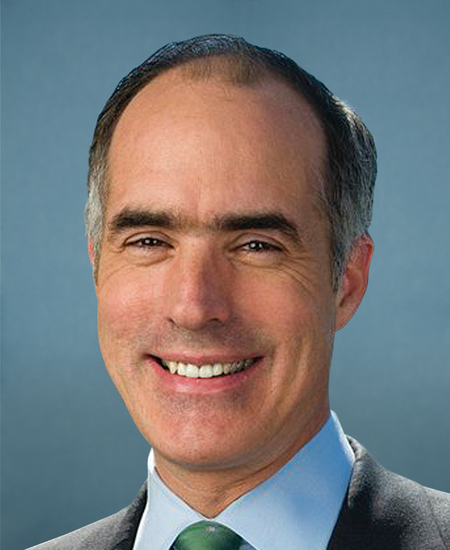
Sen. Robert P. Casey, Jr.
Sponsored bills
Maddy summaryThis bill authorizes a Congressional Gold Medal to honor the "Hello Girls" - 223 women who served as Army Signal Corps telephone operators in WWI. They connected 26 million calls in France, worked 12-hour shifts under combat conditions, and were denied veteran benefits for 60 years despite wearing uniforms and facing combat hazards. The medal recognizes their pioneering military service, devotion to duty, and the decades-long struggle for recognition as soldiers. It directs the Treasury to strike the medal and place it in the Smithsonian for public display at institutions like the National WWI Museum.
Maddy summaryThis Senate resolution (SRES 845) symbolically recognizes September 23-29, 2024, as "Asian American and Native American Pacific Islander-Serving Institutions Week" to honor institutions serving Asian American, Native Hawaiian, and Pacific Islander students. It does not create new laws or funding but encourages higher education institutions to seek support for programs addressing the needs of these student communities. The resolution highlights that these institutions enroll 46% of all Asian American, Native Hawaiian, and Pacific Islander undergraduates despite representing only 6.9% of U.S. colleges. It urges the public and organizations to observe the week with activities supporting these institutions' educational missions.
Maddy summarySRES 848 is a symbolic Senate resolution designating September 23-27, 2024, as "National Hazing Awareness Week." It does not create new laws or requirements but formally recognizes the issue of hazing in college settings. The resolution aims to raise public awareness about hazing, which directly affects college students participating in campus organizations, as highlighted by statistics showing 55% of students in extracurricular activities reported experiencing hazing. The bill encourages nationwide observance through education and prevention efforts, emphasizing that awareness should extend beyond a single week.
Maddy summarySRES 812 is a non-binding Senate resolution designating September 20, 2024, as "National Concussion Awareness Day." It cites CDC data showing millions of annual sports-related concussions, especially among youth, and emphasizes the importance of proper diagnosis and management. The resolution supports raising public and medical awareness about concussions, encourages collaboration among policymakers to improve concussion understanding, and urges further research and prevention efforts. It does not create new laws or directly affect specific groups, but aims to promote broader recognition of concussion risks.
Maddy summarySRES 838 is a symbolic Senate resolution designating November 17, 2024, as "National Warrior Call Day." It aims to raise awareness about veteran and military member mental health by emphasizing the importance of peer-to-peer connections during transition from service. The resolution cites statistics showing high veteran suicide rates (33.9 per 100,000 in 2021) and encourages all Americans to reach out to veterans or active-duty personnel for support. It does not create new laws or funding but urges public engagement through "making a warrior call" to prevent isolation. This resolution directly affects public awareness and voluntary actions, not specific individuals or programs.
Maddy summaryThis resolution designates September 2024 as "National Childhood Cancer Awareness Month" in the U.S. Senate. It requests federal, state, local, and nonprofit organizations to observe the month with programs aimed at increasing public awareness of childhood cancer risks. The resolution also encourages ongoing medical monitoring for childhood cancer survivors and recognizes childhood cancer as a public health priority requiring prevention and cure efforts, while honoring affected children's resilience.
Maddy summaryThis bill amends U.S. trade law to tie preferential trade benefits (Generalized System of Preferences) to gender equality and human rights standards. It requires beneficiary developing countries to meet new criteria, including providing equal legal rights and protections regardless of gender, eliminating discrimination in employment, and addressing gender-based violence. The U.S. Trade Representative must annually review countries' compliance, collect data on their progress, and publish findings, with potential reduction of trade benefits if countries fail to meet standards for five consecutive years. This directly affects low-income nations currently receiving U.S. trade advantages, making their continued eligibility contingent on measurable progress on gender equality.
Maddy summaryThis bill requires the Bureau of Prisons to develop a strategy to prevent illegal drugs like fentanyl from entering federal prisons through mail. Within 180 days of enactment, the Bureau must evaluate mail-scanning technology and submit a plan to Congress within 90 days, including achieving 100% scanning of all incoming mail. The plan must detail how facilities will provide digital mail copies to inmates (with physical copies following) while ensuring safety, prioritize high-security facilities, and include a 2025-2027 budget for implementation. The Bureau must also report annually on the strategy's progress and the amount of contraband intercepted.
Maddy summaryThe SAFE for Survivors Act of 2024 establishes new protections for victims of domestic violence, dating violence, sexual assault, and stalking. It creates a 40-day safe leave entitlement (10 paid days) for victims to address safety needs like legal assistance, medical care, relocation, and financial services. The law prohibits employment discrimination against victims, requires employers to provide reasonable accommodations, and ensures victims can access unemployment benefits and insurance protections without discrimination. These provisions apply to all employers and insurers, with enforcement through the Department of Labor and Federal Trade Commission.