Maddy summaryThis bill authorizes $52 million annually (2024-2028) to establish or maintain 12 regional biocontainment laboratories across the U.S. These labs, designated by the Health and Human Services (HHS) Secretary, directly affect researchers, public health agencies, and medical facilities by supporting biomedical research on biological threats like emerging infectious diseases. Key provisions require labs to conduct research, ensure surge capacity for outbreaks, share findings, provide safety training, and report safety incidents to HHS. The bill also mandates oversight, establishes a lab coordination board, and requires annual reports to Congress on lab activities and research outcomes.
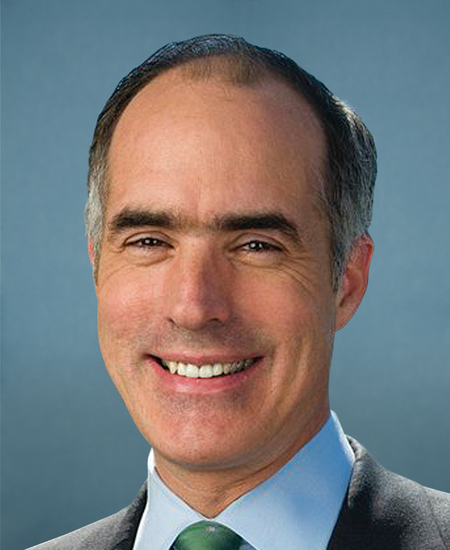
Sen. Robert P. Casey, Jr.
Sponsored bills
Maddy summaryS 2522 (ABLE MATCH Act) creates a federal matching program for ABLE accounts, providing a 100% match (phased out for higher earners) on contributions up to $2,000 annually for individuals with disabilities earning under 200% of the federal poverty level. It directly affects low-income people with disabilities, particularly those receiving Medicaid or Supplemental Security Income benefits, by adding funds directly to their tax-advantaged savings accounts without risking benefit loss. Key provisions include automatic credit payments to accounts, demographic reporting requirements for ABLE programs, and $5 million in annual grants to states for promoting ABLE account use. The program takes effect for taxable years beginning after December 31, 2026.
Maddy summaryThis bill renames the Department of Veterans Affairs community-based outpatient clinic in Monroeville, Pennsylvania, as the "Henry Parham VA Clinic." It honors Henry Parham, an African-American veteran who served in the segregated 320th Barrage Balloon Battalion during D-Day and was the last surviving African-American combat veteran of the Normandy landings. The bill makes this name change official for all federal references to the clinic. (Commemorative bill; no policy changes beyond naming.)
Maddy summaryThis bill establishes federal funding to support mental health programs for school staff. It authorizes $10 million annually for a national awareness campaign to reduce stigma and encourage educators to seek care, and $35 million annually for grants to states, schools, and colleges to create or improve mental health initiatives - including peer support, suicide prevention training, and telehealth access. The grants prioritize schools in high-need areas and require annual reporting on program effectiveness. The bill also mandates a federal review of educator mental health trends and a GAO report on existing federal grant programs addressing this issue.
Maddy summaryThis bill amends the Food and Nutrition Act to change SNAP (Supplemental Nutrition Assistance Program) eligibility rules for workers on strike. It removes a provision that automatically made workers ineligible for SNAP benefits "at any time that" they participated in a strike, replacing it with a clearer rule stating workers are ineligible "as a result of being on strike." The change directly affects workers participating in labor strikes, ensuring SNAP eligibility is tied specifically to their current strike status rather than past participation. The amendment clarifies existing law without creating new benefits or altering other SNAP requirements.
Maddy summaryThis bill establishes the Veterans Advisory Committee on Equal Access to assess and improve accessibility at the Department of Veterans Affairs (VA) for veterans with disabilities, VA employees with disabilities, and the public. The committee, composed of 15 voting members including veterans with specific disabilities (mobility, hearing, visual, mental/cognitive), accessibility experts, and VA staff, will identify barriers and recommend improvements to VA services, technology, and facilities. The VA must submit biennial reports to Congress on accessibility progress and compliance with laws like the Rehabilitation Act. The committee will operate for 10 years, with regular assessments focused on the greatest accessibility needs.
Maddy summaryThis bill reauthorizes and updates NOAA's Chesapeake Bay Office to enhance science, education, and ecosystem restoration efforts in the Chesapeake Bay watershed. It establishes new programs including a Chesapeake Bay Watershed Education and Training Program for K-12 schools and teacher development, and a Chesapeake Bay Coastal Living Resources Management Program focused on restoring habitats for species like oysters, blue crabs, and fish. The bill requires the Office to coordinate with the Chesapeake Executive Council, ensure scientific peer review for funded projects, and submit biennial reports to Congress. It authorizes $17 million in fiscal year 2024, increasing to $22.6 million by 2027, to fund these activities.
Maddy summarySCONRES 2 is a symbolic congressional resolution commending Iranian protesters who risked their safety to demonstrate against the Iranian regime's human rights abuses, particularly following the death of Mahsa Amini after her arrest by morality police for alleged hijab violations. It specifically highlights protests in over 133 cities where demonstrators, including women removing headscarves, have faced violent crackdowns, with reports of over 500 deaths and 19,000 arrests. The resolution condemns the regime's brutality, supports internet freedom tools to bypass censorship, and urges the administration to impose human rights sanctions on officials responsible for repression. As a non-binding resolution, it expresses congressional support for protesters but does not enact new laws or policies.
Maddy summarySRES 20 is a Senate resolution condemning the February 1, 2021, military coup in Burma (Myanmar) and the Burmese military's detention of civilian leaders, including State Counsellor Aung San Suu Kyi. It calls for the immediate, unconditional release of all detained political prisoners, restoration of the elected parliament, and accountability for military violence that has killed over 2,800 civilians since the coup. The resolution urges the U.S. government to impose targeted sanctions on the military junta, support democratic restoration, and coordinate with international partners to address humanitarian needs. As a non-binding resolution, it expresses the Senate's position but does not enact new laws or policies.
Maddy summary# Summary of Proposed Election Reform Legislation This comprehensive legislative document outlines a wide-ranging election reform bill with multiple titles addressing various aspects of voting rights, election administration, and election integrity. Key provisions include: 1. **Democracy Restoration** (Title I): - Restores voting rights for citizens with criminal convictions (except those serving felony sentences in correctional institutions) - Requires states to notify individuals of restored voting rights upon completion of sentence or release from custody - Includes enforcement mechanisms for states to comply with the restoration provisions 2. **Voter Identification Requirements** (Title II): - Establishes a standardized system for voter identification requirements - Specifies acceptable forms of identification (including many government-issued documents) - Requires states to provide free identification documents to eligible voters - Includes funding ($5 million annually for 5 years) to cover costs 3. **Voter List Maintenance** (Title III): - Prohibits "voter caging" (using undeliverable mail to challenge voter eligibility) - Requires states to verify voter ineligibility using objective and reliable evidence - Limits removal of voters from registration lists to specific circumstances (death, permanent move) - Mandates notice requirements for voters removed from lists 4. **Election Integrity** (Title IV): - Prohibits interference with voter registration (Section 612) - Restricts removal of local election administrators to cases of inefficiency, neglect, or malfeasance - Prohibits harassment and intimidation of election workers - Bans deceptive practices in elections (false information about voting procedures, qualifications, or endorsements) The legislation aims to expand voting access while maintaining election integrity, with specific focus on eliminating barriers for people with criminal convictions, ensuring fair voter list maintenance, and protecting election workers from harassment and intimidation. It also includes provisions for enforcement through civil actions, criminal penalties, and reporting requirements.