

Maddy summaryThis resolution (SRES 356) expresses the U.S. Senate's support for designating September 18-24, 2023, as "Rail Safety Week" in the United States. It does not create new laws or funding but publicly endorses efforts to reduce rail-related incidents - including highway-rail grade crossing collisions, trespasser incidents, derailments, and hazardous material transport risks - through education and awareness. The resolution specifically highlights goals aligned with Operation Lifesaver’s safety initiatives and references recent rail safety data, including 2022 statistics on collisions and derailments. It encourages public participation in safety activities but has no binding policy effect.
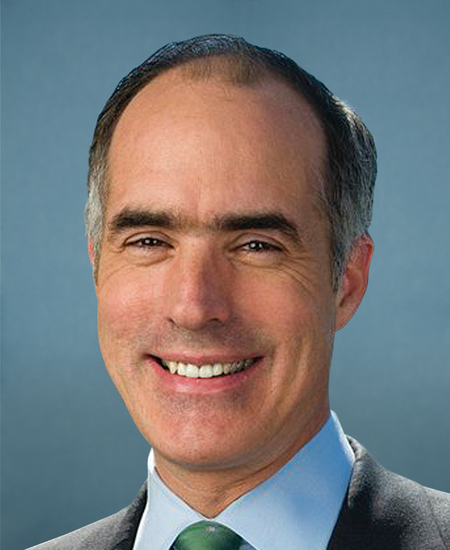
Sen. Robert P. Casey, Jr.
Sponsored bills
Maddy summarySRES 208 is a Senate resolution designating November 12, 2023, as "National Warrior Call Day." It encourages U.S. citizens, particularly those connected to military service, to reach out to veterans through peer-to-peer conversations to support their mental health and transition from military life. The resolution highlights veteran suicide statistics (6,146 deaths in 2020) and emphasizes that isolation - exacerbated by the pandemic - increases risks for conditions like PTSD. It does not create new programs but urges public engagement to connect veterans with support systems. This is a symbolic, awareness-raising measure with no binding policy changes.
Maddy summaryThe End Diaper Need Act of 2023 increases funding for diaper assistance through the Social Services Block Grant Program, allocating $1.9 billion over four years (2024-2027) to help low-income families with infants, toddlers, medically complex children, and adults with disabilities. The bill requires states to distribute free diapers and incontinence supplies through community programs, integrate with existing assistance programs like Medicaid and WIC, and report on how funds are used while ensuring funds supplement rather than replace existing state funding. It also expands the definition of "medically necessary diapers" for tax purposes and requires Medicaid waivers for medically complex children to include 200 diapers per month, with additional amounts available if a healthcare provider specifies medical need. The law includes evaluation requirements to measure the program's impact on health outcomes related to diaper need, with reports to Congress and public availability of results.
Maddy summaryThis bill requires standardized presentations about Department of Veterans Affairs (VA) benefits during preseparation counseling for service members transitioning from military to civilian life. It mandates that these presentations be reviewed by the VA and veterans service organizations before use, include information on how to file claims, and cannot promote specific organizations. The VA must also submit annual reports to Congress detailing which veterans service organizations participated, attendance numbers, and recommendations for improvement. The bill directly affects service members receiving transition assistance, ensuring they receive consistent, accurate information about VA benefits.
Maddy summaryThe Federal Agency Accessibility Compliance Act of 2023 requires all federal agencies to appoint a dedicated accessibility compliance officer within 90 days of the law's enactment. These officers must ensure agency websites and digital services meet current accessibility standards, reporting directly to agency leaders. Starting one year after enactment, agencies must publicly post annual certification of compliance or a detailed timeline for achieving it on their websites. Smaller agencies with fewer than 20 full-time employees may appoint an existing staff member for this role if their primary duties align with accessibility requirements.
Maddy summaryThe AACCENT Act establishes a national network of resource centers to improve access to augmentative and alternative communication (AAC) for the estimated 4 million Americans with significant expressive communication disabilities. It awards grants to nonprofit partnerships that must include people with communication disabilities in leadership roles, requiring centers to provide evidence-based training, technical assistance, and resources to schools, healthcare providers, employers, and communities. These centers will collect demographic data, address barriers faced by racial and ethnic minority communities, and promote awareness about the rights of people who rely on AAC. The legislation aims to eliminate communication barriers and improve equal opportunity across education, employment, healthcare, and community participation for this population.
Maddy summaryThe Algorithmic Accountability Act of 2023 requires companies that deploy automated decision systems making critical life decisions (such as for housing, employment, healthcare, or financial services) to conduct impact assessments before and after implementation. Covered entities include businesses with over $50 million in annual revenue or those handling data for more than 1 million consumers, which must document system impacts and mitigate negative effects on consumers. Companies must submit annual summary reports to the Federal Trade Commission detailing their assessments, with the FTC creating a public repository of anonymized information to inform consumers and researchers. The law mandates transparency about how systems affect consumers but does not require full disclosure of all assessment details. This bill establishes concrete requirements for accountability in automated decision-making systems affecting critical aspects of consumers' lives.
Maddy summaryS 2895, the Adoption Tax Credit Refundability Act of 2023, makes the federal adoption tax credit refundable. This change directly affects low-income adoptive parents who previously could not claim the credit if they owed no federal income tax. The bill restructures the credit in the tax code to allow families to receive it as a direct payment, even if their tax liability was zero. It applies to taxable years beginning after December 31, 2022, and includes a transitional rule for credits carried forward from prior years. The law does not alter the credit amount or eligibility criteria, only its refundability.
Maddy summaryThis bill requires U.S. colleges and universities participating in federal student aid programs to create clear anti-harassment policies covering harassment based on race, sex, disability, religion, and other protected characteristics. These policies must specifically prohibit harassment occurring online (via emails, social media, or institutional networks), on campus, in dorms, and during school-sponsored activities. It also establishes a $50 million annual grant program to fund campus prevention programs, counseling services, and training for students, faculty, and staff on recognizing and addressing harassment. The law adds these requirements to existing federal protections under Title IX and the Civil Rights Act, without replacing them.
Maddy summaryThis bill requires colleges and universities receiving federal financial aid to include hazing incidents in their annual security reports and publish detailed public transparency reports. It defines hazing as intentional acts causing physical or mental harm during group initiation or membership, and mandates institutions to create annual Campus Hazing Transparency Reports. These reports must list verified hazing incidents, organizational involvement, investigation timelines, and sanctions - while protecting student privacy - starting 12 months after enactment. Reports must be updated twice yearly and remain publicly available for seven years. The law applies to all U.S. institutions participating in federal higher education programs.