

Maddy summaryThis bill amends federal law to expand substance abuse treatment services for children, adolescents, and young adults to include suicide prevention and treatment. It specifically adds "suicide" to covered conditions and requires grant-funded programs to provide parental counseling on preventing overdose/suicide and supply safety tools (like lockboxes) to reduce access to lethal means. The law directs at least $2 million annually from federal grants toward these services, targeting providers including children's hospitals, emergency departments, tribal health programs, and pediatric specialists. It affects youth aged 12-25 and their families by integrating suicide prevention into existing substance abuse treatment funding streams. The changes apply to programs operating under the SUPPORT Act from 2024-2028.
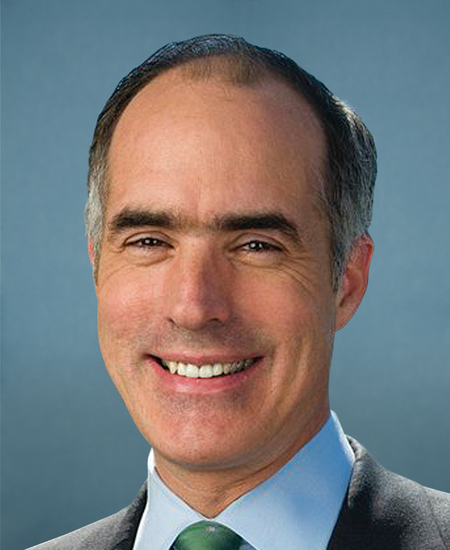
Sen. Robert P. Casey, Jr.
Sponsored bills
Maddy summaryThe Affordable Insulin Now Act of 2023 would require private health insurance plans and group health plans to limit cost-sharing for insulin to no more than $35 per 30-day supply or 25% of the negotiated price, whichever is lower. It would mandate coverage of a variety of insulin types and dosage forms, ensuring that cost-sharing counts toward annual deductibles and out-of-pocket maximums. The bill also creates a reimbursement program to pay qualifying healthcare providers for insulin furnished to uninsured individuals, covering the difference between what the individual would pay and $35 per 30-day supply. This legislation would directly affect millions of people with diabetes who rely on insulin and have private health insurance or are uninsured. The bill would take effect for plan years beginning January 1, 2024.
Maddy summaryThe Full-Service Community School Expansion Act of 2023 authorizes $500 million to $1 billion annually to expand community schools that provide comprehensive student and family support. The bill targets schools with at least 40% of students eligible for free/reduced lunch or schools identified for improvement, requiring them to establish leadership teams with parent, educator, and community representation. It mandates schools receiving funds to provide integrated student supports (including health services), expanded learning opportunities, family engagement activities, and collaborative leadership structures that address academic, social, and emotional needs. The legislation requires schools to track progress on student outcomes including academic achievement, mental health, school climate, and family engagement, with a focus on reducing achievement gaps for historically marginalized students.
Maddy summaryS 3356, the Postal Police Reform Act of 2023, clarifies the duties of U.S. Postal Service (USPS) police officers. It specifies that these officers protect mail, USPS-owned or controlled property, people on that property, and USPS employees on duty anywhere in the U.S. The bill revises existing law to explicitly state that officers may act beyond USPS property when necessary to fulfill these protective duties. It also corrects a minor typo in the legal reference. This bill directly affects USPS police officers by defining their scope of responsibility more precisely.
Maddy summaryThe FISA Reform and Reauthorization Act of 2023 extends FISA surveillance authorities through 2035 while adding significant new protections for U.S. persons. It requires the FBI to implement stricter procedures for queries of communications, including mandatory training, approval processes for certain queries, and detailed annual reporting on surveillance activities. The bill also mandates accuracy certifications for FISA applications, enhances congressional oversight, and establishes a new FISA Reform Commission to review the surveillance system. These changes aim to balance national security needs with privacy protections for U.S. citizens.
Maddy summaryThis bill would repeal a long-standing provision (Section 907) of the Freedom Support Act that has blocked U.S. economic assistance to Armenia since 1997. It directly affects U.S. foreign aid policy toward Armenia by removing the legal ban on providing economic aid. The key mechanism is amending the Foreign Operations Appropriations Act to eliminate the specific restriction on aid funding. If passed, it would allow the U.S. government to provide economic assistance to Armenia without this historical limitation. The bill does not create new aid programs but changes the legal framework for existing aid.
Maddy summaryThis bill authorizes $50 million annually (2023-2027) for the VA to award grants to states to improve outreach and assistance for veterans and their families (including spouses, children, and parents) regarding veterans' benefits. States must use funds to hire more veterans service officers, expand outreach programs, or provide training, with priority for areas lacking officers, high veteran suicide rates, or frequent crisis line referrals. Grantees must submit detailed plans ensuring equitable distribution across urban/rural areas and addressing needs of underserved veterans (e.g., Native American, elderly, women veterans), while tracking benefit application timelines and outcomes. The VA will monitor performance, require remediation plans for underperforming states, and report annually to Congress.
Maddy summaryThis Senate resolution (SRES 471) expresses formal support for National Adoption Day (observed November 18, 2023) and National Adoption Month (November 2023). It promotes awareness about children in foster care awaiting adoption, celebrates adoption success stories, and encourages U.S. citizens to support efforts securing permanent, safe homes for all children. The resolution does not create new laws or funding but serves as a symbolic gesture to highlight adoption needs. It specifically references foster care statistics (e.g., 114,000 children awaiting adoption) to underscore its purpose.
Maddy summaryThe Rural Partnership and Prosperity Act of 2023 establishes two grant programs to support rural economic development. It provides multiyear grants (2-5 years) to partnerships of local governments, nonprofits, tribes, cooperatives, and other entities to coordinate federal, state, and private investments in rural areas, with at least 5% of funds reserved for Indian Tribes. The bill requires applicants to demonstrate partnership cooperation and prohibits using funds for property purchases or for-profit operational costs, while mandating matching funds (25% for most grants, with waivers for high-poverty areas). It also creates technical assistance grants to help rural communities with grant management and planning, and amends the Rural Partners Network to streamline federal coordination and reduce administrative barriers for rural communities seeking funding.
Maddy summaryThis bill limits the number of local pay zones (called "local wage areas") that can be defined within a single federal pay locality to just one, with an exception for the "Rest of United States" area. It directly affects federal employees covered under the General Schedule pay system, particularly those working in locations that previously had multiple pay zones. The key mechanism requires the Office of Personnel Management (OPM) to consolidate these zones, ensuring only one pay rate applies per geographic area, while preventing any reduction in current employees' basic pay. The law takes effect 180 days after enactment, applying to all relevant federal pay periods.