

Maddy summaryThis bill requires natural gas and crude oil exporters to use U.S.-documented vessels built or retrofitted in the U.S. with key ship components manufactured domestically, gradually increasing the required percentage of such exports each year. For natural gas exports, the minimum percentage starts at 2% in the first 7 years and rises to 15% by the 22nd year; for crude oil, it starts at 3% and reaches 10% after 14 years. It directly affects exporters of these energy commodities, U.S. shipyards performing retrofits, and manufacturers of specified components like propulsion systems and valves. The bill also mandates training opportunities for U.S. mariners and allows waivers for cost or supply issues, while requiring the Energy Information Administration to track and publish export data.
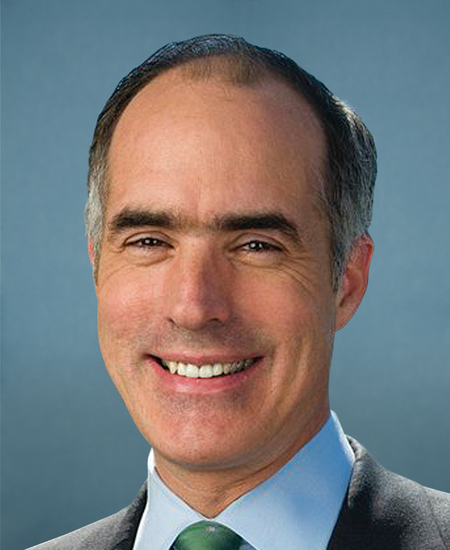
Sen. Robert P. Casey, Jr.
Sponsored bills
Maddy summaryThe PATH to College Act (S 3477) provides federal grants to public transit agencies partnering with specific colleges to improve student transportation access. It directly affects community colleges, historically Black colleges (HBCUs), Tribal Colleges, and minority-serving institutions, especially those with over 25% of students receiving Pell Grants. The bill funds new bus/rail routes, increased service frequency, and operating costs for transit connecting campuses to students’ neighborhoods. Grants cover up to 80% of capital project costs and 50% of operating expenses, with annual funding starting at $2 million in 2025 and rising to $10 million annually through 2031.
Maddy summaryThe Eviction Prevention Act of 2023 provides federal funding to states and local governments to help low-income tenants (those earning less than 125% of the Federal poverty level) obtain legal representation in eviction cases. The bill authorizes $125 million annually for grants to establish legal counsel programs that provide full attorney representation to eligible tenants facing eviction. It also creates a national database to collect detailed information on eviction cases, including tenant demographics, case reasons, and outcomes for court-ordered, administrative, and illegal evictions. This database will track data on over 100 specific metrics to help identify patterns and improve housing stability across the country.
Maddy summaryThis bill allows consumers who win legal claims against companies for violating consumer protection laws to deduct attorney fees and court costs from their taxable income. It directly affects consumers who successfully sue for violations covered by major federal laws like the Truth in Lending Act, Fair Debt Collection Practices Act, or Fair Credit Reporting Act. The key provision amends the tax code to create a new "above-the-line" deduction for these fees, preventing them from being taxed twice (once as part of the award and again as income). The change applies to fees paid after the bill's enactment for cases settled or decided during the same taxable years.
Maddy summaryThis is a ceremonial Senate resolution (SRES 492) honoring the late First Lady Rosalynn Carter. It expresses the Senate's condolences for her passing and recognizes her lifetime of humanitarian work, including her advocacy for mental health care, founding of caregiver support programs, and service with The Carter Center. The resolution does not create new laws or policies; it is purely a commemorative statement. It was introduced by a bipartisan group of senators and adopted by the Senate on December 7, 2023.
Maddy summaryThis bill, S 3437 (Addressing SILO Act of 2023), provides $62.5 million annually from 2024 to 2028 to fund community programs addressing social isolation among older adults and people with disabilities. It authorizes grants for area agencies on aging and community organizations to conduct outreach, develop evidence-based interventions, connect individuals with support services, and evaluate program effectiveness. The funds require grantees to coordinate with existing Older Americans Act programs and submit annual reports to Congress on outcomes. The bill directly affects vulnerable seniors and disabled adults by expanding access to community-based social connection services.
Maddy summaryS 3449, the Pathways to Health Careers Act, provides federal grants to help low-income individuals (earning up to 200% of the Federal poverty level) enter health care careers through training programs. The bill requires grant recipients to provide support services including child care, transportation, adult basic education, career coaching, and case management. It includes specific demonstration projects for people with arrest or conviction records seeking health careers, and for training in maternal health careers like doulas and midwives. The bill appropriates $425 million annually from 2024-2028 to fund these initiatives, with at least 25% of funds dedicated to each demonstration project type.
Maddy summaryThe Rural Forest Markets Act of 2023 establishes a program to guarantee bonds, loans, or investment vehicles for rural private forest landowners and eligible entities (like nonprofits or state agencies) to participate in voluntary environmental credit markets. It requires projects to use approved, high-integrity methodologies for sustainable forestry, prohibits artificial demand for credits, and mandates annual audits to ensure compliance. The program is capped at $150 million total funding and must minimize disruptions to traditional timber markets by analyzing timber supply data. It specifically aims to help landowners not previously engaged in forest products markets, including those with small forest parcels, through activities like reforestation and conservation easements.
Maddy summaryThis resolution (SRES 480) recognizes November 2023 as "National Family Caregivers Month" to honor the approximately 53 million family caregivers in the U.S. who provide unpaid care to loved ones with chronic illnesses, disabilities, or age-related needs. It commends these caregivers, who often face financial and emotional challenges, and encourages federal agencies, states, and private organizations to implement the 2022 National Strategy for Supporting Family Caregivers. The resolution specifically urges investment in existing support measures like tax credits, paid leave, respite care, home-based services, and healthcare access. As a symbolic gesture, it does not create new laws or funding but aims to raise awareness and promote existing caregiver support policies.
Maddy summaryThe Billionaires Income Tax Act requires individuals with annual income over $100 million or assets over $1 billion to pay taxes annually on their wealth gains, rather than deferring taxes through strategies like "buy, borrow, die." It eliminates tax deferral by implementing mark-to-market taxation, requiring billionaires to pay tax on asset appreciation each year as if they had sold the assets. The bill closes loopholes that allow the ultra-wealthy to transfer assets tax-free to heirs, requiring heirs to pay tax on gains when they sell assets. This means billionaires would pay taxes on their income as it's earned, just like working people pay taxes on wages.