

Maddy summaryThis bill requires the Environmental Protection Agency (EPA) to collect and standardize data on U.S. recycling and composting systems to improve accountability. It mandates reports on composting infrastructure capabilities, federal agency recycling practices, and end-market sales of recyclables, while creating a national inventory of materials recovery facilities. The law directly affects the EPA, states, local governments, and Indian Tribes by requiring them to provide data on recycling rates, facility capabilities, and material flows. Key mechanisms include standardizing reporting rates, studying material diversion from circular markets, and developing voluntary guidelines for labeling and public education. The bill focuses on building a factual foundation for future policy decisions, not on imposing new recycling mandates.
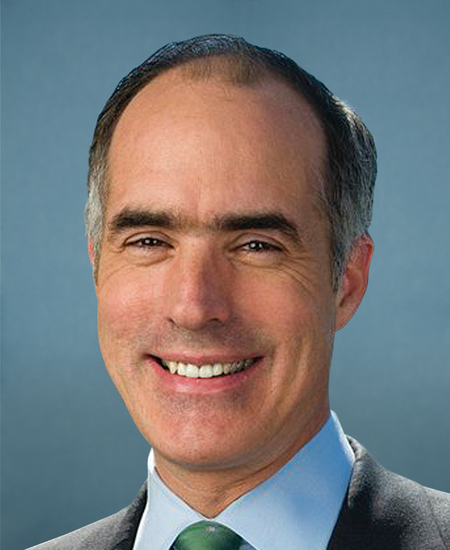
Sen. Robert P. Casey, Jr.
Sponsored bills
Maddy summaryThe Recycling Infrastructure and Accessibility Act of 2024 establishes a federal pilot grant program to improve recycling access in underserved communities. It authorizes $30 million annually (2023-2027) to fund competitive grants for eligible entities - including states, local governments, tribes, and public-private partnerships - to build transfer stations, expand curbside recycling, and create hub-and-spoke infrastructure networks. Grants range from $500,000 to $15 million per project, with 70% of funds reserved for single or multiple underserved communities lacking nearby recycling facilities. The program prohibits grant use for education and requires the EPA to report on outcomes, including recycling rate improvements, within two years of first grants.
Maddy summarySRES 590 designates March 15, 2024, as "Long COVID Awareness Day" to recognize the condition affecting over 22 million Americans, including symptoms like fatigue and cognitive issues. The resolution urges federal agencies to expand research, public education, and support for people living with Long COVID, which disproportionately impacts minorities, women, and those with lower incomes. It does not create new laws or funding but symbolically highlights the need for greater attention to this health issue.
Maddy summaryThe NURSE Act (S 3953) creates a federal grant program to help public schools hire more school nurses, specifically targeting schools serving high-need communities. It prioritizes schools where at least 20% of students qualify for free school lunches (indicating higher poverty levels) and gives priority to districts with no nurses or the greatest student health needs. The program covers up to 75% of hiring costs for the first year, with the federal share gradually decreasing over time to encourage long-term local funding. This aims to address the current shortage - where nearly two-thirds of schools lack full-time nurses - by supporting student health services, chronic disease management, and mental health support directly in schools.
Maddy summaryThis bill establishes a federal grant program to improve mental health services for LGBTQ+ youth (including nonbinary, intersex, and Two Spirit youth). It funds eligible organizations to provide trauma-informed care, cultural competency training for caregivers, school bullying prevention guidelines, and family support resources. The bill explicitly bans the use of grant funds for conversion therapy and requires the development of a federal survey measuring mental health outcomes among these youth. It also mandates reports on mental health care in foster care and social services programs within two years.
Cutting Copays Act This bill eliminates cost-sharing for generic drugs for those with the lowest-income under the Medicare prescription drug benefit's Low-Income Subsidy Program beginning in 2026.
Maddy summaryThis bill reimposes tariffs on steel imports from Mexico at levels in effect before May 2019, requiring the Secretary of Commerce to maintain these duties for at least one year. It targets Mexican steel exporters directly, aiming to address alleged breaches of a 2019 trade agreement that the bill claims caused harm to the U.S. steel industry. The law also allows the President to set import limits (quotas) to reduce Mexican steel shipments back to pre-2019 trade volumes. Duties can only be lowered if U.S. officials certify Mexico has adopted compliant policies and will maintain them. The measure focuses on reversing increased steel imports from Mexico under the framework of the 2019 Joint Statement.
Boosting Tax Credits for Accessible Housing Act This bill increases the low-income housing tax credit for units designated for occupancy by persons with disabilities.
Maddy summaryThe Grandfamilies Act of 2023 makes it easier for children living with grandparents or other relatives to access Social Security benefits and Temporary Assistance for Needy Families (TANF). The bill removes the requirement that children must be dependent on a parent for benefits, instead allowing them to qualify if living with a relative for 12+ months and receiving at least half their support. It eliminates 5-year time limits on TANF assistance for children living with non-parent caregivers, exempts these caregivers from work requirements, and provides grants for states to develop support plans for grandparents raising grandchildren. The legislation specifically helps older caregivers and those caring for children with disabilities by disregarding their income when determining eligibility for assistance.
Maddy summaryThe HELPER Act of 2023 creates a new FHA mortgage insurance program allowing eligible first responders and K-12 teachers to secure home loans with **no down payment**. It directly affects full-time law enforcement officers, firefighters, paramedics, EMTs, and public/private K-12 teachers who have worked in their roles for at least 4 of the past 5 years. Key provisions include requiring housing counseling, verifying employment status, and prohibiting monthly mortgage insurance premiums (replacing standard FHA requirements). The bill authorizes $660,000 for 2024 and $160,000 annually from 2025-2030 to fund this program, which expires after 5 years.