

Newborn Screening Saves Lives Reauthorization Act of 2021 This bill reauthorizes through FY2026 and revises several programs and activities relating to newborn screening for certain conditions and genetic, endocrine, and metabolic diseases. Among its changes, the bill reauthorizes and makes mandatory the Hunter Kelly Research Program at the National Institutes of Health, and national surveillance activities conducted by the Centers for Disease Control and Prevention. The bill also aligns statutory requirements for research on non-identified newborn blood spots with federal regulations governing research on human subjects. These blood spots are collected as part of newborn screening programs, and some states make them available for biomedical and public health research. Under current regulations, research on non-identified bio-specimens such as blood spots is not considered to be research on human subjects, to which additional protections apply.
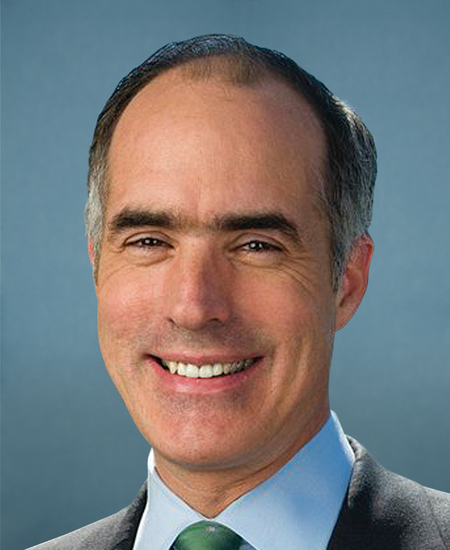
Sen. Robert P. Casey, Jr.
Sponsored bills
IMPACT to Save Moms Act This bill requires the Centers for Medicare & Medicaid Services to establish the Perinatal Care Alternative Payment Model Demonstration Project to allow states to test payment models for maternity care, including postpartum care, under Medicaid and the Children's Health Insurance Program (CHIP). Additionally, the Medicaid and CHIP Payment and Access Commission must report on specified information relating to the continuity of coverage for pregnant and postpartum women under Medicaid and CHIP.
COVID-19 Nursing Home Protection Act of 2021 This bill provides funds and establishes requirements for Medicare skilled nursing facilities (SNFs) and Medicaid nursing facilities (NFs) to address COVID-19 (i.e., coronavirus disease 2019). Specifically, the bill provides FY2021 funding for COVID-19 strike teams that can be deployed to these facilities to help with vaccinations, clinical care, infection control, or staffing. The amounts provided by the bill are designated as an emergency requirement pursuant to the Statutory Pay-As-You-Go Act of 2010 (PAYGO) and the Senate PAYGO rule. (This excludes the budget effects from being counted for the purposes of enforcing the PAYGO rules.) In addition, the bill requires the Centers for Medicare & Medicaid Services (CMS) to ensure that, during the public health emergency relating to COVID-19, at least one of its contracts with Medicare quality improvement organizations requires that the organization assist SNFs with COVID-19 infection control (e.g., training materials). Finally, the bill provides statutory authority for the requirement that SNFs and NFs report data regarding COVID-19 preparedness, testing, infections, and deaths. Additionally, the CMS must publish on the Nursing Home Compare website certain demographic information, aggregated by state, with respect to COVID-19 infections and deaths in such facilities.
ABLE Age Adjustment Act This bill increases from 26 to 46 the age threshold for tax-favored ABLE (Achieving a Better Life Experience) accounts. (ABLE accounts are designed to enable individuals with disabilities to save for and pay for disability-related expenses. To establish an account, an individual must have a qualifying impairment that began before the individual attained the age threshold.)
Stop Senior Scams Act This bill establishes a Senior Scams Prevention Advisory Group, which must create model educational materials to educate employees of retailers, financial-services companies, and wire-transfer companies about how to identify and prevent scams that affect seniors.
Black Maternal Health Momnibus Act of 2021 This bill directs multi-agency efforts to improve maternal health, particularly among racial and ethnic minority groups, veterans, and other vulnerable populations. It also addresses maternal health issues related to COVID-19 (i.e., coronavirus disease 2019). The Department of Health and Human Services (HHS) and other specified departments must address the social determinants of maternal health, which include child care, housing, food security, transportation, and environmental conditions. The bill also extends to 24 months postpartum eligibility for the Special Supplemental Nutrition Program for Woman, Infants, and Children. Additionally, HHS and other agencies must take actions to grow and diversify the maternal health workforce. To increase access to maternity care, HHS and other agencies must (1) award specified grants; (2) test an alternative payment model for perinatal care under Medicaid and the Children's Health Insurance Program (CHIP); and (3) support training, technology, and telehealth initiatives. The bill also increases research and data collection on maternal morbidity and mortality, particularly among tribal populations and minority groups. The Bureau of Prisons and the Department of Justice must establish programs to improve maternity care for incarcerated populations. The Medicaid and CHIP Payment and Access Commission must also report on the impact of Medicaid ineligibility for pregnant and postpartum prisoners. Additionally, as a condition for certain grants, states and territories must have laws limiting the use of restraints on pregnant individuals in prisons. The bill also directs activities to mitigate adverse maternal health outcomes associated with climate change and to improve maternal vaccination rates.
Officer Eugene Goodman Congressional Gold Medal Act This bill directs the Speaker of the House of Representatives and the President pro tempore of the Senate to arrange for the presentation of a Congressional Gold Medal to U.S. Capitol Police Officer Eugene Goodman for his actions to protect the Senate chamber during the security breach at the U.S. Capitol on January 6, 2021.
COVID-19 in Corrections Data Transparency Act This bill requires the Bureau of Prisons, the U.S. Marshal Service, and state and local correctional facilities to publish on their websites and report to the Centers for Disease Control and Prevention certain data on COVID-19 (i.e., coronavirus disease 2019) cases, vaccinations, and outcomes.
This resolution recognizes Black History Month as an opportunity to reflect on U.S. history and to commemorate the contributions of African Americans. It calls for the United States to (1) honor the contribution of pioneers who helped to ensure its legacy; and (2) move forward as a nation "indivisible, with liberty and justice for all."
End Diaper Need Act of 2021 This bill establishes and expands programs to provide low-income families and other vulnerable groups with access to diapers and related supplies. Specifically, it provides additional funding for FY2022-FY2025 to meet the diapering needs of certain low-income families and adults through the Social Services Block Grant Program. This grant program provides a flexible funding stream to states and territories to support social services for vulnerable children, adults, and families. The bill exempts these funds from sequestration. Sequestration is a process of automatic, across-the-board reductions under which budgetary resources are permanently cancelled to enforce specific budget policy goals. In particular, these funds must be used to meet the diapering needs of low-income families with one or more infants, toddlers, or medically complex children (i.e., children who are age three or older and diagnosed with a serious condition such as bowel or bladder incontinence); and low-income adults and adults with disabilities who rely on diapers and other adult incontinence materials. Additionally, the bill permits states to use Medicaid funds to provide medically necessary diapers and supplies to low-income families with one or more medically complex children. It also allows individuals to buy medically necessary diapers and supplies with funds from health savings accounts and other tax-advantaged accounts for health care expenses.