

This resolution expresses support for the designation of May 13, 2021, as National Senior Fraud Awareness Day and encourages the development of policies that help prevent scams targeting older adults.
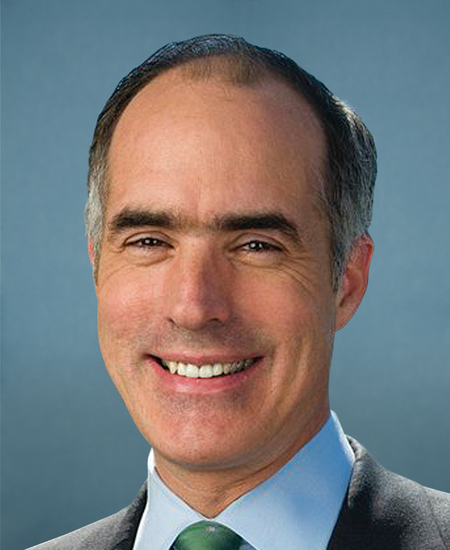
Sen. Robert P. Casey, Jr.
Sponsored bills
This resolution designates the week of May 9-May 15, 2021, as National Police Week.
Protect Women's and Girls' Rights in Afghanistan Act of 2021 This bill requires the Department of State to periodically report to Congress on the conditions of women and girls in Afghan civil society following the departure of U.S. and NATO forces. The reports shall also assess the status of assurances made by the Taliban related to preserving the rights of women and girls in Afghanistan.
Strengthen And Fortify Existing Bridges Act of 2021 or the SAFE Bridges Act of 2021 This bill directs the Department of Transportation to establish a program to assist states to rehabilitate or replace bridges found to be structurally deficient. States shall use program funds for projects to rehabilitate and replace such bridges and to maintain their surface coating and corrosion protection systems.
State Allowance for a Variety of Exchanges Act of 2021 or the SAVE Act of 2021 This bill allows the Department of Health and Human Services to award grants to support the establishment of state-based health insurance exchanges in those states that have not already elected to do so. A state that receives a grant must ensure that the resulting exchange is self-sustaining by 2026.
Long-Term Care Pharmacy Definition Act of 2021 This bill establishes a statutory definition for long-term care pharmacy under the Medicare prescription drug benefit. Currently, there is no statutory definition. Regulations from the Centers for Medicare & Medicaid Services (CMS) define a long-term care pharmacy as a pharmacy that is owned by or under contract with a long-term care facility to provide prescription drugs to the facility's residents. Additional requirements are set out in CMS guidance relating to the Medicare prescription drug benefit; pharmacies are also subject to regulations and guidance from other agencies (e.g., packaging requirements from the Food and Drug Administration). The bill defines a long-term care pharmacy as a state-licensed pharmacy that is able to provide enhanced pharmacy and clinical services to individuals who have certain comorbid and medically complex chronic conditions and who reside in skilled nursing facilities, nursing facilities, or any other applicable setting (as determined by the CMS). The term enhanced pharmacy and clinical services includes medication dispensed in special packaging, drug utilization review, and 24-7 availability of medication delivery and on-call pharmacists.
Caregivers, Access, and Responsible Expansion for Kids Act of 2021 or the CARE for Kids Act of 20 21 This bill extends eligibility for the National School Lunch Program and school breakfast program of the Department of Agriculture. A local educational agency (including any school operated by the Bureau of Indian Education) may certify as eligible for free lunches or breakfasts the following: children whose placement with a caregiver was carried out with the involvement of an agency that administers a state plan or a tribal child welfare agency, without regard to whether the agency is responsible for the care and placement of the child; children being raised by a relative who receives adoption or guardianship assistance; and children of a family that lives in housing dedicated to low-income families with a caregiver who is a grandparent or another older person that cares for the child full-time or that receives housing or housing assistance under the Native American Housing Assistance and Self-Determination Act of 1996. The bill also extends eligibility for free or reduced-price school lunches for children who were determined to be eligible in the school year prior to placement with a grandparent or relative for the school year immediately following placement. The bill provides children who receive medical assistance under the Medicaid program with direct certification for free lunches and breakfasts under the school lunch and breakfast programs.
Human-Services Emergency Logistic Program Act of 2021 or the HELP Act of 2021 This bill requires the Department of Health and Human Services (HHS) to allot funding to states, tribal nations, and territories to improve the 2-1-1 and 9-8-8 telecommunication systems. The 2-1-1 system provides callers with information and referrals with respect to health and human services and other provider agencies, and the 9-8-8 system provides callers with mental health or suicide crisis support and resources through the National Suicide Prevention Lifeline. The funds must be used solely for making the call systems available to all individuals in the service area, enhancing community information and referrals with respect to human services, or both. As a condition of this funding, recipients must appoint a lead entity to manage activities to improve the call systems. Recipients must also establish a Human Services State Oversight Council to provide the lead entity with guidance and oversight related to the call systems. In addition, HHS must establish a Human Services National Board, comprised of federal and non-federal representatives, to manage the allocation of funds and evaluate the call systems.
Untraceable Firearms Act of 2021 This bill establishes a federal statutory framework to regulate the manufacture, sale, offer to sell, transfer, purchase, and receipt of ghost guns (i.e., guns without serial numbers). Additionally, the bill revises the federal statutory framework regulating the manufacture, possession, sale, import, shipment, delivery, receipt, and transfer of undetectable firearms. Among the revisions, the bill defines undetectable firearm as a firearm without a major component wholly made of detectable material.
Accelerating Kids' Access to Care Act This bill requires state Medicaid programs to establish a process through which qualifying out-of-state providers may enroll as participating providers without undergoing additional screening requirements. Among other things, a qualifying provider must (1) serve minors, or adults whose condition began as a minor; and (2) have previously been screened for Medicare participation or for participation in the Medicaid program of the state in which the provider is located.