

Surviving Widow(er) Income Fair Treatment Act of 2021 or the SWIFT Act This bill modifies eligibility requirements and increases Social Security survivor benefits for widows, widowers, and surviving divorced spouses of a deceased worker. Specifically, the bill makes widow and widower's benefits available to disabled individuals at any age, whereas currently the benefits are limited to such individuals between ages 50 to 60. In addition, provisions reducing benefits in various instances, such as when a beneficiary is entitled to multiple types of benefits, shall not apply to widow and widower's benefits for individuals with disabilities. Additionally, the bill raises the upper age limit for determining whether a beneficiary has a child in his or her care from 16 to 18 years (or 19, if the child is a full-time elementary or secondary school student). An individual with a child in care may receive increased benefits in specified instances. The bill also increases various limits on widow and widower's benefits in certain instances and modifies the calculation for increased benefits for individuals who choose to delay receiving such benefits. For current beneficiaries, increases in Social Security benefits under this bill shall not affect the beneficiary's eligibility or benefit amount for any federal assistance program.
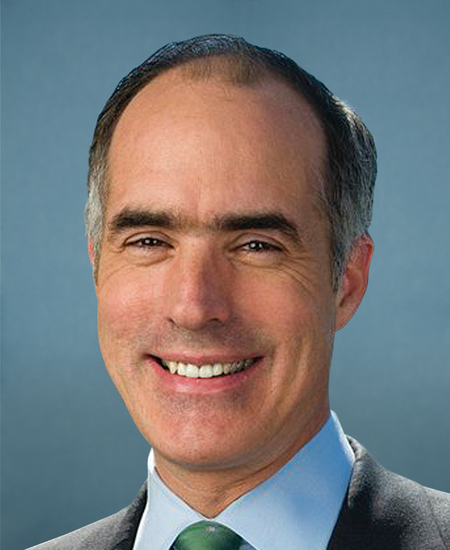
Sen. Robert P. Casey, Jr.
Sponsored bills
COVID - 19 Hate Crimes Act This bill requires a designated officer or employee of the Department of Justice (DOJ) to facilitate the expedited review of hate crimes and reports of hate crimes. DOJ must issue guidance for state, local, and tribal law enforcement agencies on establishing online hate crime reporting processes, collecting data disaggregated by protected characteristic (e.g., race or national origin), and expanding education campaigns. Additionally, DOJ and the Department of Health and Human Services must issue guidance aimed at raising awareness of hate crimes during the COVID-19 (i.e., coronavirus disease 2019) pandemic. The bill establishes grants for states to create state-run hate crimes reporting hotlines. It also authorizes grants for states and local governments to implement the National Incident-Based Reporting System and to conduct law enforcement activities or crime reduction programs to prevent, address, or respond to hate crimes. Finally, in the case of an individual convicted of a hate crime offense and placed on supervised release, the bill allows a court to order that the individual participate in educational classes or community service as a condition of supervised release.
Resilient Highways Act of 20 21 This bill addresses projects to improve the resiliency of federal-aid highways, bridges, and tunnels on and off the National Highway System. Specifically, the bill allows states to use up to 15% of funds apportioned under the national highway performance program for projects to mitigate the risk of recurring damage or the cost of future repairs from extreme weather, flooding, and other natural disasters on infrastructure that is part of the National Highway System; provides for a maximum federal cost-share of up to 100% for these projects; and authorizes emergency relief funds to be used to pay for these projects, including raising roadway grades, deepening channels to prevent flooding, improving drainage, and stabilizing slopes.
Census Improving Data and Enhanced Accuracy Act or the Census IDEA Act This bill prohibits the Department of Commerce, in the 2030 decennial census of population and each decennial census thereafter, from (1) implementing any major operational design element that has not been researched, studied, and tested for a period of at least three years before the decennial census date; or (2) including on the questionnaire for the census any subject, type of information, or question that was not submitted to Congress. The Government Accountability Office shall determine and report to Congress on whether the subjects, types of information, and questions to be included in that decennial census have been adequately researched, studied, and tested to the same degree as in previous decennial censuses.
Concentrating on High-value Alzheimer's Needs to Get to an End (CHANGE) Act of 2021 This bill modifies the requirements under Medicare for diagnosing and treating Alzheimer's disease and other cognitive impairments in older adults. Specifically, the bill expands the cognitive impairment detection benefit during annual wellness visits to require the use of validated detection tools and documentation of the results in the patient's medical record. Further, when a cognitive impairment is detected, the patient must be referred to an appropriate diagnostic service provider and other specified supports. Additionally, the Centers for Medicare & Medicaid Services must implement Medicare policies that increase the identification and response to patients' Alzheimer's disease risk factors and incentivize providers to utilize high-quality cognitive impairment diagnosis practices.
Allied Health Workforce Diversity Act of 2021 This bill allows the Department of Health and Human Services to provide grants to accredited education programs to increase diversity in the physical therapy, occupational therapy, respiratory therapy, audiology, and speech-language pathology professions. Grants may be used to provide scholarships or to support recruitment and retention of students from underrepresented groups.
Credit for Caring Act of 2021 This bill allows an eligible caregiver a tax credit of up to $5,000 for 30% of the cost of long-term care expenses that exceed $2,000 in a taxable year. The bill defines eligible caregiver as an individual who has earned income for the taxable year in excess of $7,500 and pays or incurs expenses for providing care to a spouse or other dependent relative with long-term care needs.
All Station Accessibility Program Act of 2021 or the ASAP Act of 2021 This bill authorizes the Department of Transportation to award grants to states or localities for improving the accessibility of commuter rail systems that have stations or facilities for passengers and that were in operation before the passage of the Americans with Disabilities Act (which occurred on July 26, 1990).
This resolution expresses support for the designation of National Foster Care Month.
This resolution urges the United Kingdom (UK) and the European Union (EU) to support peace on the island of Ireland and the principles, objectives, and commitments of the Good Friday Agreement. The resolution also expresses support for subsequent agreements relating to the relationship between Northern Ireland and the Republic of Ireland, including the agreement concerning the UK's withdrawal from the EU. (The island of Ireland is divided between Northern Ireland, which is part of the UK, and the Republic of Ireland, an EU member state.)