Maddy summarySRES 673 is a commemorative Senate resolution honoring the late David Hampton Pryor, who served as a U.S. Senator for Arkansas from 1978 to 1997. The resolution expresses the Senate’s "profound sorrow" at his death and directs the Secretary of the Senate to share the resolution with the House and deliver a copy to his family. It does not create new laws or policies - it is purely ceremonial, recognizing Pryor’s career as a legislator, governor, and public servant. The resolution concludes with the Senate adjourning as a mark of respect for his legacy.
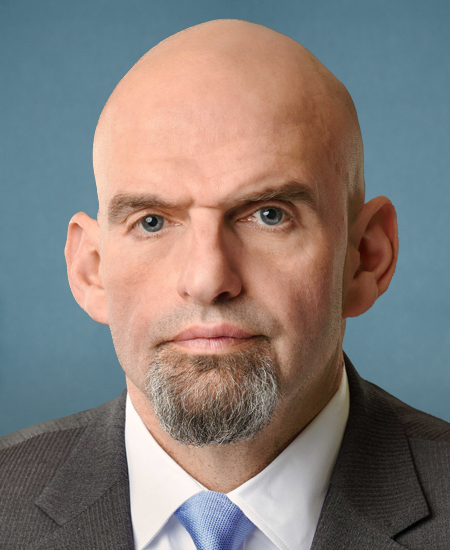
Sen. John Fetterman
Sponsored bills
Maddy summaryThis resolution (SRES 668) is a ceremonial Senate measure honoring the late Senator Daniel Robert "Bob" Graham of Florida, who died on November 9, 2023. It formally expresses the Senate's "profound sorrow" over his death and directs the Secretary of the Senate to share the resolution with the House of Representatives and deliver a copy to his family. The resolution commemorates Graham's career as a Florida senator (1987-2005), governor (1979-1987), and his work on the 9/11 intelligence inquiry, but does not create any new laws or affect constituents. As a commemorative resolution, it serves solely to memorialize his service.
Maddy summarySRES 671 is a ceremonial Senate resolution supporting the designation of April 28-May 4, 2024, as "National Small Business Week." It honors small businesses and entrepreneurs across the U.S. for their economic contributions, noting they support over 62 million jobs through 33 million businesses. The resolution expresses the Senate's recognition of small businesses' resilience and role in strengthening local economies. As a symbolic gesture with no new policies or funding, it does not impose requirements or directly affect specific entities.
Maddy summarySRES 672 is a Senate resolution recognizing April 2024 as National Sexual Assault Awareness and Prevention Month. It expresses the Senate's support for the month's goals, including raising public awareness about sexual violence, preventing assaults, improving support for survivors, and ensuring perpetrators are held accountable. The resolution specifically acknowledges the work of organizations like RAINN (Rape, Abuse & Incest National Network), local rape crisis centers, and professionals in law enforcement and healthcare who provide critical services to survivors. As a non-binding resolution, it does not create new laws or allocate funding but serves to highlight ongoing efforts to address sexual assault.
Maddy summarySRES 666 is a symbolic Senate resolution congratulating the Gay, Lesbian, and Allies Senate Staff Caucus (GLASS Caucus) on its 20th anniversary. It acknowledges the caucus’s founding in 2004, commends Senator Frank Lautenberg for his role, and recognizes key members who established and sustained the group. The resolution has no policy impact - it is purely ceremonial, expressing appreciation for the caucus’s work in fostering inclusivity and support for LGBTQ+ Senate staff over two decades.
Maddy summary# Summary of the Cannabis Administration and Opportunity Act This comprehensive legislation establishes a federal regulatory framework for cannabis in the United States, creating a legal, taxed, and regulated market while addressing social equity, public health, and workplace safety concerns. ## Key Provisions ### Federal Regulation & Taxation - Creates Chapter 56 of the Internal Revenue Code for cannabis taxation - Establishes a federal permit system for cannabis businesses (cultivation, production, distribution, retail) - Implements a tiered tax structure with special provisions for small businesses and social equity applicants - Requires compliance with federal labor laws (Fair Labor Standards Act, OSHA, National Labor Relations Act) ### Public Health & Safety - Integrates cannabis regulation under the Federal Food, Drug, and Cosmetic Act - Establishes specific rules for CBD products and dietary supplements - Creates transition periods (18 months for products, 3 years for drugs) for existing state-legal products - Requires safety data for new cannabis products before market entry ### Workplace Safety - Mandates compliance with OSHA standards for cannabis employers - Requires the Department of Labor to issue guidance on workplace safety practices - Funds research on workplace impacts of cannabis legalization - Includes provisions for worker training and hazard mitigation ### Social Equity & Community Investment - Creates a social equity program for cannabis business permits - Establishes a Cannabis Products Advisory Committee with diverse representation - Allocates $200 million annually for Community Development Financial Institutions - Provides $300 million annually for housing and community development in communities impacted by the "war on drugs" ### Banking Access - Updates anti-money laundering guidance to support cannabis-related businesses - Requires the Financial Crimes Enforcement Network to update guidance on reporting requirements - Prohibits financial institutions from denying services based on nonviolent cannabis offenses ### Enforcement & Compliance - Creates new enforcement mechanisms for violations of cannabis regulations - Establishes a process for addressing labor law violations in the cannabis industry - Includes provisions for criminal penalties for violations of the regulatory framework This legislation represents a comprehensive approach to federal cannabis regulation, balancing market creation with public health protections, social equity considerations, and workplace safety requirements, while addressing longstanding barriers to financial services for cannabis businesses.

Maddy summaryThe Promoting Affordable Connectivity Act of 2024 strengthens the Affordable Connectivity Program, which provides discounted internet service to low-income households. The bill expands the Universal Service Fund to require contributions from broadband providers and edge providers (such as major technology companies), while giving the Federal Communications Commission borrowing authority up to $25 billion to support the program. It also requires internet service providers to apply discounts to eligible households within one billing cycle after verification, and gives the FCC authority to adjust program requirements to improve its functionality. This legislation directly affects internet service providers, low-income households qualifying for the program, and the administration of the Affordable Connectivity Program. The changes aim to make internet access more affordable and sustainable for millions of Americans who qualify for the program.
Maddy summaryThis bill designates the U.S. Postal Service facility at 5120 Derry Street in Harrisburg, Pennsylvania, as the "Hettie Simmons Love Post Office Building." It requires all official references in federal laws, documents, or records to use this new name for the facility. The bill has no policy changes or direct impact beyond renaming the specific post office location.
Maddy summarySRES 655 is a Senate resolution passed on April 18, 2024, to honor the late Joseph I. Lieberman, a former U.S. Senator from Connecticut (1988-2013), following his death. The resolution recognizes his career, including his role in creating the Department of Homeland Security, establishing the 9/11 Commission, and advocating for civil rights and environmental protections. It directs the Senate to adjourn in his memory and transmit a copy to his family, expressing the Senate's sorrow and respect. This procedural resolution does not create new laws or affect policy, as it solely commemorates his legacy.
Maddy summaryThis Senate resolution designates April 2024 as "Preserving and Protecting Local News Month" and formally recognizes local news as essential to democracy. It affirms that local journalism serves a vital public function by informing communities, supporting civic engagement, and holding local government accountable. The resolution does not create new laws or allocate funding - it is a symbolic acknowledgment of the critical role local news plays in democratic communities. It highlights the severe decline in local news outlets (including the loss of nearly 2,900 print newspapers since 2005) but focuses solely on recognition, not policy action.