

Maddy summaryThe Nationwide Right To Unionize Act (S 2729) would repeal a federal law provision allowing states to enact "right-to-work" laws, which typically prevent unions from requiring workers to pay dues as a condition of employment. By removing this state-level exception, the bill would make it illegal for any state to have right-to-work laws, meaning workers in unionized workplaces across all 50 states could be required to pay union dues if their union and employer agree. This directly affects workers, unions, and employers in every state, particularly in the 27 states currently with right-to-work laws. The bill does not change existing union security agreements but eliminates state-level alternatives that restrict union dues collection.
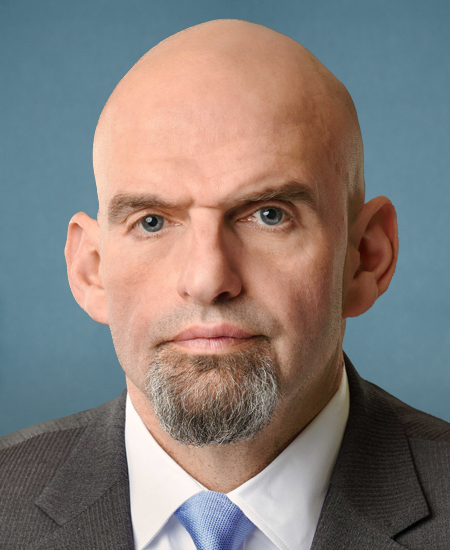
Sen. John Fetterman
Sponsored bills
Maddy summaryThe Lowering Electric Bills Act extends federal tax credits for clean energy adoption through 2034, directly affecting homeowners installing solar panels or heat pumps and businesses producing clean electricity. It modifies three key tax provisions: (1) extends the residential clean energy credit deadline from 2025 to 2034, (2) adjusts the clean electricity production credit to expire based on U.S. emissions reaching 25% of 2022 levels or 2032 (whichever comes later), and (3) simplifies the clean electricity investment credit rules. These changes aim to maintain financial incentives for clean energy projects beyond current law, reducing administrative complexity. The bill does not create new programs but prolongs existing tax benefits to support ongoing adoption.
Maddy summaryThis concurrent resolution commemorates the 50th anniversary of the 1975 Helsinki Final Act, a landmark Cold War-era agreement signed by 35 nations including the U.S. It reaffirms U.S. commitment to the Act's core principles - such as sovereign equality, territorial integrity, human rights, peaceful dispute resolution, and non-intervention - and urges all participating states to uphold these principles. The resolution specifically calls for the U.S. to continue supporting the Organization for Security and Co-operation in Europe (OSCE) and encourages public observance of the anniversary through programs and ceremonies. It directly affects U.S. foreign policy posture and diplomatic engagement with OSCE member states, particularly in response to recent violations like Russia's actions in Ukraine.
Maddy summaryThis resolution commemorates the one-year anniversary of the July 13, 2024, attempted assassination of President Donald J. Trump in Butler, Pennsylvania. It condemns the attack and other threats against political officials, honors victims Corey D. Comperatore (who died shielding his family), David Dutch, and James Copenhaver (who were injured), and expresses gratitude to first responders. The resolution also condemns incitement of violence against elected officials and calls for unity against political violence. As a symbolic gesture, it does not create new laws or policies but formally states the Senate’s position.
Maddy summaryThe Warehouse Worker Protection Act creates new requirements for employers in specific warehouse facilities (defined by industry codes including 493, 423, 424, 454110, and 492110) that use performance quotas. It requires employers to provide written descriptions of quotas and workplace surveillance practices to workers, prohibits quotas that interfere with breaks, safety compliance, or discrimination protections, and gives workers the right to access their performance data. The bill mandates 15-minute paid rest breaks every 4 hours and establishes protections against retaliation for workers who exercise these new rights. Enforcement will be handled by the Department of Labor's new Fairness and Transparency Office and the Federal Trade Commission, with civil penalties for violations. This bill directly affects warehouse workers and employers in the warehousing, distribution, and delivery sectors.
Maddy summarySRES 349 designates the week of August 3-9, 2025, as "National Farmers Market Week." The resolution recognizes farmers markets for their role in supporting local economies, connecting urban and rural communities, and promoting sustainable agriculture. It does not create new laws or funding but formally acknowledges the sector's contributions to food access, community engagement, and farming livelihoods. This is a ceremonial designation without binding policy changes.
Maddy summaryThis bill prohibits broker-dealers and investment advisers with significant Chinese government ties from operating in the U.S. financial system. Specifically, it bans membership in national securities associations for firms controlled by entities organized under China’s laws, Chinese nationals residing in China, or affiliates providing essential services (like software or customer support) from China. The prohibition applies if a firm is controlled by more than 25% of voting shares by such Chinese entities, with enforcement through mandatory examinations by regulators. The ban expires automatically 5 years after the bill becomes law. It directly affects financial firms with substantial Chinese ownership or operational control.
Maddy summaryThis bill permanently extends the enhanced premium tax credit for Affordable Care Act marketplace insurance plans, directly affecting millions of lower-income households (earning 150%-400% of the federal poverty level) who purchase coverage through state or federal marketplaces. It establishes a sliding-scale percentage system where the tax credit reduces monthly premiums based on income, starting at 0% for households earning up to 150% of poverty and increasing to 8.5% for those earning 300%-400% of poverty. The bill replaces temporary provisions with permanent rules, ensuring consistent cost-sharing support for eligible buyers. The changes apply to tax years beginning after December 31, 2025.
Maddy summaryThe Servicemembers and Veterans Empowerment and Support Act of 2025 improves support for veterans who experienced military sexual trauma by reforming how disability claims are processed and expanding access to care. It establishes specialized teams to review claims, changes evidence standards to include non-military sources like counseling records, and requires VA communications to include trauma resources. The bill expands eligibility for counseling and treatment to all former reserve members, ensures veterans get connected to health care services when submitting claims, and provides care options for those who withdraw from service academies. It also mandates annual accuracy reviews of claim processing and requires improved training for VA staff handling these cases.
Maddy summaryS 901 (LIONs Act of 2025) increases the maximum loan amounts available through key Small Business Administration (SBA) programs. It raises the cap for standard 7(a) loans from $3.75 million to $7.5 million, and for development company loans from $5 million to $10 million. These changes directly affect small businesses seeking SBA financing, allowing them to access larger loan amounts for operations, equipment, or expansion. The bill modifies existing legal thresholds without altering program eligibility or application processes.