

Maddy summaryThe Baltic Security Initiative Act (S 1009) establishes a new U.S. Department of Defense program to strengthen military cooperation with Estonia, Latvia, and Lithuania (the "Baltic countries"). It authorizes $350 million annually for fiscal years 2026-2028 to support specific security goals, including deterring Russian aggression, enhancing NATO's eastern flank defense, and improving joint capabilities like missile defense, cyber resilience, and ammunition stockpiling. The bill requires the Secretary of Defense to submit a strategy report within one year of enactment, detailing how the initiative will achieve these objectives through existing authorities. This program directly affects U.S. defense planning and security assistance for the Baltic nations, focusing on concrete military cooperation rather than new laws or regulations.
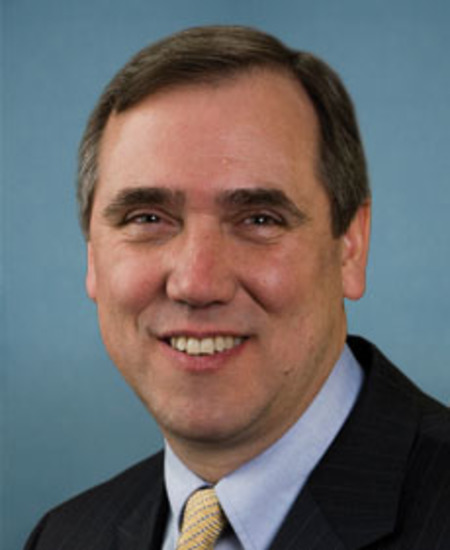
Sen. Jeff Merkley
Sponsored bills
Maddy summaryThe Mining Waste, Fraud, and Abuse Prevention Act of 2025 establishes new fees and royalties for hardrock mining operations on federal land. Mining claim holders must pay $200 annually per claim, and operators pay a 5-8% royalty on mineral production. The bill creates a Hardrock Minerals Reclamation Fund to which these fees and royalties will be deposited for reclaiming abandoned mine sites. It also establishes new permit requirements for mineral exploration and mining, along with financial assurance requirements to ensure reclamation. These provisions directly affect mining operators on federal lands, requiring them to comply with new fee structures, permit processes, and reclamation obligations.
Maddy summaryThis concurrent resolution (SCONRES 10) is a symbolic recognition of the League of Oregon Cities' 100-year history (since 1925). It honors the organization for its advocacy on behalf of Oregon's 241 cities - representing 70% of the state's population - and its role in supporting federal policy efforts related to infrastructure, pandemic relief, and community development. The resolution does not create new laws or alter funding; it solely commemorates the League's historical contributions through past advocacy on issues like the CHIPS Act, Infrastructure Investment Act, and pandemic recovery funds. It is a non-binding expression of congressional support, not a policy change affecting any entity.
Maddy summaryS 935 prohibits the U.S. President from selling or licensing the export of specific military equipment to the United Arab Emirates (UAE) or its agencies. The bill blocks these defense exports under the Arms Export Control Act until the President certifies to Congress that the UAE is not providing military support to Sudan's Rapid Support Forces. Covered items include weapons and defense articles listed in specific categories of the U.S. Munitions List (e.g., Category I-VIII, XIV, XVI-XVIII). This directly affects U.S. defense contractors and the UAE government by halting certain arms sales until the certification condition is met. The law imposes a concrete restriction on defense exports based on a defined foreign policy condition.
Maddy summaryThis bill increases federal funding for projects improving safety for pedestrians and cyclists. It allows states and localities using federal highway funds to fully cover (100%) the costs of specific projects, such as connecting existing bike/pedestrian paths or reducing risks to vulnerable road users, if they use "Proven Safety Countermeasures" for cyclists/pedestrians as defined by the Federal Highway Administration. Projects must align with state safety plans or local safety plans like Complete Streets or Vision Zero plans. The bill directly affects states and local governments managing transportation infrastructure funded through federal highway programs.
Maddy summaryS 951, the "Stop Comstock Act," amends federal obscenity laws to remove outdated and restrictive language. It deletes terms like "indecent" and "immoral" from Title 18 (e.g., Sections 552, 1461, 1462) and the Tariff Act, which were historically used to block access to reproductive health materials. The bill directly affects how federal law defines "obscene" materials, eliminating references to abortion, contraception, or "immoral use" that could be misapplied to restrict lawful medical information. This is a technical legal update to clarify that federal obscenity laws do not cover protected reproductive health content.
Maddy summaryS 957, the Honor Our Living Donors Act, amends federal law to protect living organ donors by requiring reimbursement programs to ignore the income of the organ recipient when calculating donor payments. The bill specifically prohibits grant programs from considering the recipient's income when reimbursing donors for eligible costs, ensuring donors aren't disadvantaged based on who receives the organ. It also mandates an annual report by the Secretary of Health and Human Services by December 31 each year, detailing whether funding covered all donor expenses and estimating shortfalls. This bill directly affects living organ donors participating in federal grant programs and the agencies administering those programs.
Maddy summaryThe Medicare Dental, Hearing, and Vision Expansion Act of 2025 would expand Medicare Part B coverage to include dental, hearing, and vision services starting in 2027. This would cover preventive dental services at 100% and other dental services at 80%, hearing aid examinations and hearing aids at 80%, and routine eye exams at 80% with frequency limits (such as two dental cleanings per year). The bill includes $900 million for dental, $370 million for hearing, and $500 million for vision implementation funding, affecting approximately 65 million Medicare beneficiaries who currently pay out-of-pocket for these services.
Maddy summaryThis bill establishes a federal grant program to help states and tribes implement Extreme Risk Protection Orders (ERPOs), which temporarily restrict firearm access for individuals deemed to pose a danger to themselves or others. To qualify for grants, states and tribes must enact legislation meeting specific requirements, including petition processes, notice and hearing procedures, and standards for issuing ERPOs. The bill requires states to notify federal authorities about ERPOs and update the National Instant Criminal Background Check System, ensuring ERPOs are recognized across state lines. It also mandates training for law enforcement on the safe, impartial use of ERPOs and includes provisions for reporting demographic data on petitioners and respondents. The legislation directly affects states, tribes, law enforcement officers, and individuals subject to ERPOs.
Maddy summaryThis bill amends the Religious Freedom Restoration Act (RFRA) to clarify that RFRA does not block enforcement of key federal laws protecting civil rights and safety. Specifically, it adds an exception preventing RFRA claims from overriding laws that prohibit discrimination (like the Civil Rights Act of 1964), ensure workplace protections (such as the Family and Medical Leave Act), prevent child exploitation, or guarantee healthcare access. The amendment ensures religious freedom arguments cannot be used to challenge these existing legal requirements. It also clarifies that RFRA does not apply to lawsuits against government entities seeking relief for violations of these protections.