

Real Education and Access for Healthy Youth Act of 2021 This bill requires the Department of Health and Human Services (HHS) to establish grants to support sex education and sexual health services for young people (ages 10 through 29) and repeals requirements that apply to certain federally funded sex education programs. HHS must award grants, in coordination with the Department of Education, to (1) provide sex education to young people through elementary and secondary schools, institutions of higher education, and youth-serving organizations; and (2) train education professionals to effectively teach, and otherwise support, sex education. Sex education refers to high quality teaching and learning that follows, to the maximum extent practicable, specified educational standards; covers a variety of topics concerning sex and sexuality; explores values and beliefs about those topics; and helps young people gain skills to navigate relationships and manage sexual health. Additionally, HHS must award grants for the provision of sexual health services to marginalized youth to youth-serving organizations and health care entities that are eligible to receive covered outpatient drugs at reduced prices through the 340B drug discount program. Recipients of any of these grants must comply with certain nondiscrimination requirements. In addition, they may not use funds for sex education programs or sexual health services that provide incomplete or inaccurate medical information or fail to address specified issues. The bill also eliminates prohibitions regarding the content of specified federally funded sexual health education and information programs and repeals the Abstinence Only Until Marriage program.
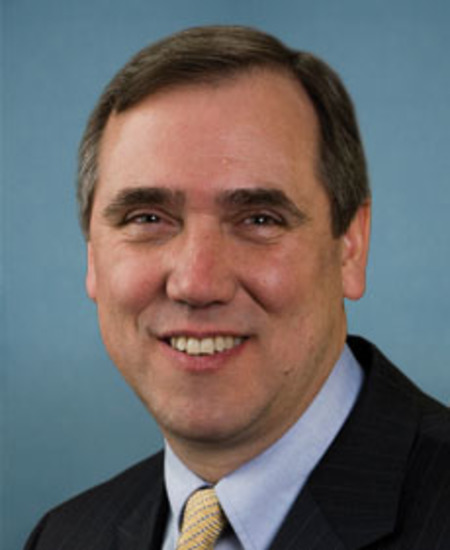
Sen. Jeff Merkley
Sponsored bills
Encouraging More Proxy voting by Organized Workers, Employees, and Retirement Savers Act or the EMPOWERS Act This bill modifies the requirements for single-employer retirement plans with respect to the fiduciaries and proxy voting procedures for such plans. Specifically, it requires the assets of such plans to be held in trust by a joint board of trustees that represents the interests of the employer and the interests of the plan participants and their beneficiaries on an equal basis. Additionally, the trustees of each plan must undergo training and establish proxy voting guidelines for the plan. In exercising a plan's proxy voting rights, a fiduciary may consider (1) the investment objectives of the plan participants and their beneficiaries, and (2) certain effects of negative externalities generated by portfolio companies.
Affordable Housing Production Act This bill allows the Department of the Treasury to transfer Troubled Asset Relief Program funds to the Department of Housing and Urban Development's Housing Trust Fund. This fund provides grants to states to (1) increase and preserve the supply of rental housing for extremely low-income and very low-income families, including homeless families; and (2) increase homeownership for extremely low-income and very low-income families.
United States Postal Service Shipping Equity Act This bill authorizes the mailing of alcoholic beverages by certain entities in accordance with the delivery requirements otherwise applicable to a privately carried shipment. The authorization applies to an entity (including a winery, brewery, beverage distilled spirits plant, or other wholesaler, distributer, importer, or retailer of alcoholic beverages) that has registered with, obtained a permit from, or obtained approval of an application from the Department of the Treasury. The bill directs the U.S. Postal Service (USPS) to prescribe regulations (1) requiring direct delivery to a duly authorized agent at a postal facility or to the addressee, who must be at least 21 years of age and present a valid, government-issued photo identification at the time of delivery; (2) prohibiting such alcoholic beverages from being for resale or any other commercial purpose; and (3) requiring such entity to certify that the mailing is not in violation of applicable laws or regulations and to provide other information as directed by the USPS. A state, local, or tribal government may bring a civil action against the USPS in U.S. district court for a violation of a law of the state, locality, or tribe regarding the sale, mailing, transportation, or importation of alcoholic beverages. The USPS shall be liable to the same extent as a private individual under like circumstances but shall not be liable for interest prior to judgment or for punitive damages.
Health Equity and Access under the Law for Immigrant Women and Families Act of 2021 or the HEAL Immigrant Women and Families Act of 20 21 This bill extends Medicaid and Children's Health Insurance Program coverage to individuals lawfully present in the United States who otherwise meet eligibility requirements. Individuals granted federally authorized presence also are required to maintain minimum essential health insurance coverage and are eligible for health insurance exchanges, reduced cost sharing, premium subsidies, and premium tax credits.
Paying a Fair Share Act of 2021 This bill requires an individual taxpayer whose adjusted gross income exceeds $1 million (high-income taxpayer) to pay a minimum tax rate of 30% of the excess of the taxpayer's adjusted gross income over the taxpayer's modified charitable contribution deduction for the taxable year (tentative fair share tax). The amount of the tax is the excess (if any) of the tentative fair share tax over the excess of (1) the sum of the taxpayer's regular tax liability, the alternative minimum tax (AMT) amount, and the payroll tax for the taxable year; over (2) certain tax credits. The bill provides for a phase-in of such tax and requires an inflation adjustment to the $1 million income threshold for taxable years beginning after 2021. The bill also expresses the sense of the Senate that Congress should enact tax reform that repeals unfair and unnecessary tax loopholes and expenditures, simplifies the tax system, and makes sure that the wealthiest taxpayers pay a fair share of taxes.
This bill reauthorizes through FY2030 the energy efficiency and conservation block grant program.
Community Energy Savings Program Act of 2021 This bill directs the Department of Energy to establish a grant program for states and Indian tribes to provide loans to consumers and communities that want to implement cost-effective energy efficiency measures.
This resolution expresses support for the goals and ideals of National Nurses Week.
Nurses for Under-Resourced Schools Everywhere Act or the NURSE Act This bill establishes a demonstration grant program through which the Department of Education must award matching funds to increase the number of school nurses in public elementary and secondary schools served by a local educational agency in which at least 20% of students are eligible to participate in the school lunch program.