

Maddy summarySRES 148 is a ceremonial Senate resolution (not a law) passed in March 2023 that formally recognizes the heritage, culture, and contributions of American Indian, Alaska Native, and Native Hawaiian women. It highlights their historical and ongoing achievements in areas like military service, business ownership, healthcare, arts, and civil rights through specific examples (e.g., veterans, entrepreneurs, activists). The resolution has no policy or funding mechanisms - it solely expresses the Senate's intent to honor these contributions and acknowledge the need to address barriers they face. It was introduced by Senators Murkowski, Schatz, and others with bipartisan support.
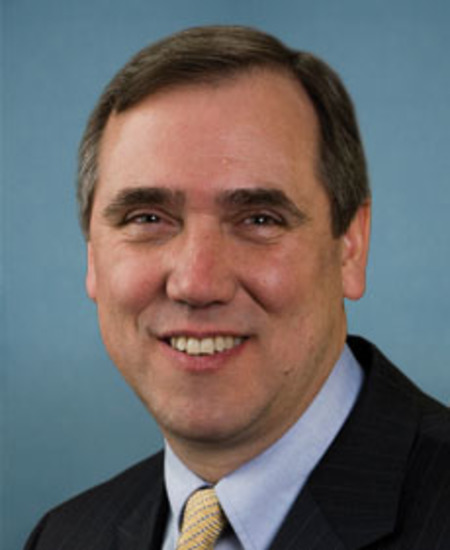
Sen. Jeff Merkley
Sponsored bills
Maddy summaryThis resolution recognizes the contributions of care workers in the U.S., including childcare providers, home health aides, and support staff for older adults and people with disabilities. It expresses support for designating April 2023 as "Care Worker Recognition Month" to honor their essential role in supporting families and communities. The resolution highlights care workers' impact on economic stability, family caregiving, and community well-being without creating new laws or funding. As a symbolic gesture, it does not impose legal requirements or alter existing policies.
Maddy summarySRES 154 is a symbolic Senate resolution supporting International Transgender Day of Visibility. It encourages the American public to observe this day through ceremonies and activities, celebrates transgender community achievements, and recognizes the community's fight for equality. The resolution has no legal effect or policy changes - it serves solely as a statement of support. It directly acknowledges transgender individuals' contributions and the ongoing challenges they face, including discrimination in employment, education, and healthcare. The resolution was introduced by multiple senators and refers to transgender representation in government and media as part of its context.
This resolution designates the first week of April as National Asbestos Awareness Week. It also urges the Surgeon General to warn and educate people about asbestos exposure, which may be hazardous to their health.
Maddy summarySRES 144 is a Senate resolution (not a law) that calls on the federal government to create a "Transgender Bill of Rights." It would direct agencies to develop policies protecting transgender and nonbinary people’s rights in healthcare, employment, housing, education, and legal identity. Key proposals include amending anti-discrimination laws to explicitly cover gender identity, ensuring access to gender-affirming care, simplifying updates to government IDs, and improving safety protections. The resolution emphasizes that these steps are "only the first steps" toward equality and stresses involving transgender communities in policy design. As a symbolic measure, it does not change current law but urges future legislative action.
Maddy summarySRES 142 is a Senate resolution expressing concern about environmental crimes and attacks on environmental and land defenders in Latin America and the Caribbean. It highlights the disproportionate targeting of Indigenous peoples (40% of fatal attacks in 2021 despite comprising 5% of the global population) and women, noting high murder rates in countries like Mexico, Colombia, and Brazil. The resolution urges governments to protect defenders, comply with international agreements (like the Escazú Agreement), and calls on U.S. agencies to support regional efforts through capacity building and anti-corruption initiatives. It does not create new laws or funding but serves as a formal statement of concern.
Maddy summaryThis bill bans the manufacture, processing, use, and distribution of commercial asbestos (including specific fiber types like chrysotile and crocidolite) in the U.S. starting one year after enactment, directly affecting manufacturers, processors, and distributors of these materials. It includes a two-year exception for the chlor-alkali industry to continue using asbestos in diaphragm manufacturing for chlorine production. The President may grant limited, renewable 3-year exemptions for national security reasons, requiring public notice except in rare security-sensitive cases. Additionally, it mandates the EPA and HHS to develop public education resources about asbestos health risks and mitigation options.
Maddy summaryS 1098, the Global Health, Empowerment and Rights Act, changes U.S. aid rules for foreign nongovernmental organizations (NGOs) receiving funding under the Foreign Assistance Act. It removes eligibility barriers for these NGOs if they provide health services (like counseling) using their own funds, as long as those services comply with local laws and would be legal in the U.S. It also eliminates extra restrictions on how foreign NGOs can use non-U.S. government funds for advocacy or lobbying, making these rules the same as those applied to U.S. NGOs receiving similar aid. This directly affects foreign health-focused NGOs working in international development and rights advocacy.
Maddy summaryThe End Racial and Religious Profiling Act of 2023 (ERRPA) prohibits law enforcement agencies at all levels from engaging in racial profiling, defined as using race, ethnicity, national origin, religion, gender, or sexual orientation in stops and searches without specific evidence. The bill requires federal, state, local, and tribal law enforcement agencies to collect and submit data on stops and searches disaggregated by race, ethnicity, gender, and religion, and to implement training programs on racial profiling. It establishes grant programs to fund data collection demonstration projects and best practices development for eliminating racial profiling, with funds reserved for small and rural law enforcement agencies. The bill also mandates annual reports to Congress on racial profiling data and implementation progress, with enforcement available through civil actions for individuals or the government.
Maddy summaryThis bill establishes a 2-year pilot program to fund state-based nursing workforce centers through $1.5 million annually (2024-2025) for up to six grants. Eligible applicants include state agencies, nursing boards, nonprofits, or schools of nursing, which must provide matching funds. Centers will analyze nursing workforce data (including shortages, education gaps, and retention challenges), develop strategies to recruit and retain nurses (especially in rural areas and diverse populations), and support faculty and leadership development. The program requires annual reports to Congress on outcomes and best practices for addressing nursing workforce shortages.