

Maddy summaryThis bill exempts certain family members of eligible Filipino veterans from U.S. immigration visa limits. It directly affects spouses, children, and other relatives of Filipino veterans who were naturalized under specific historical laws (the 1990 Immigration Act or the 1940 Act related to WWII service). The key provision amends the Immigration and Nationality Act to create a new exemption category, allowing these family members to qualify for visas without being subject to annual numerical caps. This changes the process by removing a specific barrier to family reunification for this group. The bill focuses on updating visa eligibility rules, not creating new benefits.
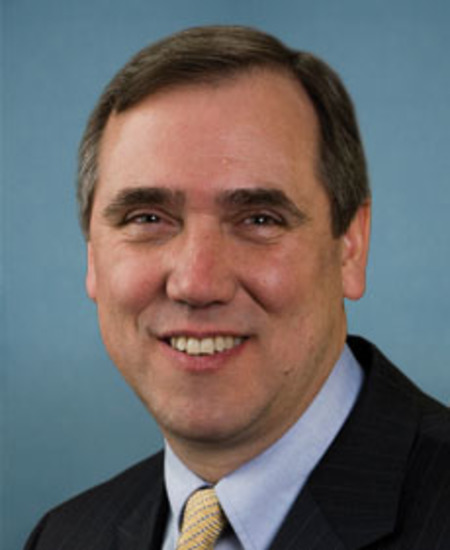
Sen. Jeff Merkley
Sponsored bills
Maddy summaryS.1252, the Uyghur Policy Act of 2023, requires the U.S. State Department to develop a strategy within 180 days to pressure China to release Uyghurs and other ethnic minorities detained in Xinjiang. It mandates U.S. diplomats to seek access to detention facilities, support Uyghur advocacy in Muslim-majority countries through public diplomacy programs, and provide Uyghur language training for Foreign Service officers. The bill also directs the U.S. to advocate at the United Nations for unimpeded access to Xinjiang and to oppose efforts limiting discussion of human rights issues there. It directly affects U.S. diplomatic operations, international advocacy efforts, and the State Department’s engagement with China on Xinjiang. The legislation focuses on concrete policy actions rather than speculative outcomes.
Maddy summaryThe FISH Act of 2023 establishes a U.S. "black list" of foreign fishing vessels engaged in Illegal, Unreported, or Unregulated (IUU) fishing, including those using forced labor. Vessels on this list would be denied access to U.S. ports, services, and transshipment in U.S. waters, with sanctions imposed on their beneficial owners. The bill requires coordination between the National Oceanic and Atmospheric Administration, State Department, and Customs and Border Protection to implement the list, verify seafood imports, and share data to combat IUU fishing. It also authorizes $20 million annually for enforcement and includes provisions for technical assistance to help nations improve fisheries management. The law directly affects foreign fishing vessels, their owners, and U.S. agencies responsible for enforcement and import verification.
Maddy summaryS 1231 (SAD Act) prohibits crisis pregnancy centers (CPCs) from making deceptive claims about providing abortion services, contraception, or employing licensed medical staff. It directly affects CPCs that falsely represent themselves as reproductive health providers, which the bill states often target underserved communities. The law authorizes the Federal Trade Commission (FTC) to enforce this prohibition under existing consumer protection laws, imposing civil penalties of up to $100,000 or 50% of a CPC's revenue. The FTC must also submit biennial reports to Congress on enforcement actions. The bill aims to ensure patients receive accurate information about reproductive health services.
Maddy summaryThe SMART Prices Act (S 1246) repeals a provision blocking states from negotiating Medicare drug prices and accelerates the Medicare Drug Price Negotiation Program. It increases the annual number of drugs eligible for negotiation from 10 to 40 starting in 2027, shortens the timeframes for qualifying drugs from 7 to 3 years, and adjusts price ceiling percentages (e.g., raising the maximum fair price cap for some drugs from 75% to 76%). These changes directly affect Medicare beneficiaries by potentially lowering drug costs and pharmaceutical companies by altering negotiation timelines and pricing rules. The bill aims to reduce Medicare drug spending through faster, more aggressive price negotiations.
Maddy summaryThe Green New Deal for Health Act establishes an Office of Climate Change and Health Equity within the Department of Health and Human Services to coordinate federal efforts addressing climate impacts on health. It creates a National Strategic Action Plan to improve health sector resilience, allocates $10 billion for climate-ready medical facilities through Green Hill-Burton funds, and requires hospitals to notify the government 90 days before discontinuing essential services or closing. The bill directly affects health care facilities, communities disproportionately impacted by climate change (defined as communities with significant representation of communities of color, low-income populations, or Tribal communities), and individuals with vulnerabilities like those under 5 or over 65, facing racial bias, or with disabilities. Key provisions include mandatory climate risk disclosure for medical supplies, grants for community mental health programs focused on climate resilience, and requirements to maintain essential health care access during climate disasters.
Maddy summaryThe No Child Left Inside Act of 2023 would provide federal grants to states to implement environmental literacy plans in K-12 education. These plans would integrate outdoor learning experiences into regular school curriculum, provide teacher professional development focused on environmental content, and create outdoor learning spaces on school grounds. The bill includes a specific grant program for outdoor school education programs that offer multi-day, hands-on environmental experiences aligned with academic standards. Priority would be given to high-need schools serving students from low-income families, with states required to report annually on program implementation and effectiveness.
Maddy summaryS 1202, the "Keep Our PACT Act," mandates increased annual federal funding for two key education programs. It requires specific minimum funding levels for Title I of the Elementary and Secondary Education Act (which supports schools in high-poverty areas) and the Individuals with Disabilities Education Act (IDEA, which funds specialized education for students with disabilities) from fiscal years 2024 through 2033. The bill sets annual dollar targets that increase each year, with IDEA funding eventually reaching 40% of national per-pupil spending for students with disabilities by 2033. These funds directly affect public schools serving low-income students and students with disabilities across all states. The bill does not change eligibility or program requirements but ensures specified funding levels are appropriated annually.
Maddy summaryThe Latonya Reeves Freedom Act of 2023 establishes a federally protected right for individuals with disabilities who require long-term services and supports (LTSS) to live in community-based settings rather than institutions. The bill defines specific requirements for "community-based" settings, including housing options that allow individuals to live in their own homes or shared residences with privacy rights, choice, and control over their services. It requires states to develop transition plans with measurable goals to move people from institutional settings to community-based supports within 12 years, along with annual reporting on progress. The Department of Justice and Department of Health and Human Services will enforce the law through investigations, compliance reviews, and the ability to seek injunctive relief for violations.
Maddy summaryThe Do No Harm Act amends the Religious Freedom Restoration Act (RFRA) to clarify that RFRA does not apply when federal laws protect against discrimination (like the Civil Rights Act of 1964), guarantee workplace protections (such as the Family and Medical Leave Act), prevent child exploitation, or ensure health care access. It specifically prevents religious freedom claims from blocking enforcement of these existing laws. The bill directly affects individuals or entities attempting to use RFRA to challenge such federal protections in court. This amendment ensures that religious freedom arguments cannot override established civil rights, workplace, child safety, or health care regulations.