

Maddy summaryThis concurrent resolution (SCONRES 9) expresses Congress's non-binding sense that climate change constitutes an emergency requiring urgent federal action. It urges the President to use existing authorities (like the National Emergencies Act) to mobilize resources for rapid climate mitigation, building on the Inflation Reduction Act's $369 billion climate investments. The resolution emphasizes addressing disproportionate impacts on frontline communities, advancing environmental justice, and accelerating the transition to renewable energy. It does not create new laws or declare a formal emergency but calls for leveraging current powers to scale climate action.
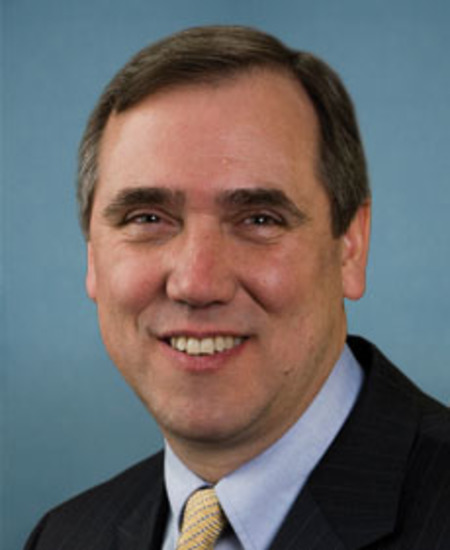
Sen. Jeff Merkley
Sponsored bills
Maddy summarySJRES 4 is a joint resolution that removes the 1972 deadline for states to ratify the Equal Rights Amendment (ERA), which was originally proposed in House Joint Resolution 208. It declares that the ERA is valid as part of the U.S. Constitution if ratified by three-fourths of states (38), regardless of the expired deadline. The resolution directly affects the ERA ratification process, making it possible for states to complete ratification without time constraints. As of 2023, 38 states had already ratified the ERA, and this resolution would finalize its inclusion in the Constitution if enacted.
Maddy summaryThe Child Care for Working Families Act establishes a new federal program to provide affordable, high-quality child care for working families with children under age 6. It requires states to implement a sliding fee scale (with no copayment for families earning up to 85% of state median income) and develop a tiered quality system for child care providers, with payment rates that support staff wages comparable to elementary educators. The bill prioritizes access for underserved populations including children with disabilities, children experiencing homelessness, children in foster care, and children from low-income families, while requiring states to improve child care quality and supply through dedicated funding streams. States must submit detailed plans demonstrating how they will meet these requirements to receive federal funding, which will be provided through a combination of direct child care assistance and quality improvement activities.
Maddy summaryThis bill prohibits insurers from denying coverage, canceling policies, or increasing premiums for life, disability, or long-term care insurance solely because someone is a living organ donor, without considering actual health risks. It also updates the Family and Medical Leave Act to include recovery from organ donation surgery as a qualifying condition for leave for private-sector employees and federal workers. Additionally, the bill requires the Health and Human Services Secretary to update public educational materials about living organ donation within six months, covering benefits, risks, and the new insurance protections. These changes directly affect living organ donors, insurers, and employers who must comply with the updated leave and insurance rules.
Maddy summaryThe HELP Copays Act (S 1375) changes how health insurance plans calculate patient cost-sharing. It requires that discounts, financial assistance, or third-party payments (like drug manufacturer coupons) count toward a patient’s deductible, copayment, or out-of-pocket limit. This directly affects individuals enrolled in group or individual health insurance plans who receive such assistance. The bill amends the Public Health Service Act and Affordable Care Act to ensure these payments reduce the actual out-of-pocket costs patients face, rather than being treated as separate expenses.
Maddy summaryThe Forced Arbitration Injustice Repeal Act (S 1376) would prohibit businesses from requiring customers, employees, or small businesses to agree to private arbitration for future employment, consumer, antitrust, or civil rights disputes. It also bans agreements that prevent people from joining class or collective lawsuits in these areas. The bill makes such forced arbitration clauses unenforceable and ensures courts - not arbitrators - decide if the law applies. This directly affects individuals and small businesses in disputes involving workplace discrimination, product issues, unfair competition, or civil rights violations, allowing them to seek justice collectively in court.
Maddy summaryThe CLAIM Act protects insurance companies from federal penalties when providing coverage to cannabis businesses operating legally under state laws. It prohibits federal agencies from banning, penalizing, or forcing insurers to cancel policies solely because a business is cannabis-related, or because an owner, operator, or employee works in the cannabis industry. The bill also shields insurers from federal liability for offering such coverage or investing income from it, as long as the business complies with state or tribal cannabis regulations. It does not require insurers to cover cannabis businesses but ensures they can do so without federal interference. This primarily affects insurers and cannabis businesses operating within legal state frameworks, addressing a key barrier to accessing insurance.
Maddy summary# Summary of Proposed Educator Loan Forgiveness and Teacher Preparation Amendments This document proposes significant amendments to the Higher Education Act of 1965, primarily focused on teacher preparation, educator loan forgiveness, and support for educators working in high-need schools and early childhood education programs. ## Key Provisions: 1. **Cost of Attendance Expansion (Section 4)**: - Amends Section 472 to include "reasonable costs associated with clinical experiences related to that program" as part of cost of attendance for students in educator preparation programs. 2. **TEACH Grants (Section 5)**: - Establishes TEACH Grants of $8,000 per year for students in teacher preparation programs. - Requires recipients to teach in high-need fields (math, science, special education, etc.) for 4 years in high-need schools. - Failure to fulfill service obligation converts grants to loans with 0% interest. 3. **Enhanced Loan Forgiveness (Section 6)**: - Creates a new Educator Loan Forgiveness Program requiring 5 years of qualifying service in high-need schools or early childhood education programs. - Includes both: * Full loan forgiveness upon completion of 5 years of service * Monthly loan forgiveness during service (Secretary assumes minimum monthly obligation) - Defines "high need school" broadly to include: * Schools with over 30% poverty rate * Schools identified for improvement * Bureau of Indian Education schools * Tribal schools * Native Hawaiian education systems - Includes provisions for parent PLUS loans on behalf of qualifying educators. 4. **Loan Credit Program (Section 7)**: - Creates a new "Loan Credit for Educators" program applying monthly credits to covered loans for full-time educators. - Credits are applied to the balance of interest and principal due on covered loans. - Designed to encourage individuals to enter and continue in the education profession. ## Overall Purpose: The legislation aims to enhance student access to a well-prepared, diverse, and stable educator workforce by eliminating debt burdens for educators in return for service teaching and leading in high-need schools or early childhood education programs. It includes comprehensive support for educator preparation programs, expanded loan forgiveness options, and new credit mechanisms to reduce financial barriers to entering and remaining in the education profession. The amendments are designed to address educator shortages in high-need areas, particularly in schools serving high-poverty communities, tribal communities, and early childhood education settings.
Maddy summaryThe WIPPES Act (S 1350) requires manufacturers and retailers to label specific types of premoistened wipes with a standardized "Do Not Flush" notice and symbol. It directly affects producers of baby wipes, cleaning wipes (including bathroom and hard surface cleaners), and personal care wipes (like makeup remover or feminine hygiene wipes) that could be flushed. The law mandates clear, visible labeling on packaging according to strict placement rules (e.g., on cylindrical packaging, flexible film, or rigid containers) to ensure consumers see the warning each time a wipe is dispensed. The goal is to prevent sewer blockages and environmental harm caused by flushing these wipes, which often do not break down safely.
Maddy summaryThe Election Worker Protection Act of 2023 provides federal grants to states for recruiting and training election workers (including poll workers and election volunteers) with specific requirements for cultural competence and diversity in recruitment efforts. It also funds physical security services and social media threat monitoring for election workers to protect them from threats. The bill establishes new criminal penalties for intimidating, threatening, or harassing election workers while they perform their duties, and creates a grant program to help protect election workers' personally identifiable information from public disclosure. These provisions apply to workers involved in federal elections and require states to submit reports on how the funds are used.