

Maddy summaryThis bill changes how donations of property that has increased in value are taxed when given to certain organizations. It removes a distinction in the tax code that previously treated transfers to political organizations differently from transfers to other tax-exempt groups like charities. Now, donors giving such appreciated property to organizations under Section 501(c) (e.g., charities) or Section 527 (political groups) will face the same tax rules. The change applies to donations made after the bill becomes law. It affects donors and these specific types of tax-exempt organizations.
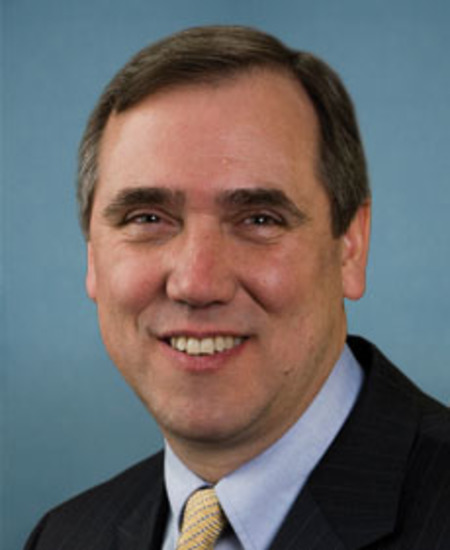
Sen. Jeff Merkley
Sponsored bills
Maddy summaryThis bill creates a new oversight structure for for-profit colleges (proprietary institutions of higher education) by establishing a Proprietary Education Interagency Oversight Committee composed of federal agency heads and a Proprietary Education Oversight Advisory Committee with diverse stakeholder representation. It requires a centralized complaint system for students to report issues with these institutions, an annual report containing detailed data on enrollment, finances, student outcomes, and enforcement actions, and a public "For-Profit College Warning List" identifying institutions with serious problems like fraud, lawsuits, or eligibility issues. The bill directly affects for-profit colleges that receive federal education assistance, students attending these institutions, and multiple federal agencies responsible for oversight. These provisions aim to increase transparency, accountability, and consumer protection in the for-profit higher education sector.
Maddy summaryThe GRACE Act establishes a minimum annual refugee admission level of 125,000, requiring the U.S. to admit at least that many refugees each fiscal year unless the President sets a higher number (with 125,000 automatically applying if no determination is made). It mandates that the President consider the United Nations High Commissioner for Refugees' global resettlement needs when setting annual numbers and allocate refugees regionally, including an unallocated reserve for unexpected regional needs after notifying Congress. The bill also requires quarterly reports to Congress on refugee admissions, including regional breakdowns, security clearance rates, processing times, and plans to meet annual goals, enhancing transparency in the refugee admissions process.
Maddy summaryThis bill amends the National Voter Registration Act to allow U.S. Citizenship and Immigration Services (USCIS) field offices to serve as official voter registration agencies for new naturalized citizens. It requires USCIS offices to facilitate voter registration applications during naturalization processes and mandates that courts conducting naturalization ceremonies permit USCIS to provide registration assistance. The bill directly affects newly naturalized citizens who complete their citizenship process at USCIS offices or through court ceremonies. Key provisions establish joint procedures between states and USCIS for registration and clarify that existing immigration fees and grant programs may fund these voter registration services.
Maddy summaryThe Human Rights Defenders Protection Act of 2024 establishes a comprehensive U.S. strategy to protect global human rights defenders facing violence, threats, and reprisals for their work. It creates a new visa category (101(a)(15)(W)) allowing human rights defenders at urgent risk to enter the U.S. for safety, while requiring the President to develop an annual strategy for U.S. embassies to monitor threats, train diplomats, and coordinate protection efforts. The bill mandates U.S. embassies to identify designated points of contact for human rights defenders, track patterns of reprisals, and integrate protection measures into diplomatic and development activities. It also expands the Reagan-Fascell Democracy Fellows Program to support democracy advocates at risk and requires annual country reports detailing treatment of human rights defenders worldwide. The legislation directly affects human rights defenders advocating for environmental protection, democracy, women's rights, minority rights, and LGBTQI+ rights who face threats from governments or non-state actors.
Maddy summaryThis bill excludes certain wildfire relief payments from taxable income for individuals affected by federally declared wildfires. It applies to payments covering uninsured losses like property damage, additional living expenses, or emotional distress resulting from qualified wildfires (declared after 2014). The exclusion prevents double tax benefits by disallowing deductions for expenses already covered by these payments. The policy change applies only to payments received between 2020 and 2025.
Maddy summaryThe Investor Choice Act of 2024 prohibits brokers, dealers, and investment advisers from requiring investors to use mandatory arbitration or waive class action rights in contracts. It amends key securities laws (the Securities Exchange Act, Securities Act, and Investment Advisers Act) to ban clauses that force disputes into arbitration or restrict court access. Existing agreements with such clauses become void unless arbitration was already initiated before the law passed. This directly affects retail investors and financial firms by ensuring investors can choose between arbitration and court, and pursue class actions when appropriate.
Maddy summaryThis bill prohibits rental property owners (with 4+ units) and algorithmic services from facilitating price coordination among landlords. It makes it illegal for owners to use "coordinators" (software/data services) that collect and analyze rental data to recommend uniform pricing or lease terms, which could enable tacit rent cartels. Violations would be treated as antitrust violations under federal law, with penalties including triple damages for affected tenants. The Federal Trade Commission and state attorneys general would enforce these provisions, and pre-dispute arbitration agreements related to violations would be unenforceable.
Maddy summaryS 3694 (SWIMS Act of 2024) bans the public display of orcas, beluga whales, false killer whales, and pilot whales by prohibiting their export, import, taking, and breeding for such purposes under federal law. It directly affects marine parks, aquariums, and facilities that currently display these species, requiring any movement to be for sanctuary placement (non-profit, natural-environment settings) or wild release. The bill amends the Marine Mammal Protection Act and Animal Welfare Act to make it unlawful to permit these whales for public display or breeding for display, while allowing limited exceptions for individual animal well-being in designated sanctuaries.
Maddy summaryS 3688, the FAIR Act, sets pay adjustments for federal employees in 2025. It increases base pay by 4% for most federal workers covered under statutory pay systems and prevailing rate employees (those paid according to local market rates). Additionally, it raises locality pay adjustments by 3.4% for 2025. The bill directly affects all federal employees whose pay is determined under these specific pay systems. These changes are mandated by statute and apply to calendar year 2025.