

Maddy summary# Summary of the Cannabis Administration and Opportunity Act This comprehensive legislation establishes a federal regulatory framework for cannabis in the United States, creating a legal, taxed, and regulated market while addressing social equity, public health, and workplace safety concerns. ## Key Provisions ### Federal Regulation & Taxation - Creates Chapter 56 of the Internal Revenue Code for cannabis taxation - Establishes a federal permit system for cannabis businesses (cultivation, production, distribution, retail) - Implements a tiered tax structure with special provisions for small businesses and social equity applicants - Requires compliance with federal labor laws (Fair Labor Standards Act, OSHA, National Labor Relations Act) ### Public Health & Safety - Integrates cannabis regulation under the Federal Food, Drug, and Cosmetic Act - Establishes specific rules for CBD products and dietary supplements - Creates transition periods (18 months for products, 3 years for drugs) for existing state-legal products - Requires safety data for new cannabis products before market entry ### Workplace Safety - Mandates compliance with OSHA standards for cannabis employers - Requires the Department of Labor to issue guidance on workplace safety practices - Funds research on workplace impacts of cannabis legalization - Includes provisions for worker training and hazard mitigation ### Social Equity & Community Investment - Creates a social equity program for cannabis business permits - Establishes a Cannabis Products Advisory Committee with diverse representation - Allocates $200 million annually for Community Development Financial Institutions - Provides $300 million annually for housing and community development in communities impacted by the "war on drugs" ### Banking Access - Updates anti-money laundering guidance to support cannabis-related businesses - Requires the Financial Crimes Enforcement Network to update guidance on reporting requirements - Prohibits financial institutions from denying services based on nonviolent cannabis offenses ### Enforcement & Compliance - Creates new enforcement mechanisms for violations of cannabis regulations - Establishes a process for addressing labor law violations in the cannabis industry - Includes provisions for criminal penalties for violations of the regulatory framework This legislation represents a comprehensive approach to federal cannabis regulation, balancing market creation with public health protections, social equity considerations, and workplace safety requirements, while addressing longstanding barriers to financial services for cannabis businesses.
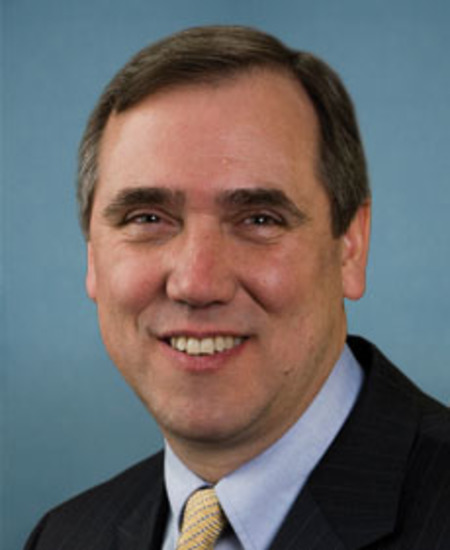
Sen. Jeff Merkley
Sponsored bills
Maddy summaryThe Choose Medicare Act (S 4231) would create "Medicare part E" plans available in individual, small group, and large group insurance markets. These plans would provide comprehensive coverage including essential health benefits, gold-level coverage, all reproductive services, and abortion coverage, with premiums adjusted by market type and location. The bill would establish $2 billion in startup funding for 2025, require employers to refer employees to health insurance navigators, and implement protections against high out-of-pocket costs for Medicare beneficiaries. It would also expand premium assistance for lower-income individuals and establish new mechanisms to protect consumers from excessive insurance rates.
Maddy summaryThe Next Step Home Act restores voting rights in federal elections for U.S. citizens who have completed sentences for federal felony convictions after December 21, 2018. It directly affects people released from federal custody who have served their sentences, requiring federal agencies to notify them of their voting rights upon release. Key provisions include mandating notification by the Bureau of Prisons or probation officers, establishing legal remedies for voting denial, and tying federal prison funding to compliance with the law. The bill applies only to federal elections (not state/local), does not override state voting laws, and takes effect for elections after its enactment.
Maddy summarySRES 655 is a Senate resolution passed on April 18, 2024, to honor the late Joseph I. Lieberman, a former U.S. Senator from Connecticut (1988-2013), following his death. The resolution recognizes his career, including his role in creating the Department of Homeland Security, establishing the 9/11 Commission, and advocating for civil rights and environmental protections. It directs the Senate to adjourn in his memory and transmit a copy to his family, expressing the Senate's sorrow and respect. This procedural resolution does not create new laws or affect policy, as it solely commemorates his legacy.
Maddy summarySRES 654 is a Senate resolution expressing concern about lead exposure affecting approximately 800 million children globally, citing World Health Organization data on lead's harmful effects on brain development and health. It calls on the U.S. Agency for International Development (USAID) to integrate lead exposure prevention into international health, education, and environmental programs abroad. The resolution specifically urges USAID to address lead risks from sources like contaminated consumer goods and recycling practices in low-income countries. As a non-binding resolution, it does not create new laws but seeks to influence U.S. international development priorities.
Maddy summaryThis bill creates an independent Office of Inspector General (IG) for the federal judicial branch, directly affecting federal judges, Supreme Court justices, and judicial employees. The IG will investigate alleged misconduct (like ethics violations or fraud) in courts below the Supreme Court and ethics issues involving Supreme Court justices, while preventing waste and fraud. Key mechanisms include conducting audits, subpoenaing records, protecting whistleblowers who report misconduct, and reporting findings to Congress and the Chief Justice. The IG cannot review court decisions or discipline judges, ensuring the role focuses on oversight rather than judicial intervention.
Maddy summaryThis bill authorizes $4.6 billion in funding for 11 specific construction and renovation projects at U.S. Department of Veterans Affairs (VA) medical facilities across 10 states and Puerto Rico during fiscal year 2024. It directly affects veterans who receive care at these facilities by enabling improvements such as new specialty care buildings, mental health space expansions, seismic safety upgrades, parking facilities, and replacement of aging infrastructure. Key provisions include $759 million for a new health center in El Paso, $528 million for mental health and parking in Dallas, and $370 million for seismic corrections and new buildings in San Juan, Puerto Rico. The bill does not change VA benefits or eligibility but funds physical infrastructure upgrades to modernize healthcare delivery.
Maddy summaryThis bill permanently authorizes the Secretary of Agriculture to fund 13 specific agricultural research programs through annual grants totaling $5 million per program. It directly supports farmers, researchers, and agricultural industries by addressing practical challenges like wildfire smoke impacts on wine grapes, drought-resistant dryland farming, sustainable berry production, and disease-resistant shellfish breeding. Key provisions include developing smoke-taint thresholds for grapes, creating precision livestock management tools for rangelands, and researching carbon-sequestering dryland farming practices. The funding is allocated annually to advance solutions for crop quality, environmental resilience, and economic viability across multiple agricultural sectors.
Maddy summaryThis bill (S 4188) bans financial markets from trading water or water rights as commodities for future delivery. It amends the Commodity Exchange Act and Public Law 85-839 to explicitly prohibit trading in water, water rights, or related financial indices or data. The change directly affects commodity exchanges, financial institutions, and traders who might have offered such contracts. It does not alter water management rules, usage rights, or affect water users.
Maddy summaryThe Green Climate Fund Authorization Act of 2024 authorizes $4 billion in U.S. funding for each of fiscal years 2025 and 2026 to be contributed to the Green Climate Fund (GCF), a global multilateral fund supporting climate action in developing countries. The GCF, established in 2010, finances projects focused on reducing greenhouse gas emissions, adapting to climate impacts, and addressing climate-related losses and damages across nearly 130 countries. The bill requires U.S. contributions to align with environmental justice principles, including free prior informed consent from indigenous communities, gender equality, and respect for human rights in all funded projects. This authorization aims to fulfill U.S. international climate finance commitments, building on a prior pledge of $3 billion for the GCF’s second replenishment period.