

Maddy summary# Summary of the Proposed Substance Use Disorder Treatment and Prevention Bill This document is a comprehensive legislative proposal focused on addressing substance use disorder through a public health approach rather than a criminal justice approach. The key elements include: ## Main Components (Title XXXIV of the Public Health Service Act) **Subtitle A: Local and State Grants** - Establishes a grant program for local and state entities to provide substance use disorder treatment - Requires establishment of a "planning council" for each locality - Specifies funding requirements and administrative structures **Subtitle B: State and Tribal Grants** - Creates a grant program for states and tribes to address substance use disorder - Includes requirements for planning councils and other administrative structures - Provides significant funding for these programs **Subtitle C: Other Grant Program** - Establishes a grant program for public entities, nonprofits, Indian entities, and Medicaid providers - Prioritizes organizations serving underserved populations - Includes specific requirements for applications and service delivery **Subtitle D: Innovation, Training, and Health Systems Strengthening** - Creates "Special projects of national significance" for innovative treatment models - Establishes education and training centers for health professionals - Provides funding to increase substance use disorder treatment provider capacity - Includes programs to support workers with substance use disorder ## Key Funding Authorizations The bill authorizes substantial annual funding across all subtitles: - **Subtitle A:** $4.6 billion annually (2024-2033) - **Subtitle B:** $4.6 billion annually (2024-2033) - **Subtitle C:** $1 billion annually (2024-2033) - **Subtitle D:** - Special projects: $500 million annually - Education/training: $500 million annually - Provider capacity: $50 million annually - Employee support: $40 million annually - Research: $10 million annually ## Additional Key Provisions 1. **Amendments to Controlled Substances Act:** - Requires "covered persons" (dispensers, distributors, manufacturers of schedule II controlled substances) to submit annual certifications regarding diversion controls and misbranding - Establishes civil and criminal penalties for failure to submit or submitting false certifications - Creates a "Comprehensive Addiction Resources Fund" to collect penalties and supplement substance use disorder treatment funding 2. **General Limitations on Fund Use:** - Funds can only be used for public health purposes - Prohibits use of funds for incarceration, institutionalization, or involuntary treatment of individuals with substance use disorder - Prohibits use of funds for activities inconsistent with public health purposes 3. **Federal Drug Demand Reduction Activities:** - Requires the Director of National Drug Control Policy to publish an online list of all drug control program grant programs - Mandates annual review of federally funded demand reduction activities for effectiveness and efficiency ## Overall Approach The bill represents a significant shift toward a public health model for addressing substance use disorder, emphasizing: - Treatment rather than punishment - Prevention and early intervention - Training for health professionals - Support for underserved populations - Evidence-based treatment models - Comprehensive data collection and research This legislation is designed to provide substantial, sustained funding for a comprehensive approach to the opioid crisis and broader substance use disorder treatment, with specific requirements to ensure accountability, effectiveness, and public health focus.
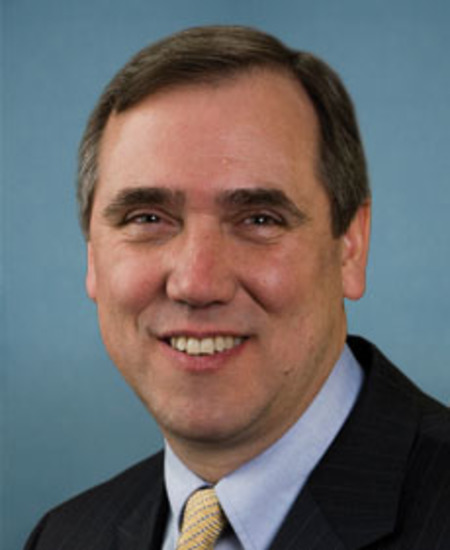
Sen. Jeff Merkley
Sponsored bills
Maddy summaryThe Medical Debt Cancellation Act (S 4289) creates a federal grant program to help hospitals cancel eligible medical debt for patients. Hospitals can apply for competitive grants to eliminate debt that is 15 months old or less, owed by low-income patients for emergency or non-elective care, with priority given to safety net hospitals. The bill also requires healthcare providers to follow new billing rules (like informing patients about financial assistance before bills are due) and bans interest on overdue medical bills, while adding protections against debt collectors pursuing pre-enactment medical debt. It establishes a public resource list of financial assistance programs and mandates annual reports on the program’s progress.
Maddy summaryThis joint resolution proposes a constitutional amendment to guarantee all U.S. citizens of voting age the fundamental right to vote in any public election in their jurisdiction. It would prohibit denying or restricting voting rights except when a government demonstrates a "compelling interest" using the "least restrictive means," and repeal the phrase "or other crime" from the 14th Amendment’s voting rights clause. Congress would gain authority to enforce this amendment through legislation. The amendment directly affects all eligible voters nationwide and would fundamentally reshape federal and state voting rights laws.
Maddy summarySRES 676 is a symbolic Senate resolution supporting National Nurses Week, observed annually from May 6 to May 12. It recognizes nurses' contributions to healthcare, highlights their role in patient advocacy and public health, and acknowledges their status as the largest healthcare profession in the U.S. The resolution does not create new policies or funding but encourages the public to observe the week with recognition and activities. It was introduced by 25 Senators and refers to nurses' historical significance, including Florence Nightingale's birthday.
Maddy summaryThe BUILD GREEN Infrastructure and Jobs Act creates a $50 billion annual grant program (2025-2034) to fund transportation infrastructure projects that reduce greenhouse gas emissions and use renewable energy. It prioritizes projects in frontline, vulnerable, or disadvantaged communities (at least 40% of funds), rural areas (30-40% of funds), and requires projects to be "green" (deeply reducing emissions and using renewable energy). The program mandates 5% of grant funds for workforce development, sets $17/hour minimum wages with annual increases tied to wage growth, and requires LEED environmental standards. Projects must also include a zero-emission transition plan and demonstrate how they will reduce vehicle miles traveled in single-occupancy vehicles.
Maddy summarySRES 673 is a commemorative Senate resolution honoring the late David Hampton Pryor, who served as a U.S. Senator for Arkansas from 1978 to 1997. The resolution expresses the Senate’s "profound sorrow" at his death and directs the Secretary of the Senate to share the resolution with the House and deliver a copy to his family. It does not create new laws or policies - it is purely ceremonial, recognizing Pryor’s career as a legislator, governor, and public servant. The resolution concludes with the Senate adjourning as a mark of respect for his legacy.
Maddy summaryThis resolution (SRES 668) is a ceremonial Senate measure honoring the late Senator Daniel Robert "Bob" Graham of Florida, who died on November 9, 2023. It formally expresses the Senate's "profound sorrow" over his death and directs the Secretary of the Senate to share the resolution with the House of Representatives and deliver a copy to his family. The resolution commemorates Graham's career as a Florida senator (1987-2005), governor (1979-1987), and his work on the 9/11 intelligence inquiry, but does not create any new laws or affect constituents. As a commemorative resolution, it serves solely to memorialize his service.
Maddy summarySRES 666 is a symbolic Senate resolution congratulating the Gay, Lesbian, and Allies Senate Staff Caucus (GLASS Caucus) on its 20th anniversary. It acknowledges the caucus’s founding in 2004, commends Senator Frank Lautenberg for his role, and recognizes key members who established and sustained the group. The resolution has no policy impact - it is purely ceremonial, expressing appreciation for the caucus’s work in fostering inclusivity and support for LGBTQ+ Senate staff over two decades.
Maddy summaryThis bill establishes a federal working group within the EPA to survey U.S. households lacking reliable drinking water or wastewater treatment, focusing on geographic distribution and cost estimates for improvements. It directs the group to use non-personal data (like ZIP codes) to avoid privacy issues and develop a methodology for estimating infrastructure costs. The group will coordinate with agencies like Interior, Agriculture, and Census, and produce a public online index linking federal and state water access data. Every five years, the EPA must report to Congress with detailed findings, including cost estimates broken down by state and congressional district, to inform future water infrastructure planning.
Maddy summaryS 4223, the Access to Birth Control Act, requires pharmacies that stock contraception to provide it without delay when requested, or immediately offer referral/transfer options if unavailable. It prohibits pharmacies from intimidating customers, misrepresenting availability, or refusing service based on personal beliefs, while allowing exceptions for no prescription, inability to pay, or professional clinical judgment. The bill targets pharmacies serving patients seeking FDA-approved contraceptives or related medications, aiming to address barriers like refusals reported post-Dobbs v. Jackson. Violations carry $1,000 daily civil penalties or allow private lawsuits for affected patients.