

Maddy summaryS 1021 establishes a new program within the Supplemental Nutrition Assistance Program (SNAP) to increase purchases of "naturally nutrient-rich dairy" (like fluid milk, yogurt, and cheese made from cow's milk) by SNAP households. It provides point-of-sale incentives at checkout, meaning SNAP users would receive immediate discounts when buying qualifying dairy products. The program allocates $10 million annually for grants to state/local governments or nonprofits to run projects, with priority given to initiatives maximizing direct incentives and using electronic systems. Projects must be evaluated for effectiveness, and results will be publicly reported, while transitioning existing dairy incentive programs to this new framework.
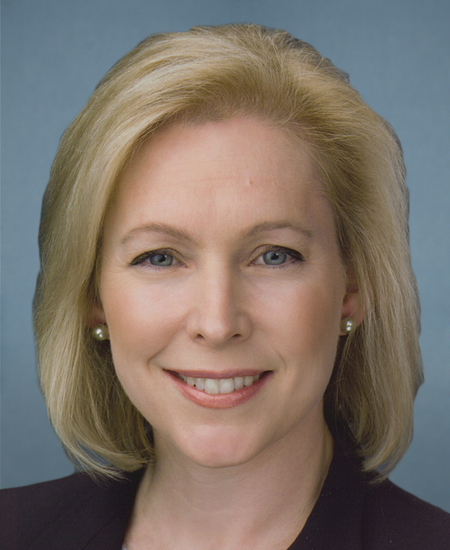
Sen. Kirsten E. Gillibrand
Sponsored bills
Maddy summaryThis bill expands the Work Opportunity Tax Credit to include military spouses. It adds "qualified military spouse" as a new category eligible for the credit, meaning employers who hire spouses of active-duty service members can claim the tax benefit. To qualify, a spouse must be certified by a local agency as married to an Armed Forces member at the time of hire. The change applies to hires occurring after the law's effective date, directly affecting military spouses seeking employment and employers who hire them.
Maddy summaryThis bill, the Major Richard Star Act (S 1032), allows veterans with combat-related disabilities to receive both their military retired pay and Veterans Affairs disability compensation simultaneously. It amends U.S. Code sections to remove the automatic reduction in retired pay that previously forced these veterans to choose between the two payments. The key change ensures veterans with combat-related disabilities qualify for full retired pay without offset against their VA disability benefits, effective for payments starting after the bill's enactment date. This directly affects veterans receiving military retired pay under Chapter 61 who also qualify for VA disability compensation for combat-related injuries.
Maddy summaryThis bill creates the Forest Conservation Easement Program, providing federal funding to help landowners place conservation easements on eligible forest land. The program offers two types of easements: forest land easements (purchased by eligible entities from landowners) and forest reserve easements (purchased directly by the federal government). It prioritizes protecting working forests and habitats for species at risk, with funding up to 75% of the fair market value for easements and special considerations for socially disadvantaged forest landowners. The program is funded at $100 million annually for fiscal years 2025-2029 and requires forest management plans for enrolled land.
Maddy summaryThe Putting Veterans First Act of 2025 protects veterans, military spouses, caregivers, survivors, and reserve component members who work in federal civil service. It requires the reinstatement of those removed, demoted, or suspended between January 20, 2025 and the bill's enactment date, with back pay and restored benefits. The bill also establishes protections against future removals without proper justification, mandates regular reporting on military community employment, and restricts changes to VA operations like office closures, hiring freezes, and telework policies without congressional notice. Additionally, it requires VA to restore canceled contracts and improve transparency through weekly workload reports and published wait times for community care.
Safe Schools Improvement Act This bill requires states to direct their local educational agencies (LEAs) to establish policies that prevent and prohibit bullying and harassment of elementary and secondary school students. In particular, these policies must prohibit bullying and harassment based on race, color, national origin, disability, religion, or sex. Sex includes sexual orientation, gender identity, and sex characteristics (including intersex traits). Further, LEAs must provide (1) students, parents, and educational professionals with annual notice of the conduct prohibited in their disciplinary policies; (2) students and parents with grievance procedures that target such conduct; and (3) the public with annual data on the incidence and frequency of that conduct at the school and LEA level. The Department of Education must conduct and report on an independent biennial evaluation of programs and policies to combat bullying and harassment in elementary and secondary schools. The National Center for Education Statistics must collect state data to determine the incidence and frequency of the conduct prohibited by LEA disciplinary policies.
Maddy summaryS 951, the "Stop Comstock Act," amends federal obscenity laws to remove outdated and restrictive language. It deletes terms like "indecent" and "immoral" from Title 18 (e.g., Sections 552, 1461, 1462) and the Tariff Act, which were historically used to block access to reproductive health materials. The bill directly affects how federal law defines "obscene" materials, eliminating references to abortion, contraception, or "immoral use" that could be misapplied to restrict lawful medical information. This is a technical legal update to clarify that federal obscenity laws do not cover protected reproductive health content.
Maddy summaryS 916 prohibits the detention of pregnant, lactating, or postpartum noncitizens in immigration custody, requiring their immediate release except in rare cases involving credible safety threats. It bans all physical restraints during pregnancy, labor, delivery, and postpartum recovery, with strict limits on exceptions. The bill mandates access to comprehensive reproductive healthcare, including prenatal care, labor services, and postpartum support, while requiring facilities to provide medical consent and maintain detailed reporting on detention practices. These provisions apply directly to noncitizens held by U.S. Immigration and Customs Enforcement (ICE) or U.S. Customs and Border Protection (CBP) facilities.
This resolution designates March 6, 2025, as National Slam the Scam Day to raise awareness and amplify the messaging about scams involving individuals impersonating government employees, encourage policies and programs to prevent such scams, recognize those who work to prevent such scams, and encourage the public to report and share information about such scams.
Maddy summaryThis bill amends the Religious Freedom Restoration Act (RFRA) to clarify that RFRA does not block enforcement of key federal laws protecting civil rights and safety. Specifically, it adds an exception preventing RFRA claims from overriding laws that prohibit discrimination (like the Civil Rights Act of 1964), ensure workplace protections (such as the Family and Medical Leave Act), prevent child exploitation, or guarantee healthcare access. The amendment ensures religious freedom arguments cannot be used to challenge these existing legal requirements. It also clarifies that RFRA does not apply to lawsuits against government entities seeking relief for violations of these protections.