

Maddy summaryThis bill expands health coverage access for military families by modifying the TRICARE Young Adult Program. It directly affects military service members' children aged 21-26 who previously faced eligibility restrictions or separate fees. Key changes include removing a prior age limit that excluded some young adults and eliminating a separate premium for this coverage. The result is simplified access to health care under TRICARE without additional costs for qualifying dependents. These updates apply to existing TRICARE benefits, not new programs.
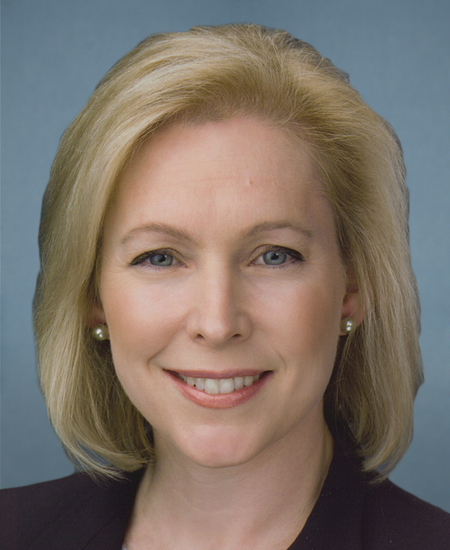
Sen. Kirsten E. Gillibrand
Sponsored bills
Maddy summaryThe O DAIRY Act of 2025 provides targeted support for organic dairy farmers by extending emergency disaster assistance to cover losses from rising organic feed costs that reduce net income by over 10% annually. It requires the USDA to collect and publish detailed cost-of-production data for organic milk, including regional feed prices and milk sales data through a new monthly "Organic All Milk Prices Survey." The bill also mandates the development of a safety net program prioritizing small organic dairy operations and establishes a $20 million infrastructure funding program to support regional processing facilities, farm aggregation systems, and new organic dairy processing plants serving small producers. Additionally, it creates five-year-funded "Regional Organic Dairy Market Specialists" to research marketing challenges and recommend policies to improve market access and competition.
Maddy summaryThe Stop the Scammers Act establishes a whistleblower reward program for individuals reporting violations of federal consumer financial law (e.g., scams, fraud). Whistleblowers who provide original information leading to successful enforcement actions by the Consumer Financial Protection Bureau (CFPB) may receive 10-30% of recovered civil penalties (minimum $50,000 if penalties are under $1 million). The bill mandates strong confidentiality protections for whistleblowers, prohibits employers from waiving these rights via contracts, and requires the CFPB to report annually on the program. It directly affects whistleblowers in consumer finance cases and the CFPB’s enforcement process, not the general public.
Maddy summaryThe Employee Ownership Financing Act establishes an Office of Employee Ownership within the Department of Labor to administer a new loan program supporting employee ownership. The program provides loans or loan guarantees to employee stock ownership plans (ESOPs) and worker-owned cooperatives to help companies become or remain at least 51% employee-owned, increase employee ownership, or expand operations while preserving jobs. Loans will have interest rates at or below market rates with up to 15 years to repay, and require business plans demonstrating employee ownership structures and meaningful employee involvement in company decisions. The bill also amends the Worker Adjustment and Retraining Notification Act to give employees the right of first refusal to purchase a plant or facility before a closure, and establishes an Advisory Council to advise on implementation.
Maddy summarySRES 334 is a symbolic Senate resolution designating the week of August 25-29, 2025, as "National Community Health Worker Awareness Week." It recognizes community health workers - frontline professionals who connect underserved communities to health services through culturally appropriate outreach, education, and advocacy - as vital to improving public health. The resolution encourages collaboration across local, state, and federal levels to raise awareness of their role but does not create new laws, funding, or requirements. It is a non-binding gesture supporting existing efforts to highlight this workforce, which serves communities through roles like health education, care coordination, and community advocacy.
Processing Revival and Intrastate Meat Exemption Act or the PRIME Act This bill exempts from federal inspection requirements animals and meats that are slaughtered and prepared at custom animal slaughter facilities for distribution within the state. Under current law, a custom slaughter exemption applies if the meat is slaughtered exclusively for personal, household, guest, or employee uses. Specifically, the bill expands the federal inspection exemption to include the slaughter of animals or the preparation of carcasses, meat, and meat food products that are slaughtered and prepared at a custom slaughter facility in accordance with the laws of the state where the facility is located; and prepared exclusively for distribution to household consumers in the state or restaurants, hotels, boarding houses, grocery stores, or other establishments in the state that either prepare meals served directly to consumers or offer meat and food products for sale directly to consumers in the state. The bill does not preempt any state law concerning (1) the slaughter of animals or the preparation of carcasses, meat, and meat food products at a custom slaughter facility; or (2) the sale of meat or meat food products.
Maddy summaryThis bill reissues a contract for the "Charting My Path for Future Success" project, which trains educators to help high school students with disabilities set goals, create action plans, and track progress toward post-graduation success. It directly affects students with disabilities in 62 high schools across 13 local districts, where 61 educators currently support 1,600 students. The key mechanism requires the Secretary of Education to continue funding the existing nonprofit project - previously awarded under IDEA - by reissuing its solicitation. The bill ensures the project’s funding cannot be canceled without congressional approval, maintaining continuity for participating students and schools.
Maddy summaryS 2377, the EACH Act of 2025, requires all federal health programs - including Medicaid, Medicare, the Children’s Health Insurance Program (CHIP), and the Indian Health Service - to cover abortion services without restrictions based on income or insurance type. It repeals the Hyde Amendment (Section 1303 of the ACA), which previously barred federal funds from covering most abortions, and prohibits state or private insurance plans from restricting abortion coverage. This directly affects millions enrolled in federal health programs, particularly low-income individuals, women of color, and young people, who face barriers to abortion access under current laws. The bill mandates that all federally funded health programs provide comprehensive abortion coverage as a standard benefit.
Maddy summaryThe WIPE Act authorizes the Department of Defense to use mobile solid waste disposal units for destroying seized illicit contraband, including counterfeit goods, narcotics, and classified materials. It specifically prohibits using open-air burn pits for disposing of contraband, classified equipment, or hazardous waste. The bill reallocates $8.95 million in fiscal year 2026 Army funding, increasing procurement funds for disposal systems while reducing operations funds previously allocated for burn pit use in contingency operations. This directly affects military installations, forward bases, and partner security forces using these disposal methods for border security and counter-narcotics efforts.
Maddy summaryThis bill authorizes $5 billion annually (2026-2030) for the Secretary of Energy to fund deferred maintenance, critical infrastructure upgrades, and modernization projects at U.S. national laboratories. It directly affects Department of Energy national laboratories, including facilities for research, computing, utilities, and administrative buildings. Key provisions require the Secretary to submit annual project lists to Congress and develop a 10-year strategy report detailing facility priorities, funding needs, and operational plans. The funding must allocate at least one-third yearly to the Office of Science. The bill mandates specific reporting to congressional committees on project descriptions and funding profiles.