

Maddy summaryThis bill ensures uninterrupted access to SNAP (food stamps) and WIC benefits during government funding gaps in fiscal year 2026. It authorizes the Treasury to provide emergency funds if Congress fails to pass full-year appropriations for the Department of Agriculture by September 30, 2025, covering all missed benefits retroactively from September 30, 2025. State agencies administering these programs would be reimbursed for costs incurred during the funding lapse. The funding automatically terminates once Congress passes 2026 appropriations or by September 30, 2026.
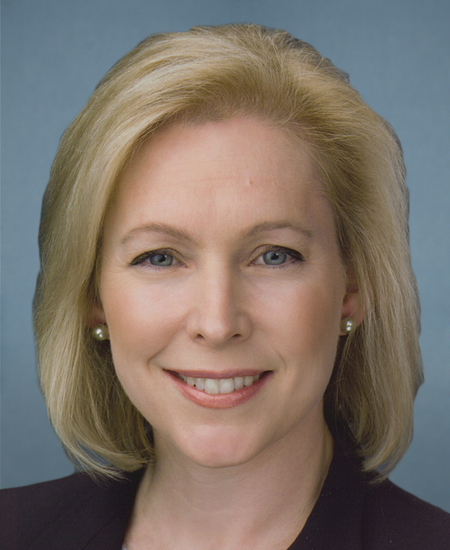
Sen. Kirsten E. Gillibrand
Sponsored bills
Maddy summaryThis bill provides temporary student loan relief for federal employees and their supporting contractors during government shutdowns. If a shutdown lasts 14+ days in 2026 or later, the Secretary of Education must suspend all federal student loan payments for these "covered individuals," halt interest accrual, and count the suspended months toward loan forgiveness eligibility. It also requires credit reporting agencies to treat suspended payments as if made on time and allows refunds for payments made during qualifying shutdowns. The relief applies retroactively from September 2025.
Maddy summaryThis bill changes how Social Security cost-of-living adjustments (COLAs) are calculated for seniors, directly affecting beneficiaries aged 62 and older who receive Social Security benefits. It requires the government to use either the standard Consumer Price Index for Wage Earners (CPI-W) or a new index tracking costs for seniors (CPI-E), whichever results in a larger annual adjustment. The bill directs the Bureau of Labor Statistics to publish the CPI-E index, reflecting spending patterns of seniors, and uses a research index until it becomes available. The changes would apply to COLAs calculated for cost-of-living computation quarters ending on or after September 30, 2026.
Maddy summaryS.Res. 466 is a non-binding Senate resolution condemning President Trump's pardon of Binance founder Changpeng Zhao, who had pleaded guilty to violating U.S. anti-money laundering laws. The resolution highlights financial connections between the Trump family and Zhao's company, including the use of the Trump family's cryptocurrency in a $2 billion Binance transaction, and calls on Congress to take action against what it describes as corrupt pardons. As a symbolic measure, it does not create new law but formally expresses the Senate's disapproval of the pardon and urges legislative steps to prevent similar conflicts. The resolution was introduced on October 23, 2025, the same day Trump granted Zhao's pardon.
Maddy summaryThis bill provides back pay to federal employees, military personnel, and certain contractors who lost compensation due to a government funding lapse during the period from October 1, 2025, through the bill's enactment date. It appropriates funds from the Treasury to cover "standard employee compensation" (including base pay, allowances, and benefits) for all covered individuals during the shutdown period, requiring agencies to distribute payments within 7 days of enactment. The funds may only be used for this specific purpose and cannot be redirected to other agency needs. The pay is retroactive to September 30, 2025, treating affected individuals as if they had received full pay continuously during the shutdown.
Maddy summaryS 2994, the Voter Purge Protection Act, prevents states from removing voters from registration lists based on non-voting or failure to respond to mail. It requires states to use verified evidence - like death records or permanent out-of-state moves - for removals, not just non-voting history. Voters removed must receive 48-hour notice with reinstatement options, and states must publicly announce list maintenance efforts. The bill also allows voters to update their address through election day at polling locations or central sites, ensuring continued eligibility after moving within the same state. This directly protects voters who might otherwise be incorrectly purged due to administrative errors or lack of contact.
Maddy summaryThis bill requires federal financial regulators (like the Fed and CFPB) to issue guidance within 180 days of enactment, directing banks and lenders to assist consumers and businesses affected by government shutdowns. It defines affected groups as furloughed federal employees, DC workers without pay, or contractors facing income loss due to shutdowns. The guidance mandates lenders to help these groups with loan modifications, prevent credit score harm from temporary payment difficulties, and avoid reporting modified loans negatively. Regulators must also issue a public alert at shutdown start and submit a post-shutdown effectiveness report to Congress within 90 days.
Maddy summaryThe Campus Accountability and Safety Act amends the Clery Act to improve transparency and support for students affected by campus violence at institutions of higher education receiving federal funding. It requires schools to collect and publish detailed statistics about incidents of sexual assault, domestic violence, dating violence, and stalking, including how many cases were reported to Title IX coordinators, whether victims sought campus disciplinary action, and outcomes of those proceedings. The bill mandates institutions to establish confidential "sexual and interpersonal violence specialists" who provide trauma-informed support to survivors, coordinate accommodations, and help connect students with resources. It also requires schools to provide written notice within 24 hours of initiating disciplinary proceedings and implement uniform disciplinary processes that don't discriminate based on student characteristics like athletic team membership. These requirements apply to all institutions of higher education receiving federal financial aid.
Maddy summaryThis bill extends the expiration date for cybersecurity information sharing authorities under the 2015 law from September 30, 2025, to September 30, 2035. It directly affects organizations and government entities that share cybersecurity threat information under the existing framework. The key provision amends Section 111(a) of the Cybersecurity Information Sharing Act of 2015 to update the deadline, with retroactive effect starting October 1, 2025. The bill also updates the law's title to "Protecting America from Cyber Threats Act" for consistency.
Maddy summaryThis bill provides temporary relief to federal workers during government shutdowns by pausing specific civil obligations. It directly affects federal employees (including contractor employees) who are furloughed or working without pay, suspending actions like evictions, mortgage foreclosures, student loan collections, tax payments, and insurance lapses during the shutdown and for 30 days afterward. Key mechanisms include court-ordered stays for rent, mortgages, and loans; automatic student loan deferment; tax payment deferrals; and protection against insurance policy termination due to unpaid premiums. The relief applies only to civil matters (not criminal cases or child support) and requires court involvement for certain actions.