

Maddy summaryThis bill (S 3195) repeals a specific section (Section 213) from the 2026 appropriations law and restores an older provision (Section 10 of the 2005 Legislative Branch Appropriations Act) as if the repealed section had never existed. It directly affects how legislative branch funding is administered, correcting a technical error in the appropriations process. The bill makes no new policy changes but restores the original funding mechanism that was inadvertently altered by the 2026 law. It is purely procedural, with no direct impact on public programs or citizens' daily lives.
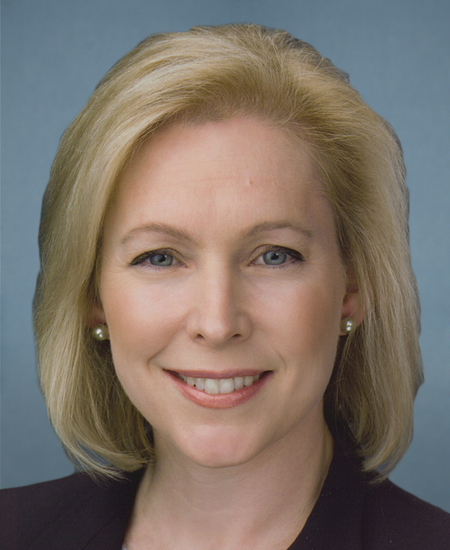
Sen. Kirsten E. Gillibrand
Sponsored bills
Maddy summaryThis resolution (SRES 494) is a commemorative Senate measure observing the 50th anniversary of the November 10, 1975, sinking of the SS Edmund Fitzgerald in Lake Superior, which resulted in the loss of all 29 crew members. It formally recognizes the tragedy, honors the deceased crew and their families, and acknowledges the storm that caused the disaster - the "storm of the century" with 100 mph winds and 50-foot waves. The resolution also highlights the ship's historical significance as a record-breaking freighter and its cultural legacy through Gordon Lightfoot's song, while reaffirming support for Great Lakes shipping safety. As a symbolic gesture, it does not enact new policies or affect any specific groups directly.
Maddy summaryS 3146 (Restoring Access for Detainees Act) would require U.S. Immigration and Customs Enforcement (ICE) to provide immigration detainees in DHS custody with specific communication services. It mandates 200 free monthly minutes for calls to family or legal representatives, unlimited free minutes for communications with legal entities (like courts, immigration officials, or the UN Refugee Agency), and private communication opportunities with lawyers or oversight officials during initial detention and location changes. The bill also prohibits facilities from restricting legal call duration or monitoring protected communications, while requiring clear public policies on call timing and location. This directly affects detained immigrants seeking legal assistance or family contact during immigration proceedings.
Maddy summaryThis bill ensures uninterrupted funding for Head Start programs in fiscal year 2026 by appropriating necessary funds from the Treasury if regular or continuing appropriations for that year are not enacted by September 30, 2026. It directly affects Head Start programs and the children and families they serve by preventing service disruptions during funding gaps. The key mechanism requires funding to continue under the same conditions as fiscal year 2025 (as established by the Full-Year Continuing Appropriations and Extensions Act, 2025) until either regular appropriations are passed, a specific appropriations resolution is enacted, or September 30, 2026. The bill does not create new funding but maintains current levels to avoid program interruptions.
Maddy summaryThis bill amends existing laws to increase federal support for flood protection and watershed restoration projects. It allows the Secretary to fund measures that exceed immediate needs if they benefit long-term watershed health and prevent repeated damage. Local organizations managing flood control infrastructure can now receive up to 90% federal funding for rehabilitation projects in "limited resource areas" (compared to 65% generally), while still covering permit and resource rights costs themselves. The bill directly affects local governments and watershed groups undertaking flood prevention work by expanding eligible projects under conservation programs to specifically include flood/drought mitigation.
Maddy summaryThis bill (S 3141, the SAFE Act) prohibits federal Executive agencies from initiating or carrying out layoffs or staff reductions during a government funding gap (shutdown). It directly affects federal employees and agencies by banning actions like reduction-in-force (RIF) proposals, notices, or implementations when appropriations lapse. The law requires any such prohibited action taken after September 30, 2025, to be nullified, with no effect. It explicitly excludes voluntary separation programs under existing law and applies retroactively from the specified date.
Maddy summaryThe Fair Credit for Farmers Act of 2025 provides financial relief to eligible farmers and ranchers who are struggling with loan payments. It offers a 2-year payment deferral on direct farm loans for covered producers (including limited resource, socially disadvantaged, beginning, and veteran farmers), extends loan maturity dates by 2 years, and sets interest rates at 0.125% during the deferral period. The bill also requires lenders to waive guarantee fees on loans for covered producers and makes several reforms to farm loan programs, including improved transparency in adverse decisions and new equitable relief options for farmers wrongly denied loans. These changes aim to make farm lending more accessible and fair for struggling agricultural producers.
Maddy summarySRES 481 is a non-binding Senate resolution urging the Trump administration to use the USDA’s existing $4.5 billion contingency funds and interchange authority to fund the Supplemental Nutrition Assistance Program (SNAP) for November 2025. The resolution states that SNAP is an entitlement program requiring government funding, and the USDA legally has the authority to draw from these reserves to avoid benefit disruptions. This would directly support the 42 million Americans who rely on SNAP, including 16 million children, 8 million seniors, 4 million people with disabilities, and 1.2 million veterans. The resolution does not change the law but calls for immediate action to maintain food assistance during a potential funding gap.
Maddy summaryThe Social Security Emergency Inflation Relief Act (S 3078) would provide an additional $200 monthly payment to Social Security beneficiaries, Supplemental Security Income (SSI) recipients, railroad retirement beneficiaries, and veterans receiving disability compensation or pension payments during the six-month period from January 1 to June 30, 2026. These payments would be delivered automatically through existing benefit channels and would not count as income for tax purposes or affect eligibility for other government assistance programs. The bill allocates $11 million for Treasury administrative costs and $83 million for the Social Security Administration to manage the payments, with funding covering the entire implementation period. This temporary measure aims to provide direct financial relief to vulnerable groups during a specified inflationary period.
Maddy summaryThis bill provides temporary funding for military pay and certain civilian employee salaries during fiscal year 2026 if Congress hasn’t passed regular appropriations. It covers all active-duty military members, reserve personnel on active duty or training, and civilian employees of the Defense Department, Coast Guard, intelligence community (including the CIA and National Intelligence Director’s office). The funding remains available until either regular appropriations are enacted, the Intelligence Authorization Act passes, or September 30, 2026. It does not change existing pay policies but ensures continuous payment during budget gaps.