

Maddy summaryThis bill, known as the Absentee and Mail Voter Protection Act, aims to overturn a specific executive order by repealing it and prohibiting the use of federal funds to implement similar directives in the future. It directly affects the United States Postal Service, various federal agencies, and state election officials by restricting their ability to regulate mail-in ballots or create national citizenship lists for voting purposes. Key provisions ban federal agencies from sharing voter registration data, compel the Postal Service to continue delivering state-issued mail ballots without interference, and forbid the use of taxpayer money to enforce rules that would require states to adopt specific citizenship verification methods. The legislation seeks to preserve the current system where states manage their own election administration while the Postal Service delivers ballots, citing historical precedents and the high volume of mail-in voting used by Americans.
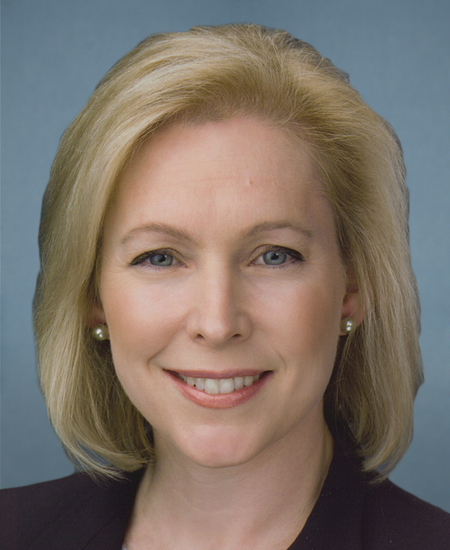
Sen. Kirsten E. Gillibrand
Sponsored bills
Maddy summaryThis bill directs the President to remove U.S. military forces from ongoing military actions against Iran that lack explicit congressional authorization. It specifically responds to a February 2026 order for airstrikes inside Iran, which Congress states violates the War Powers Resolution. The bill requires the removal of forces unless Congress has declared war or passed a specific authorization for military action against Iran. Exceptions allow for self-defense, intelligence-sharing with allies attacked by Iran, and supporting allies against Iranian retaliation.
Maddy summaryThe Speedy Tariff Refund Act of 2026 requires U.S. Customs and Border Protection to automatically issue interest-bearing refunds for duties collected under the International Emergency Economic Powers Act. This process applies to all importers of affected goods and does not require them to submit requests or additional paperwork to receive their money. The bill also mandates that Customs prioritize these refunds for small businesses and re-process any previously finalized transactions to ensure the correct refund amount is paid. Additionally, the legislation expresses a congressional preference that importers pass these refunds on to their customers, though this is a statement of intent rather than a mandatory requirement.
Maddy summaryThe HERO Child Care for Military Families Act aims to improve child care availability and workforce stability for military families by expanding eligibility for military child development centers and introducing new hiring and benefit structures. Key provisions allow the Department of Defense to hire national service volunteers as child care employees and establish a preclearance program that conducts background checks and health screenings on potential hires regardless of whether a job opening currently exists. The bill also authorizes job-sharing arrangements where two part-time employees share one full-time position to reduce vacancies and offers limited benefits, such as commissary access and tuition assistance, to help recruit and retain staff. To better track progress, the legislation requires the creation of a unified data system to monitor child care capacity and waitlists, along with specific reports on how child care availability impacts military readiness and family retention.
Maddy summaryThe YouthBuild for the Future Act expands the YouthBuild program, which helps young people gain job skills through construction training and education, by directing a larger share of funding to rural areas and tribal communities. It updates program rules to better support participants by allowing grant funds to cover matching financial requirements, providing food assistance, and offering specific support services for individuals with disabilities. The bill also introduces new grants to help program partners form alliances with local employers to create more relevant job training opportunities and requires the government to consult regularly with program operators to set realistic performance goals. Additionally, the legislation increases the total amount of money available for the program over the next six years and establishes a new specific fund to support these employer partnerships.
Maddy summaryThe HUMBLE Presidents Act prohibits the use of a sitting President's name, image, likeness, or signature on federal property, buildings, and currency. Specifically, the bill bans naming or decorating federal assets with current presidential identifiers and forbids their appearance on U.S. coins and paper money. It also restricts the use of federal funds to carry out any activities that violate these naming and decoration restrictions. This legislation directly affects the Department of the Treasury, federal facilities, and the design of national currency.
Maddy summaryThis bill, titled the "Keep Public Funds in Public Schools Act," repeals two sections of the Internal Revenue Code. It eliminates Section 25F, which provides a tax credit for contributions made to scholarship granting organizations. Additionally, the bill repeals Section 139K, which allows certain educational assistance to be excluded from an individual's gross income. These changes primarily affect taxpayers who currently claim these credits or exclusions, and organizations involved in scholarship grants or providing educational assistance. The amendments generally take effect for taxable years ending after December 31, 2026.
Maddy summarySRES 627 is a Senate resolution designating March 5, 2026, as "National Slam the Scam Day" to raise public awareness about government imposter scams. It specifically targets scams where fraudsters impersonate agencies like the IRS, Social Security, or Medicare to steal money or personal information, disproportionately affecting older adults. The resolution encourages education through community groups, law enforcement, and financial institutions to help people recognize and report these scams, without creating new laws or regulations.
Maddy summaryThe Combating Illicit Xylazine Act places xylazine - a veterinary sedative increasingly found in illicit drug mixtures - into Schedule III of the Controlled Substances Act, subjecting it to federal regulation as a controlled substance. It specifically allows veterinary use without requiring registration of the ultimate user (e.g., pet owners or veterinarians) if xylazine is dispensed by a registered veterinarian or pharmacy with a vet prescription and used for animals owned by the user, under their care, or in authorized animal programs. The bill provides a one-year delay for labeling and packaging requirements and a 60-day delay for registration and recordkeeping for veterinary use to ease implementation. Additionally, it adds xylazine to the Arcos tracking system for controlled substances and mandates two congressional reports on illicit use prevalence within 18 months and 4 years of enactment.
Great Lakes Restoration Initiative Act of 2025 or the GLRI Act of 2025 This bill reauthorizes through FY2031 the Great Lakes Restoration Initiative, which carries out programs and projects to protect and restore the Great Lakes.