

Maddy summaryThis bill limits how long individuals can serve as special government employees (SGEs) to 130 days in any 365-day period, requiring agencies to reclassify them into standard positions after exceeding this threshold. It creates a public database listing key details for "covered" SGEs (those with duties comparable to GS-11 level or higher, not on advisory committees, and not in student roles), including name, title, pay, agency, and employment dates. Agencies must update the database within 30 days of personnel changes and publicly post financial disclosure reports for these individuals, excluding reports containing national defense information or specific exempt categories. The database will be accessible online without registration, ensuring transparency about SGE roles and compensation.
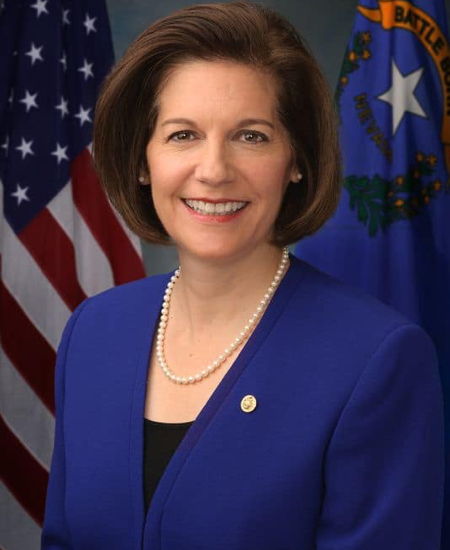
Sen. Catherine Cortez Masto
Sponsored bills
Maddy summarySRES 142 is a Senate resolution recognizing the heritage, culture, and contributions of American Indian, Alaska Native, and Native Hawaiian women. It highlights specific achievements, including over 4,400 women serving in the military as of 2025, more than 11,600 women owning businesses as of 2024, and historical roles in fields like science, medicine, and cultural preservation. As a symbolic resolution, it does not create new laws or allocate funds but publicly honors these women’s contributions to communities, tribal sovereignty, and U.S. history without mandating policy changes.
Maddy summarySRES 120 is a ceremonial Senate resolution recognizing the 113th anniversary of Girl Scouts of the United States of America (March 12, 2025). It celebrates the organization’s founder, Juliette Gordon Low, and honors Girl Scouts’ mission of building girls’ courage, confidence, and leadership skills through programs like STEM, outdoor activities, and civic engagement. The resolution has no policy or funding changes - it simply acknowledges the group’s history and impact on over 50 million alumnae. It does not directly affect any individuals or require new government action.
Maddy summaryThe SEC Whistleblower Reform Act of 2025 expands protections for employees who report securities law violations by allowing them to make internal reports to supervisors or colleagues with authority to address misconduct - without losing whistleblower status. It requires the Securities and Exchange Commission (SEC) to process award claims within one year (with limited 180-day extensions for complex cases) and mandates written notification to whistleblowers about delays. The bill also prohibits companies from forcing employees to waive whistleblower rights or use pre-dispute arbitration for related disputes, ensuring these protections apply to claims filed after enactment.
Maddy summaryThe Paycheck Fairness Act strengthens equal pay protections by modifying the Equal Pay Act of 1963 to require employers to prove that non-sex factors used in pay decisions are job-related, consistent with business necessity, and account for the entire pay difference. It prohibits employers from relying on salary history when setting pay for new hires and enhances protections for workers who discuss wages or file pay discrimination claims. The bill requires the Equal Employment Opportunity Commission to collect and publish compensation data disaggregated by sex, race, and ethnicity to better enforce pay discrimination laws. These provisions directly affect workers in the private and public sectors, particularly women and women of color who face the largest pay gaps. The act also establishes a National Award for Pay Equity to recognize employers making significant efforts to eliminate pay disparities.
Maddy summaryThe Mining Schools Act of 2025 creates a Department of Energy grant program to fund mining education at eligible colleges and universities. It directly affects accredited mining engineering programs and specific public university departments in states with significant mining economies, aiming to recruit students and strengthen training in critical mineral extraction, environmental reclamation, and domestic supply chains. Grants - limited to 10 annually - must support curriculum focused on rare earth elements, recycling technologies, reducing environmental impacts, and meeting U.S. energy mineral needs. The program authorizes $10 million yearly for fiscal years 2026-2033, with oversight by a Mining Professional Development Advisory Board.
Maddy summarySRES 132 is a Senate resolution designating March 24, 2025, as "National Women of Color in Tech Day." It recognizes the contributions of women of color in technology and highlights ongoing challenges they face in the tech industry, including underrepresentation and systemic barriers. The resolution urges public observance of the day, commits the Senate to supporting diversity and inclusion initiatives in tech, and calls for strengthening STEM education access through partnerships with minority-serving institutions. It does not create new laws or funding but serves as a symbolic acknowledgment of diversity's importance in the tech workforce.
Maddy summaryThis bill expands the Work Opportunity Tax Credit to include military spouses. It adds "qualified military spouse" as a new category eligible for the credit, meaning employers who hire spouses of active-duty service members can claim the tax benefit. To qualify, a spouse must be certified by a local agency as married to an Armed Forces member at the time of hire. The change applies to hires occurring after the law's effective date, directly affecting military spouses seeking employment and employers who hire them.
Maddy summaryThis bill creates a federal grant program to help rural water and wastewater systems prepare for and respond to disasters. It authorizes $20 million annually (2025-2029) for grants to qualified nonprofit organizations with disaster response experience, enabling them to provide onsite support, develop emergency plans, improve system resilience, and conduct assessments. The program specifically targets disadvantaged communities lacking resources for water system safety and covers activities like emergency repairs, vulnerability assessments, and coordination with agencies like FEMA. Eligible nonprofits must have licensed personnel or relevant expertise and cannot duplicate other federal funding.
Maddy summaryThis bill establishes a federal program to improve cybersecurity for rural water and wastewater systems. It directly affects rural water associations by providing technical assistance through "circuit riders" who assess security risks, develop protection protocols, and document cyber readiness. Key mechanisms include rapid threat assessments, developing security plans, and requiring annual reports on program activities. The program is funded at $10 million annually for fiscal years 2025-2029, with circuit riders needing specific cybersecurity certifications. This is a concrete policy change focused on strengthening infrastructure protection for rural communities.