

Maddy summaryS 749 (NACIE Improvement Act) requires the President to add at least one Tribal College or University president to the National Advisory Council on Indian Education (NACIE) within 180 days of enactment. It mandates that NACIE’s annual report be shared with the Secretaries of Education and Interior by June 30 each year. Both departments must then consider this report when preparing their federal budget proposals. This directly affects Tribal Colleges through membership inclusion and influences federal education funding decisions via budget considerations.
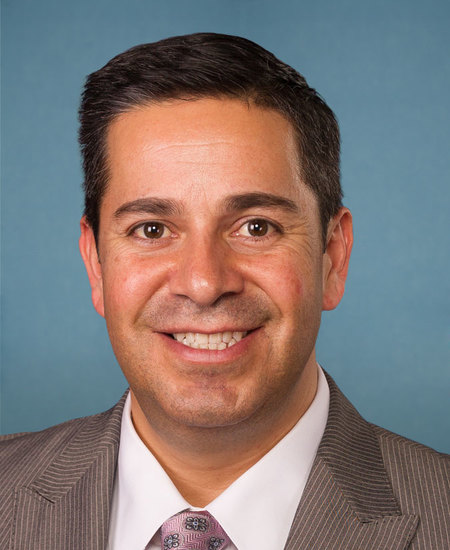
Sen. Ben Ray Luján
Sponsored bills
Maddy summarySRES 459 is a ceremonial Senate resolution recognizing November 2023 as National Native American Heritage Month and the Friday after Thanksgiving as Native American Heritage Day, as specified in the 2009 Native American Heritage Day Act. It does not create new laws or funding but formally acknowledges Native Americans' contributions to U.S. history, culture, and society through "appropriate programs and activities." The resolution highlights historical context, including Native American cultural preservation, military service, and influences on U.S. governance, without imposing obligations on any entity. It directly affects the general public by encouraging observance during November 2023. This is a symbolic gesture, not a policy change.
Maddy summaryThis bill redesignates the National Peer-Run Training and Technical Assistance Center for Addiction Recovery Support as a "Center of Excellence" under federal law. It adds new requirements for the center to support peer support specialists through professional development, integrate services into nonclinical settings, and bridge evidence-based practices with real-world applications. The bill establishes a 5-year pilot program (ending September 2028) to create regional centers of excellence, tailored to local needs, with a report to Congress recommending whether to make the program permanent or expand it. Funding increases from $1 million annually (2019-2023) to $2 million annually (2024-2028) for these initiatives.
Maddy summarySCONRES 7 is a Senate concurrent resolution condemning Russia’s detention of Vladimir Kara-Murza, a Russian opposition leader jailed for criticizing Vladimir Putin’s regime, the invasion of Ukraine, and advocating for democracy. It calls for his immediate release, urges Russia to free all political prisoners, and expresses solidarity with advocates for democratic values in Russia. The resolution specifically references Kara-Murza’s history of poisoning attempts, his arrest for "spreading false information" after speaking out, and his recent high treason charges. It does not create new laws or impose sanctions but formally expresses congressional opposition to his unjust detention.
Maddy summaryThis resolution designates October 30, 2023, as a National Day of Remembrance for workers in the U.S. nuclear weapons program, including uranium miners, millers, haulers, plutonium processors, and participants in atmospheric nuclear tests. It honors these workers for their contributions and the health risks they faced while supporting national defense. The resolution encourages the public to participate in ceremonies and activities on that date to recognize their service. As a symbolic gesture, it does not create new policies or funding but continues a series of Senate resolutions honoring these workers dating back to 2009.
Maddy summaryThe Puerto Rico Status Act (S 3231) establishes a process for Puerto Rico to determine its political status through a plebiscite on November 2, 2025, offering residents three options: independence, sovereignty in free association with the United States, or statehood. If no option receives a majority in the initial vote, a runoff election will be held on March 8, 2026. The bill outlines detailed transition mechanisms for each potential status, including constitutional conventions, changes to citizenship and immigration laws, and continued federal benefits during a transition period. It requires bilingual voter education materials, establishes oversight for the voting process, and specifies how federal laws would change under each status option. The bill directly affects Puerto Rico's residents, the U.S. federal government, and Puerto Rico's government as it would transition to a new political status.
Maddy summaryThis bill amends federal pay rules to clarify how premium pay (extra pay for hazardous work) counts toward annual pay limits for wildland firefighters. It specifically affects federal employees with the Forest Service, Department of the Interior, or National Weather Service who perform wildfire suppression work, including incident meteorologists and incident management team members. The key provision disregards certain premium pay from calculations when applying the annual pay cap for federal employees, preventing firefighters from exceeding the Executive Schedule Level II pay limit through hazard pay. The bill also requires agencies to report on hiring needs for these roles by March 2024 to ensure sufficient staffing without triggering pay cap limitations.
Maddy summaryThis bill strengthens the Better Online Ticket Sales Act by requiring online ticket sellers to implement security measures that prevent bots from bypassing purchase limits. It mandates that ticket websites enforce access controls, maintain data safeguards, and report security circumvention incidents to the FTC within 30 days. Violations carry daily civil penalties of $10,000 per day plus $1,000 per incident, with higher penalties for intentional violations. The law directly affects major ticket platforms like Ticketmaster, aiming to reduce bot-driven ticket scalping by making security systems more robust and accountable.
Maddy summaryThe TREATS Act (S 3193) modifies federal rules to allow telehealth visits for initial evaluations when prescribing certain medications to treat substance use disorders. It directly affects patients seeking medication-assisted treatment and healthcare providers prescribing FDA-approved medications for addiction (in schedules III-V). The bill replaces the requirement for a mandatory in-person medical evaluation with an option for a telehealth evaluation using approved video or audio systems. This change applies specifically to prescriptions for addiction treatment medications, expanding access for patients in remote or underserved areas. The policy change streamlines the process without altering medication approval or coverage requirements.
Maddy summaryThe PRICE Act requires third-party food delivery apps (like Uber Eats or DoorDash) to clearly display all fees to consumers before payment. It mandates that delivery fees must be calculated based solely on delivery distance and item price (excluding taxes or user-specific factors), and must be shown at every step of the ordering process. Restaurants and delivery platforms must also explain each fee’s purpose and refundability before checkout. This directly affects delivery apps, restaurants using these platforms, and consumers ordering food through third-party services.