

Maddy summaryThe SAFER Banking Act provides legal protections for banks and financial institutions that serve state-legal marijuana businesses and related service providers. It creates a "safe harbor" preventing federal banking regulators from penalizing institutions for offering services to these businesses, even though marijuana remains illegal under federal law. The bill also allows income from state-legal marijuana businesses to be considered "legal income" for mortgage qualification purposes and establishes guidance for suspicious activity reporting related to these businesses. Similar protections are extended to hemp-related businesses and service providers, without requiring banks to serve these businesses.
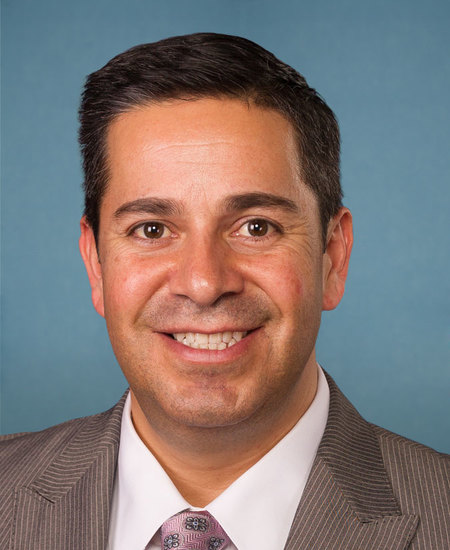
Sen. Ben Ray Luján
Sponsored bills
Maddy summaryThe Billionaires Income Tax Act requires individuals with annual income over $100 million or assets over $1 billion to pay taxes annually on their wealth gains, rather than deferring taxes through strategies like "buy, borrow, die." It eliminates tax deferral by implementing mark-to-market taxation, requiring billionaires to pay tax on asset appreciation each year as if they had sold the assets. The bill closes loopholes that allow the ultra-wealthy to transfer assets tax-free to heirs, requiring heirs to pay tax on gains when they sell assets. This means billionaires would pay taxes on their income as it's earned, just like working people pay taxes on wages.
Maddy summaryThis bill amends federal law to expand substance abuse treatment services for children, adolescents, and young adults to include suicide prevention and treatment. It specifically adds "suicide" to covered conditions and requires grant-funded programs to provide parental counseling on preventing overdose/suicide and supply safety tools (like lockboxes) to reduce access to lethal means. The law directs at least $2 million annually from federal grants toward these services, targeting providers including children's hospitals, emergency departments, tribal health programs, and pediatric specialists. It affects youth aged 12-25 and their families by integrating suicide prevention into existing substance abuse treatment funding streams. The changes apply to programs operating under the SUPPORT Act from 2024-2028.
Maddy summaryThe Full-Service Community School Expansion Act of 2023 authorizes $500 million to $1 billion annually to expand community schools that provide comprehensive student and family support. The bill targets schools with at least 40% of students eligible for free/reduced lunch or schools identified for improvement, requiring them to establish leadership teams with parent, educator, and community representation. It mandates schools receiving funds to provide integrated student supports (including health services), expanded learning opportunities, family engagement activities, and collaborative leadership structures that address academic, social, and emotional needs. The legislation requires schools to track progress on student outcomes including academic achievement, mental health, school climate, and family engagement, with a focus on reducing achievement gaps for historically marginalized students.
Maddy summaryS 3356, the Postal Police Reform Act of 2023, clarifies the duties of U.S. Postal Service (USPS) police officers. It specifies that these officers protect mail, USPS-owned or controlled property, people on that property, and USPS employees on duty anywhere in the U.S. The bill revises existing law to explicitly state that officers may act beyond USPS property when necessary to fulfill these protective duties. It also corrects a minor typo in the legal reference. This bill directly affects USPS police officers by defining their scope of responsibility more precisely.
Maddy summarySRES 476 is a symbolic Senate resolution supporting the establishment of a National Move Over Law Day. It does not create new laws but urges national, state, and regional organizations to raise public awareness about existing state move-over laws, which require drivers to change lanes or slow down near roadside emergency responders. The resolution highlights that 50 traffic responders were killed in 2022 due to collisions while managing incidents, and cites the need for greater public education on these laws to improve safety. It specifically references the Federal Highway Administration’s Crash Responder Safety Week as part of ongoing efforts to reduce roadside collisions.
Maddy summaryThis bill (S 3330) requires the Secretary of Labor to study whether pharmacy benefit managers (PBMs) should be treated as fiduciaries under federal retirement law. The study would examine the impacts of a policy change that would make PBMs legally responsible for acting in the best interest of health plans and their members, including restrictions on certain fees tied to drug prices. It would not change current law but would assess how such a policy might affect PBM fee structures and transparency. The study must be completed within two years of the bill's enactment and reported to Congress.
Maddy summaryS 3331 creates a pilot program to provide federal grants to licensed spaceport operators for improving transportation infrastructure near launch/reentry sites. Operators receive grants based on past launch activity ($250,000 per licensed launch, $100,000 per permit), with a $2.5 million annual limit per operator. Supplemental grants (up to 50% of the primary grant) are available if states or private entities match funding. The program, funded up to $20 million annually, expires on October 1, 2028, and applies only to infrastructure directly supporting transportation safety for launches.
Maddy summaryS 3305, the "Helping Young Americans Save for Retirement Act," lowers the age requirement for new employees to join employer retirement plans from 21 to 18 years old. It directly affects young workers aged 18-21 who previously had to wait until age 21 to qualify for retirement savings plans like 401(k)s. The bill modifies rules so employees meeting a 500-hour service requirement over two consecutive 12-month periods can enroll at 18, instead of waiting until age 21. It also adds a 5-year delay for participants who join solely due to this new rule, ensuring they are not counted as participants until five years after their first enrollment. The changes apply to plans operating after December 31, 2025.
Maddy summaryS 3301, the DOE and USDA Interagency Research Act, requires the Department of Energy (DOE) and Department of Agriculture (USDA) to jointly conduct research focused on shared mission priorities. It mandates a competitive, merit-reviewed process to fund collaborative projects with universities, national labs, and other entities, covering areas like biofuels, AI-driven agricultural/energy systems, carbon storage, and grid security. The bill directly affects DOE, USDA, and their research partners by establishing formal coordination mechanisms for cross-agency projects. Key provisions include requiring a formal agreement between the departments, prioritizing data-sharing infrastructure, and directing a report on collaboration outcomes within two years.