

Maddy summaryThe HELPER Act of 2023 creates a new FHA mortgage insurance program allowing eligible first responders and K-12 teachers to secure home loans with **no down payment**. It directly affects full-time law enforcement officers, firefighters, paramedics, EMTs, and public/private K-12 teachers who have worked in their roles for at least 4 of the past 5 years. Key provisions include requiring housing counseling, verifying employment status, and prohibiting monthly mortgage insurance premiums (replacing standard FHA requirements). The bill authorizes $660,000 for 2024 and $160,000 annually from 2025-2030 to fund this program, which expires after 5 years.
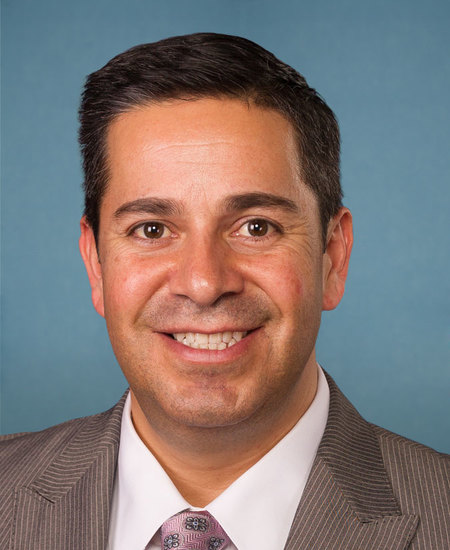
Sen. Ben Ray Luján
Sponsored bills
Maddy summaryThis resolution (SRES 586) is a symbolic Senate measure supporting the observance of "Deep Vein Thrombosis and Pulmonary Embolism Awareness Month" in March. It does not create new laws or allocate funds but formally recognizes the Senate's backing for raising public awareness about DVT and PE - serious conditions affecting up to 900,000 people annually in the U.S. and causing 60,000-100,000 deaths. The resolution highlights these conditions as preventable yet often fatal, contributing to significant healthcare costs, and emphasizes the importance of public education.
Maddy summaryThe Radiation Exposure Compensation Reauthorization Act (S 3853) extends and expands compensation for individuals exposed to radiation from Manhattan Project waste, uranium mining operations, and atmospheric nuclear testing. The bill extends the compensation fund for 6 years (from 2 years), increases payments to $100,000 for certain claims, and expands eligibility by adding new ZIP codes in Missouri, Tennessee, Alaska, and Kentucky for Manhattan Project waste claims. It also expands the definition of "specified diseases" to include chronic lymphocytic leukemia, allows affidavits as evidence for claims, and extends the filing deadline from 2 to 5 years. The bill creates a $3 million annual grant program for epidemiological studies on uranium mining impacts and reauthorizes the Energy Employees Occupational Illness Compensation Program.
Maddy summaryThe TAME Extreme Weather Act requires Federal agencies, including NOAA, the Department of Agriculture, and the Department of Energy, to use artificial intelligence to improve weather forecasting, enhance grid resilience, and monitor environmental impacts. Key provisions mandate agencies to create public Earth system reanalysis datasets for AI training, develop AI models for wildfire detection and emissions monitoring, and optimize energy grids using AI. Agencies must make AI models, training datasets, and code publicly available under open licenses while continuing traditional weather observation and research. The bill also requires best practices to minimize environmental impacts of AI use and includes national security reviews for sensitive data. This legislation aims to modernize weather forecasting and climate adaptation through AI while ensuring public access to government-developed tools.
Maddy summaryThe Empower Act of 2024 reforms public financing for presidential campaigns by increasing matching payments to 600% of individual contributions under $1,000 (called "matchable contributions") and repealing previous expenditure limits for presidential candidates. It creates the "Freedom From Influence Fund" to finance these payments, which will be funded by 4.75% assessments on criminal and civil fines and penalties. The bill affects presidential candidates who qualify for public financing under new eligibility requirements, including certification that they will not accept contributions exceeding $1,000 per individual. The changes apply to the 2028 presidential election and subsequent elections, with regulations required by June 2026.
Maddy summaryThis bill would restructure the Federal Election Commission (FEC) by reducing membership to five members (with no more than two from the same political party), removing the Secretary of the Senate and Clerk of the House as ex officio members, and establishing a "Blue Ribbon Advisory Panel" to recommend candidates for appointment. It would limit members to a single six-year term, increase the Chair's administrative authority, and require majority Commission votes for certain enforcement actions. These changes would affect how the FEC enforces campaign finance laws and handles complaints. The bill also permanently extends penalty authority and adds restrictions on ex parte communications.
Maddy summaryThe John R. Lewis Voting Rights Advancement Act of 2024 updates the Voting Rights Act of 1965 to strengthen protections against voting discrimination. It clarifies how to prove vote dilution, denial, or abridgement claims and expands the types of voting changes requiring federal preclearance, including changes to election methods, boundaries, voter ID requirements, and polling locations. The bill requires states to provide public notice of voting changes at least 48 hours in advance and mandates transparency about demographic data related to polling places. This legislation directly affects states and political subdivisions with a history of voting rights violations, aiming to protect minority voters from discriminatory voting practices.
Maddy summaryThis bill amends the tax code to treat spaceports like airports for financing purposes. It allows spaceports to qualify for tax-exempt bonds (used to fund infrastructure) by adding "spaceports" to existing airport bond rules and creating special lease provisions. The bill defines a "spaceport" broadly to include facilities for spacecraft manufacturing, launch services, flight control, and cargo transfer - without requiring public access. This change directly affects spaceport developers and operators seeking to finance construction through tax-exempt bonds. The policy change applies to bonds issued after the bill's enactment.
Maddy summarySRES 553 is a ceremonial Senate resolution honoring Jean A. Carnahan, who served as Missouri’s first female U.S. Senator from 2001 to 2002 after her husband’s passing. The resolution expresses the Senate’s sorrow over her death, recognizes her service as First Lady of Missouri and U.S. Senator, and her advocacy for families and veterans. It directs the Senate Secretary to share the resolution with the House and Carnahan’s family, with no substantive policy changes or affected parties. This is a standard commemorative measure with no legislative impact.
This resolution supports the designation of February 17-February 24, 2024, as National FFA Week. It also (1) recognizes the important role of the National FFA Organization (Future Farmers of America) in developing the next generation of globally conscious leaders who will change the world; and (2) celebrates the 10th anniversary of the Give the Gift of Blue program, which has donated more than 17,000 FFA blue jackets to FFA members in need.