

Maddy summaryThis resolution expresses the U.S. Senate's support for designating May 2024 as "Mental Health Awareness Month" to promote public understanding of mental health challenges. It highlights issues like untreated childhood depression, disparities in mental health care access for communities of color, and social media's impact on youth mental health. The resolution does not create new laws or allocate funding but declares mental health a national priority and encourages efforts to reduce stigma and improve access to services. It urges individuals and organizations to use the month to support mental well-being and those living with mental illness.
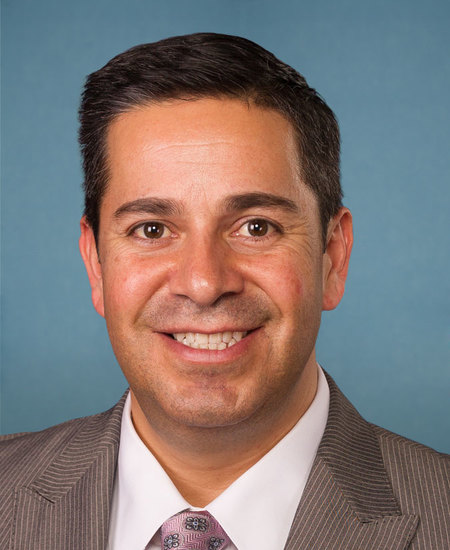
Sen. Ben Ray Luján
Sponsored bills
Maddy summarySRES 708 is a Senate resolution commemorating the 100th anniversary of the June 3, 1924, designation of the Gila Wilderness as the first federally protected wilderness area in the United States and the world. The resolution recognizes this milestone as the foundation for the national wilderness system and the 1964 Wilderness Act, honoring the area's century-long preservation without permanent human development. It acknowledges the historical roles of Forest Service employees like Aldo Leopold and Arthur Carhart, as well as Indigenous stewardship by the Apache and Mimbres peoples. This resolution has no policy impact - it solely celebrates a historical landmark.
Maddy summaryThis resolution designates May 2024 as National Foster Care Month to raise public awareness about challenges faced by children in foster care. It specifically highlights issues like the 368,530 children currently in foster care, the need for stable placements, and barriers to successful transitions to adulthood for youth aging out of the system. The resolution encourages Congress to develop policies that improve outcomes for these children, including supporting foster parents and preventing unnecessary entry into the system. As a symbolic resolution, it does not create new laws but aims to prompt legislative action through recognition and advocacy.
Maddy summaryThis Senate resolution designates May 2024 as "American Stroke Month" to raise public awareness about stroke prevention and treatment. It encourages Americans to learn stroke warning signs (like face drooping or speech difficulty), recognize risk factors (such as high blood pressure), and call 911 immediately during a stroke. The resolution also urges support for initiatives promoting stroke awareness, research, and access to quality care to reduce stroke-related deaths and disability. It does not create new laws or allocate funding, serving solely as a symbolic recognition effort.
Maddy summaryThe Fair Repair Act requires manufacturers of digital electronic devices (like smartphones, computers, and tablets) to provide independent repair shops and device owners with necessary parts, tools, and documentation for repairs on fair and reasonable terms. It prohibits manufacturers from using tactics like parts pairing, false alerts, or extra fees to block third-party repairs or reduce device functionality when non-OEM parts are used. The law excludes motor vehicles, medical devices, and related equipment from its requirements and will take effect 60 days after enactment. This directly affects device owners seeking affordable repairs, independent repair businesses, and manufacturers of digital electronics.
Maddy summaryThis bill establishes federal minimum standards for collective bargaining rights for public employees and supervisors. It directs the Federal Labor Relations Authority (FLRA) to determine if state laws "substantially provide" for specific rights including the right to form unions, bargain collectively, and have interest impasse resolution mechanisms. If a state law doesn't meet these standards, the FLRA would administer collective bargaining for affected employees. The bill also prohibits strikes or lockouts that would disrupt emergency services and preserves existing collective bargaining agreements in place before the bill's enactment. It does not preempt state laws that already meet these minimum standards.
Maddy summaryThis bill authorizes $40 million annually (from 2008 through 2029) for states to develop and implement statewide forest resource assessments and strategies. It directly affects state forestry programs by providing dedicated federal funding for these planning efforts. The key provision sets a yearly funding cap of $40 million per state, allowing states to use this specific appropriation alongside other existing funds under the Cooperative Forestry Assistance Act. Total annual spending for each state's forest planning cannot exceed this $40 million limit.
Maddy summaryThis bill (S 4349) requires private health plans and insurance issuers to provide secure electronic transmission for prior authorization requests for prescription drugs, starting January 1, 2027. It directly affects health care professionals (like doctors), patients needing prescription coverage, and health plans/insurers. The key provision mandates that requests and responses must use secure electronic methods meeting federal technical standards (excluding fax, non-compliant portals, or basic electronic forms), with standards set by the Secretary of Health and Human Services after consulting stakeholders. It applies to group and individual health plans covered under the Public Health Service Act, ERISA, and Internal Revenue Code.
Maddy summaryThe Rights for the TSA Workforce Act of 2024 requires the Transportation Security Administration to transition its workforce from its current personnel management system to the standard federal employee system under Title 5 of the U.S. Code by December 31, 2024, while protecting employees from pay or benefit reductions during the transition. The bill preserves existing leave, retirement benefits, and collective bargaining rights for screening agents, and includes specific provisions for Federal air marshals regarding pay and benefits. It mandates consultation with labor representatives during the transition and requires several reports on workforce conditions, including recruitment efforts, workplace safety, and employee satisfaction.
Maddy summaryS 4301 would allow states and Indian Tribes to request waivers for foreign educators working in rural or Tribal schools, exempting them from the standard 2-year foreign residence requirement after completing their J-1 visa program. The bill requires educators to accept full-time teaching positions in qualifying rural or Tribal schools and commit to working there for three years (with limited exceptions for school closures or hardship). States are capped at 30 such waivers per fiscal year, and waivers extend to spouses and children of the educator. This directly affects foreign educators seeking to remain in U.S. schools in underserved areas and gives states/tribes authority to facilitate their continued employment.