

Border Health Security Act of 2021 This bill modifies the duties and activities of the United States-Mexico Border Health Commission and the Canada-United States Pan-Border Public Health Preparedness Council and makes other changes to address health issues along the U.S. border. Specifically, the commission must cooperate with the council where appropriate, and both the commission and the council must develop strategic plans, work plans, evaluations, and reports concerning their activities. The Department of Health and Human Services must award grants to (1) eligible entities in border areas to address recommendations of the commission and the council to improve the health of border area residents; and (2) trauma centers, public health entities, and state, local, or tribal entities for infectious disease surveillance activities in border areas. In addition, the Office of the Assistant Secretary for Preparedness and Response may coordinate with the Department of Homeland Security in establishing a system that alerts clinicians and public health officials to emerging health threats in border areas. The Government Accountability Office must evaluate commission and council activities every two years.
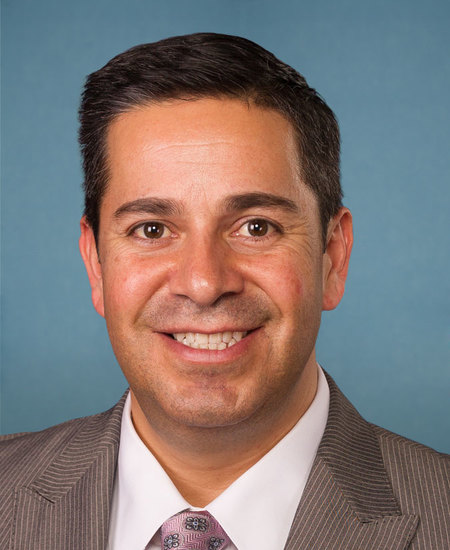
Sen. Ben Ray Luján
Sponsored bills
Supreme Court Ethics Act This bill establishes a new statutory requirement for the Judicial Conference of the United States to issue a judicial code of conduct for judges and justices of U.S. courts, including Justices of the Supreme Court. Currently, the Judicial Conference issues a code of conduct for judges of U.S. courts (but not for Justices of the Supreme Court).
Safeguard Tribal Objects of Patrimony Act of 2021 This bill prohibits the exportation of Native American cultural items and archaeological resources that were illegally obtained; provides for the return of such items, including voluntary returns; and establishes and increases related criminal penalties. The bill requires the Department of the Interior and the Department of State to each designate a liaison to facilitate and hold trainings and workshops on the voluntary return of human remains and cultural items. Additionally, Interior must refer individuals and organizations to Indian tribes and Native Hawaiian organizations to facilitate the voluntary return of human remains and cultural items; convene an interagency working group; and convene a Native working group consisting of representatives of Indian tribes and Native Hawaiian organizations to provide advice on issues concerning the return of, and illegal trade in, human remains and cultural items. The bill also increases from 5 years to 10 years the maximum prison term for an individual convicted of selling, purchasing, using for profit, or transporting for sale or profit human remains or cultural items that were illegally obtained.
United States Cadet Nurse Corps Service Recognition Act of 2021 This bill recognizes service as a member of the U.S. Cadet Nurse Corps between July 1, 1943, and December 31, 1948, as active duty service. The active duty designation entitles qualifying individuals to certain benefits afforded to veterans, such as burial benefits (not including interment at Arlington National Cemetery) and honorary veteran status. Under the bill, the Department of Defense (DOD) must issue individuals who served in the corps during the specified period a discharge from their service under honorable conditions if such a discharge is warranted based on the duration and nature of the service. Such individuals are not entitled to Department of Veterans Affairs benefits aside from those related to burials and memorials. The bill also authorizes DOD to produce a service medal or other commendation, memorial plaque, or grave marker to honor the individuals.
This resolution (1) commits to advancing policies that will end roadway fatalities by 2050, and (2) calls on Congress and the Department of Transportation to commit to working together to achieve zero roadway fatalities by the year 2050.
Broadcast Varied Ownership Incentives for Community Expanded Service Act or the Broadcast VOICES Act This bill requires the Federal Communications Commission (FCC) to take certain actions to increase diversity of ownership in the broadcasting industry and establishes related tax incentives. Specifically, the bill requires the FCC to report to Congress regarding (1) recommendations for increasing the total number, and the value, of broadcast stations that are owned by socially disadvantaged individuals; (2) the total number of broadcast stations that are owned by socially disadvantaged individuals; and (3) whether there is a nexus between diversity of ownership or control of broadcast stations and the diversity of the viewpoints expressed on the stations. In addition, the bill allows companies engaged in the qualifying sale of a broadcast station to receive favorable tax treatment by electing nonrecognition of the gain or loss resulting from the sale. To qualify for this treatment, the sale must result in or preserve ownership of a broadcast station by socially disadvantaged individuals. Finally, the establishes a tax credit for certain contributions toward the training of socially disadvantaged individuals in the management and operation of broadcast stations.
Securing Universal Communications Connectivity to Ensure Students Succeed Act or the SUCCESS Act This bill provides additional funding for the Emergency Connectivity Fund, which supports remote learning during the COVID-19 emergency period by covering reasonable costs of laptop and tablet computers, Wi-Fi hotspots, modems, routers, and broadband connectivity purchases for off-campus use by students, school staff, and library patrons.
Local Journalism Sustainability Act This bill allows individual taxpayers a tax credit up to $250 in any taxable year for subscriptions to one or more local newspapers for the taxpayer's personal use. It also allows a local news journalist employer a payroll credit for wages paid to local news journalists. The bill allows certain small businesses a tax credit for amounts paid for advertising in a local newspaper or through a broadcast of a radio or television station serving a local community.
Health Misinformation Act of 2021 This bill limits liability protection that applies to a provider of an interactive computer service (e.g., a social media company) for claims related to content provided by third parties if a provider promotes health misinformation during a declared public health emergency. Specifically, the liability protection (sometimes referred to as Section 230 protection) shall not apply to a provider that promotes health misinformation using an algorithm unless the algorithm uses a neutral mechanism for the promotion, such as chronological functionality. The Department of Health and Human Services must, within 30 days, issue guidance about what constitutes health misinformation.
Safe Schools Improvement Act of 2021 This bill requires states to direct their local educational agencies (LEAs) to establish policies that prevent and prohibit bullying and harassment of elementary and secondary school students. In particular, these policies must prohibit bullying and harassment based on race, color, national origin, sex, sexual orientation, gender identity, disability, or religion. Further, LEAs must provide (1) students, parents, and educational professionals with annual notice of the conduct prohibited in their disciplinary policies; (2) students and parents with grievance procedures that target such conduct; and (3) the public with annual data on the incidence and frequency of that conduct at the school and LEA level. The Department of Education must conduct and report on an independent biennial evaluation of programs and policies to combat bullying and harassment in elementary and secondary schools. The National Center for Education Statistics must collect state data to determine the incidence and frequency of the conduct prohibited by LEA disciplinary policies.