

State Public Option Act This bill allows residents who are not already eligible for Medicaid and not concurrently enrolled in other health insurance coverage to buy into a state Medicaid plan beginning January 1, 2022, at the option of the state. State Medicaid programs may set premiums and cost-sharing requirements for such coverage in accordance with specified limitations. The bill also (1) provides the enhanced Federal Medical Assistance Percentage (i.e., federal matching rate) to every state that expands Medicaid coverage for individuals who are newly eligible under the Patient Protection and Affordable Care Act, regardless of when such expansion takes place; and (2) requires state Medicaid programs to cover comprehensive reproductive health care services, including abortion services.
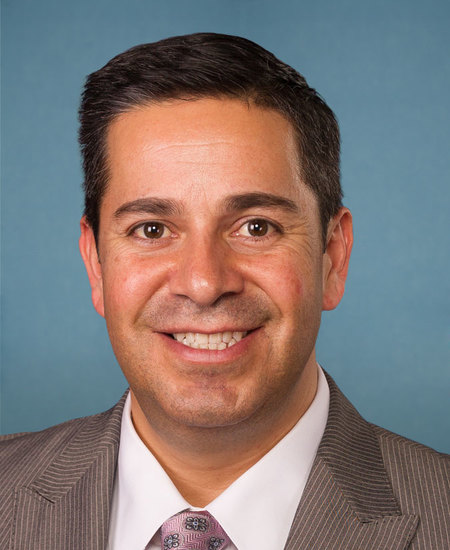
Sen. Ben Ray Luján
Sponsored bills
Child Care Access Means Parents In Schools Reauthorization Act or the CCAMPIS Reauthorization Act This bill permanently reauthorizes and revises the Child Care Access Means Parents in School Program. The program awards grants to support the participation of eligible student parents in postsecondary education through the provision of campus-based child care services. Among other revisions to the program, the bill allows grant funds to be used for additional purposes (e.g., child care subsidies and support services) and specifies additional grant application requirements.
This joint resolution repeals specified authorizations for the use of military force against Iraq.
Prevent Interruptions in Physical Therapy Act of 2021 This bill allows a physical therapist to receive payment under Medicare for services provided to the physical therapist's patients by another physical therapist through a qualifying temporary arrangement, regardless of the geographic area or population served. Currently, physical therapists may only receive payment with respect to such arrangements for services provided in medically underserved, rural, or health professional shortage areas.
This resolution expresses support for the designation of the first Monday in March as COVID-19 Victims and Survivors Memorial Day.
This resolution recognizes and expresses support for efforts to promote democracy and human rights in Cuba.
This resolution expresses the condolences of the Senate regarding the death of the Honorable Carl Levin, former Senator for Michigan.
This bill extends through October 18, 2021, the order issued by the Centers for Disease Control and Prevention (CDC) titled Temporary Halt in Residential Evictions To Prevent the Further Spread of COVID-19 and published on September 4, 2020. The bill also permits the CDC to further extend the order as it determines necessary.
This resolution expresses the condolences of the Senate regarding the death of the Honorable Mike Enzi, former Senator for Wyoming.
Domestic Workers Bill of Rights Act This bill provides rights and protections for domestic workers (e.g., housekeepers, nannies, caretakers, personal assistants, and chauffeurs), including pay and leave rights, and health and safety protections. Specifically, the bill repeals the exemption of domestic live-in employees from certain minimum wage and maximum hour requirements. Employers must provide written notice of termination and provide at least 30 days of lodging and two weeks of severance pay to terminated live-in employees. Live-in employees also must be provided with reasonable access to telephone and internet service during their employment. The bill requires employers to provide domestic workers with a written agreement covering wages, sick leave, benefits, and other matters. Further, domestic workers may request and be granted changes to work schedules due to personal events. The bill also provides domestic workers with certain privacy rights, extends to domestic workers protections against discrimination in employment, and increases the federal medical assistance percentage (FMAP) for certain Medicaid-funded medical services provided by domestic workers. The Department of Labor must (1) award grants for a domestic worker national hotline for reporting emergencies, training on hazards facing domestic workers, and workforce investment activities for domestic workers; and (2) establish a Domestic Worker Wage and Standards Board to investigate standards in the domestic workers industry. Labor must publish online a document that describes the rights and protections for domestic workers under this bill.